
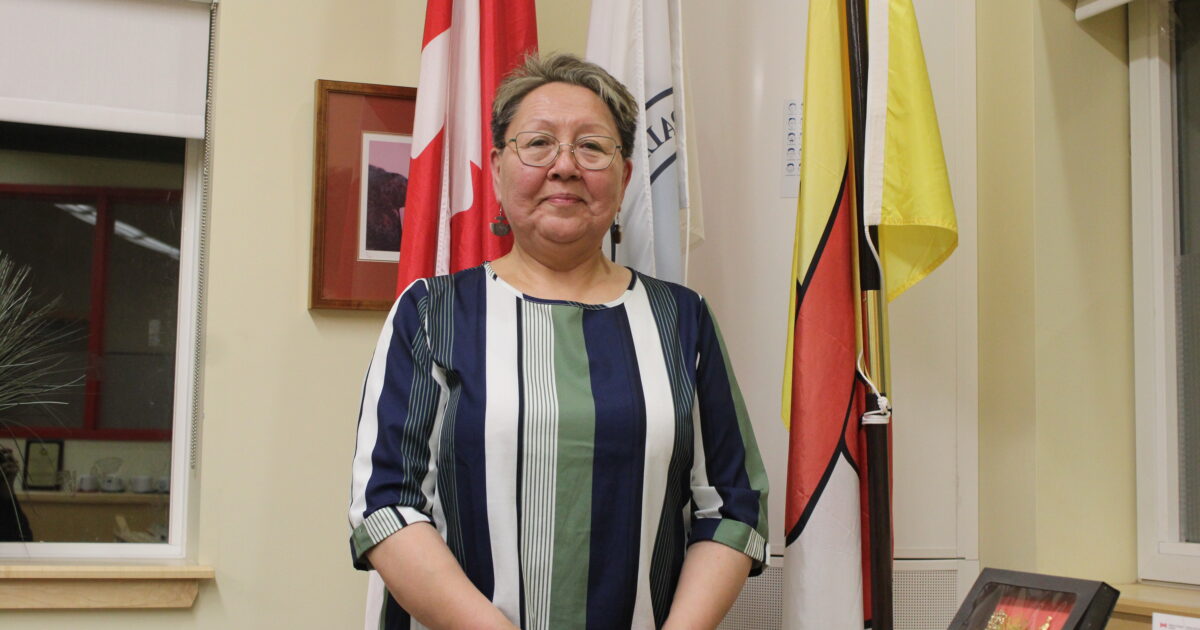
After losing seat in Nunavut election, Mary Killiktee is updating her resume and looking for better ‘tomorrows’

Uqqummiut is one of seven Nunavut ridings that include two or more communities, along with Aivilik, Amittuq, Arviat North-Whale Cove, Netsilik, Quttiktuq and Rankin Inlet North-Chesterfield Inlet. (Screenshot courtesy of Elections Nunavut)
Mary Killiktee is glad that there are “tomorrows.”
The former Qikiqtarjuaq mayor and a one-term MLA is reflecting after losing her re-election bid for Uqqummiut — the riding that includes the communities of Qikiqtarjuaq and Clyde River — on Monday night.
Gordon Kautuk, a former Clyde River hamlet councillor of 14 years, is the riding’s MLA-elect, according to unofficial results of the Nunavut territorial election.
Kautuk received 402 votes, while Killiktee got 132.
“I wish him all the best,” she said Tuesday morning.
The result was devastating, but not surprising, she said.
In 2021, Killiktee won against Clyde River candidate Sheila Enook, but since then Killiktee was “regularly” told that her Clyde River constituents want to see their MLA as a representative for their community.
“They have felt that they’ve been neglected,” she said.
While the majority of Qikiqtarjuaq’s voters opted for Killiktee, most Clyde River voters cast their ballot for Kautuk.
With Clyde River’s population being nearly 1,200 people — twice as big as Qikiqtarjuaq’s — Kautuk’s win was predictable, Killiktee said.
To her, that underlines the issue faced by some Nunavut MLAs of having to represent and run in ridings that include several communities.
For 25 Nunavut communities, there are only 22 MLAs.

Uqqummiut is one of seven constituencies that include two or more hamlets, along with Aivilik, Amittuq, Arviat North-Whale Cove, Netsilik, Quttiktuq, and Rankin Inlet North-Chesterfield Inlet.
Even though Clyde River and Qikiqtarjuaq face similar issues like housing and education, they are still different historically and culturally, Killiktee said.
“I was a stranger to them and they were a stranger to me,” she said, adding that before the 2021 election she had only been to Clyde River once.
“Of course, I’m less of a stranger to them now after four years.”
The two communities are roughly 400 kilometres apart, with no road between them or direct flight connection.

As well, the two places use different dialects of Inuktitut — Qikiqtarjuaq’s is closer to Pangnirtung’s, while Clyde River’s is more similar to Pond Inlet’s, Killiktee said.
The process of campaigning doesn’t come without its issues, either.
Killiktee said she got stuck for three days in Clyde River due to poor weather before she could fly to Iqaluit and return home from there to Qikiqtarjuaq, just a day before the election.
The cost of the trip was roughly $2,100 and unlike when Killiktee was travelling as a sitting MLA, her re-election campaign travel expenses were not covered by the Nunavut government, so she had to “save up” to be able to afford it, she said.
Also, the 12 election posters Killiktee ordered didn’t arrive because of the Canada Post strike.
So while other candidates could show off their pins and websites, she had to go ahead without any election swag.
The issue of several communities being lumped together into one riding, with some constituents having to be represented by a “stranger,” is hard to crack, she said.
The size of a constituency is determined by population, with the aim being for all MLAs to represent roughly the same number of voters.
One solution, Killiktee said, could be to make the population of each riding smaller so that they could fit in a single community.
But with Grise Fiord, Nunavut’s smallest community with just 144 residents, such a reform would dramatically increase the number of MLAs and stretch the capabilities of the existing legislative assembly building, she said.
For now, Killiktee is looking to take some time off so she can “update her resume.”
“I don’t want to stay home,” she said. “I will be looking for a job, but a there aren’t a lot of options in smaller communities.”