
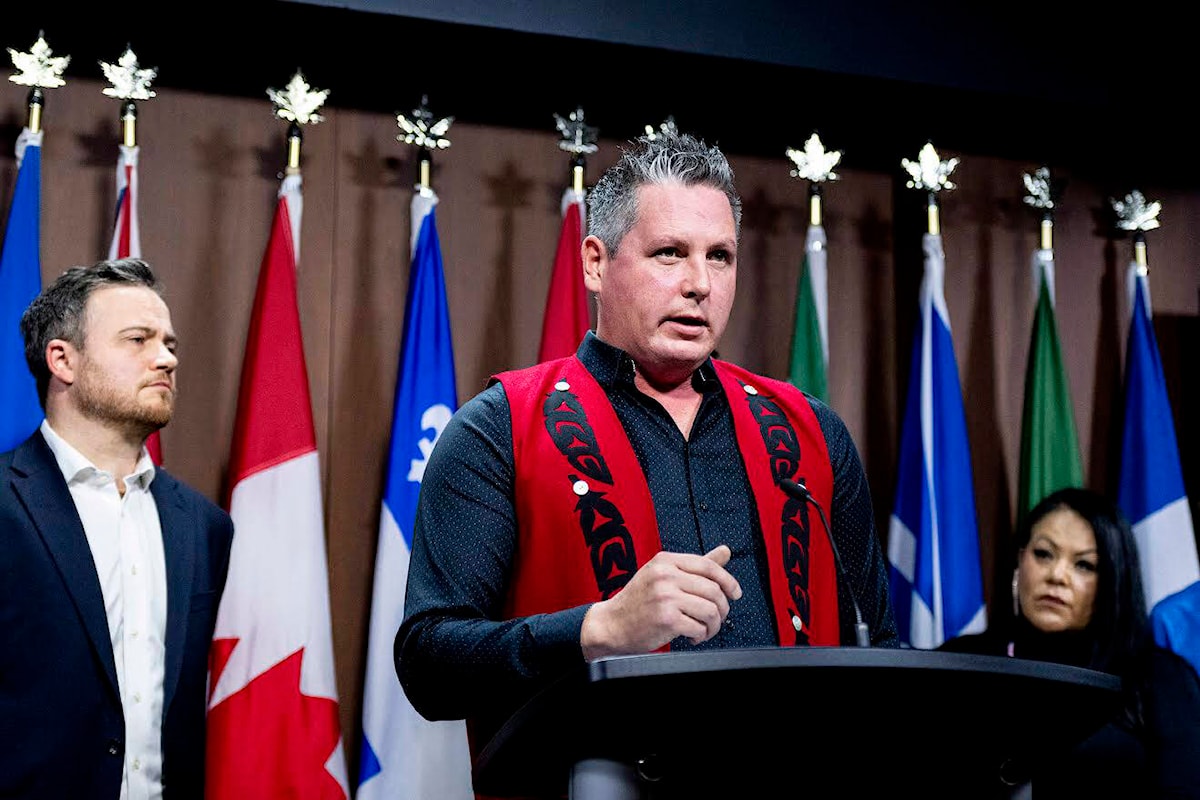
Yukon First Nations Wildfire founder visited Ottawa on Oct. 23 to advocate for Indigenous crews in Canada’s wildfire response system
Chad Thomas, founder of Yukon First Nations Wildfire, met with federal leaders in Ottawa on Oct. 22 to call for national recognition of Indigenous wildfire crews and long-term funding to match the scale of Canadian wildfires.
He joined a delegation of wildfire survivors and emergency responders pressing for federal action on equipment, resources, mental health supports and Indigenous-led emergency management. The visit followed what organizers described as Canada’s second-worst wildfire season on record.
Thomas said Ottawa must remove barriers that prevent Indigenous crews from receiving national certification. Under current rules, only provinces and territories can certify wildfire personnel, a restriction that sidelines First Nations trainers and limits deployment.
“Right now, the only people that hold on to that national certification are the provinces and territories themselves and they don’t allow First Nation contractors to certify people to this high level,” Thomas said.
Beat the Heat, a Yukon First Nations Wildfire program created by Thomas, is not federally endorsed despite its rigorous training standards. He said the program is on par with the territorial one, but its graduates aren’t eligible for national deployment.
A four-part strategy was proposed to improve Indigenous emergency management, youth recruitment, standardized training, proper equipment and field experience. Without all four, Thomas said certification and retention will continue to suffer.
“If you don’t allow them to get out on the incidences and get experience to build that final piece for them to be certified, then that’s a big issue,” he said.
Retention is already a concern, according to Thomas. Many young firefighters leave First Nations crews to join provincial agencies offering better training and advancement, despite wanting to serve their own communities.
“We invest so much in recruiting and training but without experience opportunities, they can’t progress. We need to let them grow while staying with their own organizations,” Thomas said.
First Nations crews are often classified as contractors rather than first responders, a distinction that limits access to advanced training and excludes them from inter-agency coordination through the Canadian Inter-agency Forest Fire Centre (CIFFC), which oversees inter-provincial deployments.
“They’re not really contract crews, they’re First Nation first responders,” Thomas said.
“That’s something that’s always bothered me quite a bit and it’s something I’ve been advocating for a very long time.”
While provinces pay to participate in CIFFC, First Nations governments are excluded, despite managing their own wildfire crews and territories. Thomas said federal officials were receptive to his message, though surprised by the extent of the gaps.
“A lot of the information that they get fed is from provinces and territories,” he said.
Foreign fire crews from Australia, South Africa, the United States and Mexico have previously deployed under mutual aid agreements. Thomas said Canada should prioritize Indigenous crews who are trained, locally based and deeply familiar with the land.
Mental health support was also highlighted as a critical gap. Thomas said First Nations wildfire crews often go without adequate resources despite working under the same front-line conditions as territorial teams.
National coordination could help address these issues. Thomas is calling for consistent funding, regional emergency management positions and a seat at the table for Indigenous crews managing wildfire risk in their own traditional territories.
The Wildfire Awareness Society recently graded Whitehorse’s wildfire preparedness. Forest fuel management earned an A-, but city-level FireSmart efforts and evacuation planning received C and D grades, citing limited resources and public awareness.
Thomas said those findings reflect broader systemic gaps that national coordination could help close, if Indigenous crews are empowered to lead.
Contact Jake Howarth at [email protected]