
Once you get past the dishy first third of this Mommy Dearest-style memoir, you can be forgiven for starting to skim.
Like any skilled journalist would do, New York author Molly Jong-Fast loads her best material into the first pages. After that she loses steam, and her already-slender book begins to feel repetitive and scattered.
Thanks to its chatty style and gossipy content, How to Lose Your Mother received lots of attention when it came out in early June.
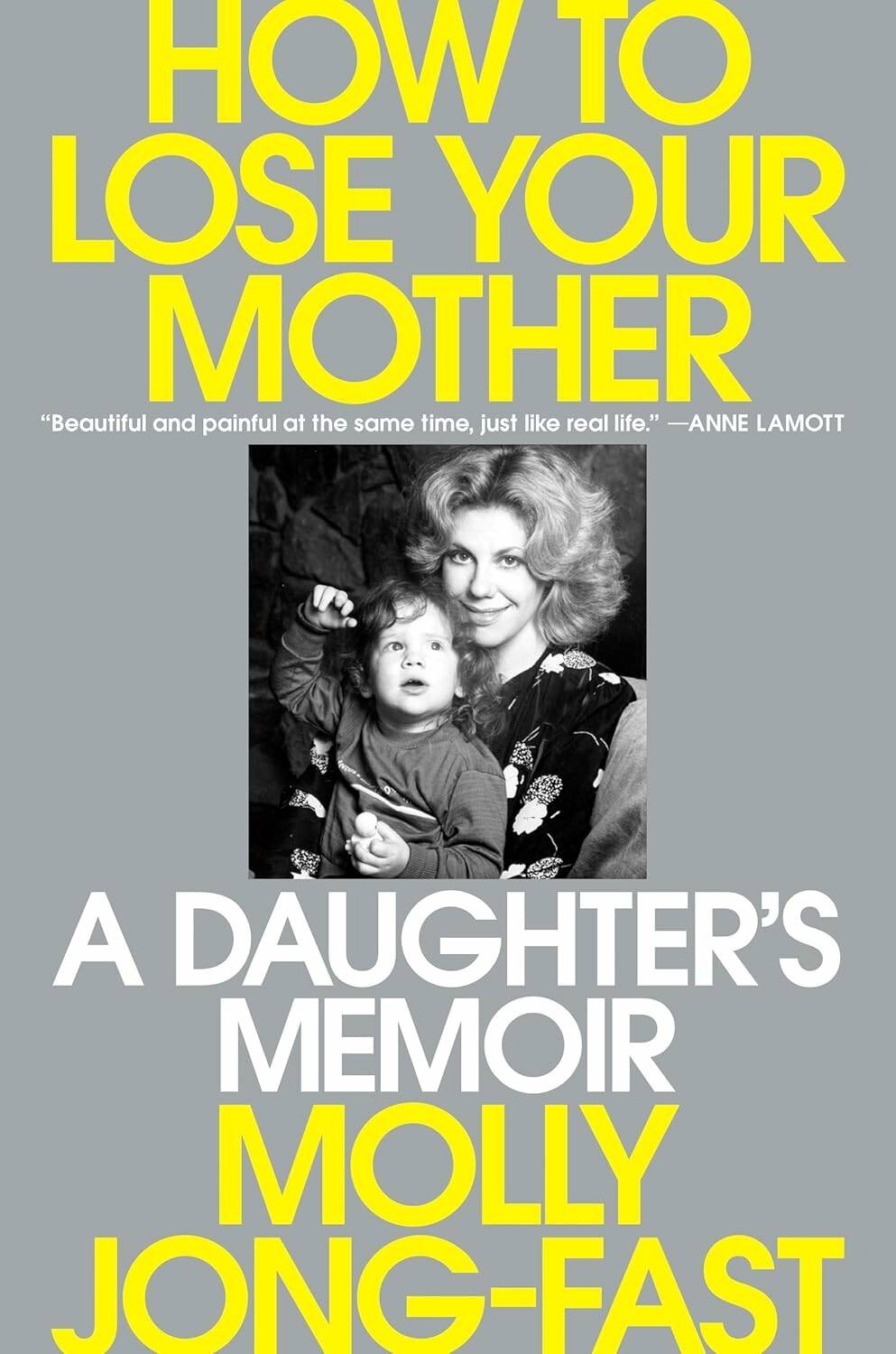
How to Lose Your Mother
Jong-Fast is the only child of the once-notorious novelist Erica Jong.
In 1973, at age 31, Jong published her racy novel Fear of Flying, which broke the news to the English-speaking world that men were not the only gender who enjoyed casual sex.
Jong became a cultural sensation. Although she published more than 20 books in the intervening years, she never again did anything as momentous.
Molly says here that mom was “a world-class narcissist” interested in her work, her famous friends and herself. Oh, yes, and in drinking wine. Lots of wine.
“She would always say that I was everything to her,” writes Molly, 46, a U.S. TV political analyst, podcaster and author of two novels and two other memoirs. “She would always tell anyone who listened that I was her greatest accomplishment. I always knew that wasn’t the truth.”
Molly’s father, by the way, was Jong’s third husband Jonathan Fast. That marriage broke up when Molly was a young child. Husband No. 2 had been Chinese-American psychiatrist Allan Jong, whose surname Erica (neé Mann) kept.
Molly goes easy on dad here. Even though he moved to California and had a second family, she saves her vitriol for mom. A typically catty judgment: “She always had trouble getting along with people who were not men she wanted to seduce.”
In later years, Molly writes, she and her biological father bonded over the fact that they were both the children of “same-sex narcissists.”
Molly’s paternal grandfather was the prolific McCarthy-era novelist and Communist Howard Fast, best known for the 1960 movie adaptation of his novel Spartacus.
“I never knew my mother or grandfather at the height of their respective fames,” she notes, “but I did know them at the end, when they were desperately trying to claw fame back.”
To the degree that this memoir has a structure, it is a narrative of Molly’s “annus horribilis,” 2023.
Coming out of the pandemic, she had to move her mother, suffering from dementia, into a nursing home and deal with the decline and death of her stepfather Kenneth Burrows, Jong’s longtime hubby No. 4.
Moreover, Molly’s own husband (15 years her senior and father to their three children) was treated for a form of pancreatic cancer. At the end of the book, touch wood, he is OK.
Winnipeg Free Press | Newsletter

But the book is primarily an excuse for Molly to exorcise her demons over feeling unloved and ignored as a child.
Mom was an alcoholic who let her be raised by her nanny. No surprise, Molly overdid the drugs and booze as a teenager. Miraculously, she got sober after a stint in rehab at age 19, and goes to Alcoholics Anonymous meetings to this day.
Aside from the amusing celebrity name-dropping — both mom and daughter move in predominantly Jewish circles of New York media and culture — there is not much else to tell.
Although she does tell it, over and over again.
Retired Free Press editor and writer Morley Walker admits he has never read Fear of Flying.