

Ever dream of a robot to clean your house? Well, here it comes — with a hefty price tag and controversial privacy terms: The robotics and AI company 1X, backed by OpenAI’s investment fund, has opened pre-orders this week for its humanoid robot, NEO.
The robot, designed to handle everyday household chores, promises to free users from the burden of cleaning and organizing — but in exchange for that promise, consumers must agree to let human workers watch what’s happening inside their homes.
Why? Because, much like Tesla’s robot, which impressed audiences at the company’s event until it was revealed to be remotely controlled by employees, NEO isn’t exactly autonomous in practice.
Standing about 1.68 meters tall and weighing 30 kilograms, NEO was designed with a “soft” fabric-like appearance, unlike the tough, industrial look of most robots. It’s intended to perform basic tasks autonomously — such as opening doors, fetching objects, and turning lights on or off — according to reports in U.S. and European media.
However, when it comes to more complex chores, like folding laundry or mopping the floor, it still requires human assistance.
According to the company, those interested in purchasing it will need to wait a bit longer: the first robot units are expected to be shipped to customers in the U.S. during 2026, followed by Europe and Asia in 2027.
3 View gallery
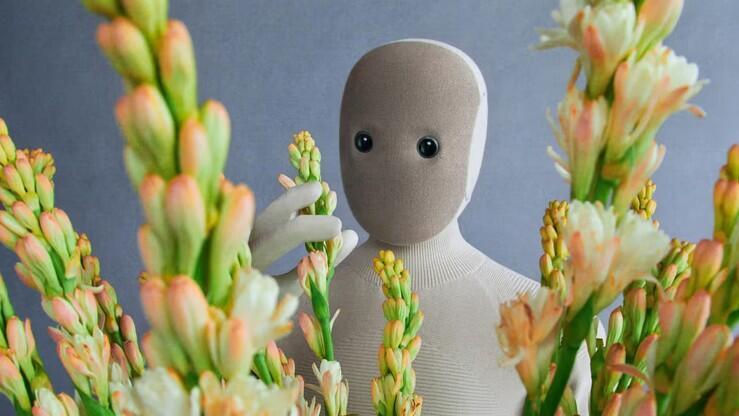
The published details reveal the “fine print” of this supposed revolution:
1X’s CEO, Bernt Børnich, openly admitted in an interview with The Wall Street Journal that the robot’s neural network is still in its learning phase. Therefore, at launch, more complex tasks will actually be carried out by remote human operators (teleoperators).
Anyone who purchases NEO in the initial rollout will have to agree to a “contract” stipulating that company employees, wearing virtual reality headsets, will be able to see inside the user’s home through the robot’s cameras and control it remotely.
The official purpose of this setup is to collect real-world training data to improve the robot’s artificial intelligence and eventually allow it to perform tasks fully autonomously.
“If we don’t have your data, we can’t improve the product”, explains Børnich.
The company, for its part, is trying to ease privacy concerns. Owners will receive an app that allows them to define specific time windows during which human operators are permitted to take control of the robot.
Additionally, 1X promises to blur the faces of anyone who doesn’t wish to appear on video, and to let owners define “no-go zones” in their homes (such as bedrooms and bathrooms) where the robot will not be allowed to enter under remote control.
3 View gallery

Nevertheless, despite these promises, commentators worldwide — including on tech news sites — see this as a significant compromise, creating potential security vulnerabilities and undermining consumer trust.
NEO is being launched at a time when the humanoid robotics sector is booming and is currently dominated by other major players, primarily in the U.S. and China. Unlike most competitors, who are currently focusing on industrial and logistics applications, 1X has chosen to target the consumer market directly.
While competitors like Tesla and Figure AI (backed by Nvidia and Jeff Bezos) focus on building robust robots for factory work, 1X is taking a risk with its “data-first” model.
The company is offering pre-orders for NEO with a $200 deposit, pricing early buyers at $20,000, or alternatively through a monthly subscription model of $499.
The use of remote human control is not a new invention. Throughout the history of robotics, human supervision has always served as a necessary transitional stage. For example, in medicine, telerobotic surgery (performing surgery remotely) is already a reality.
3 View gallery
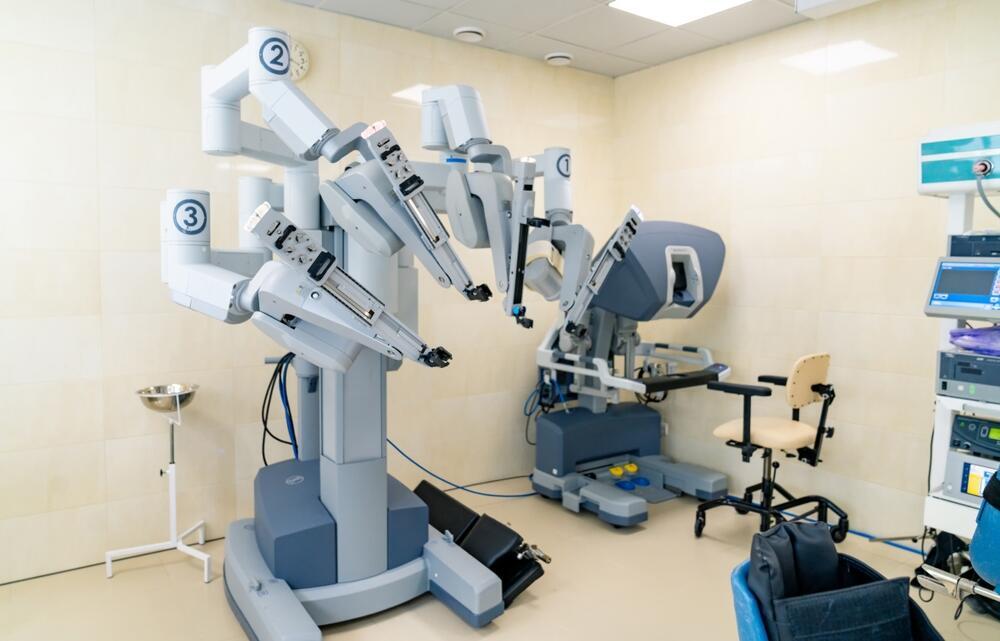
Already a reality. The Da Vinci operating robot
(Photo: Shutterstock)
In home robotics, this is reminiscent of the early days of autonomous vehicles, which also relied on human safety drivers to monitor the vehicle and provide highly valuable data for training AI systems.
At 1X, they believe this hybrid model is the fastest path to full autonomy, leveraging human labor to perform complex tasks that the algorithms have not yet mastered.
However, in Western countries, ethical questions arise regarding the wages and working conditions of these operators, who are likely employed at lower costs while performing work that, in turn, trains the very machines that may eventually replace them.