
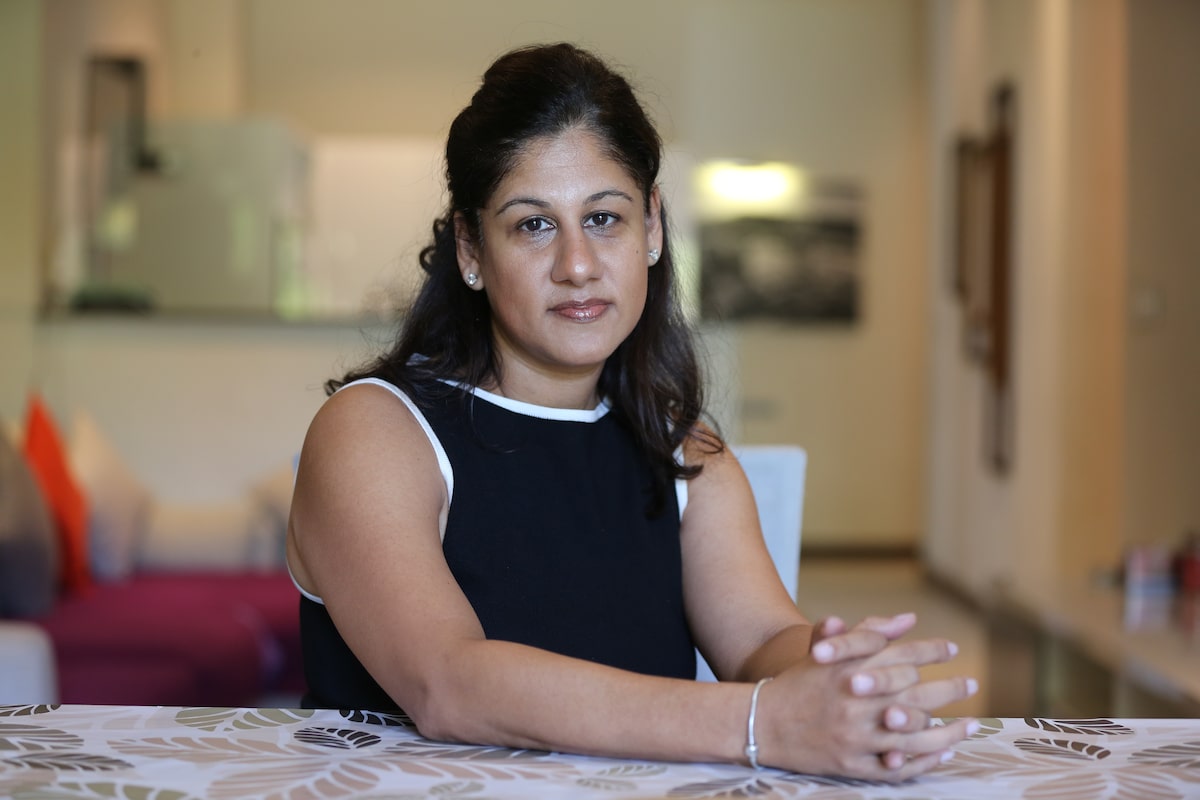
“It feels like I’m being forced to stay here against my will,” says Vanita Mirpuri, a Canadian woman who hasn’t been able to leave Mauritius since 2021, partly because Canada refuses to release her passport.Vel Moonien/The Globe and Mail
A Canadian woman says she has been stuck in the Indian Ocean country of Mauritius for the past five years, unable to return home, partly because Canada refuses to release her passport.
The Foreign Affairs Ministry of Mauritius says Vanita Mirpuri is prohibited from leaving the country because of a five-year-old “computer misuse” charge against her based on a complaint by her former husband. But the charge was withdrawn in March, and Canada is still unwilling to return her passport without the approval of local authorities, she says.
Ms. Mirpuri surrendered her passport to Canada’s honorary consul in Mauritius in 2021 after local police ordered her to do so. Since then, Canada has deferred to the local authorities, telling her to obtain permission from them if she wants her passport back.
When she asked the Mauritian Passport and Immigration Office to lift the travel ban after the charge was finally withdrawn, Ms. Mirpuri said, the department told her that her former husband had filed another charge against her, several years after their divorce, so the office refused to authorize the return of her passport.
Canada imported nearly 1,800 endangered wild-caught monkeys for research, sparking calls for a ban
The case raises questions about how Canada responds to citizens who are embroiled in foreign disputes or legal cases. Ottawa seems to be increasingly selective about the services it provides in such situations, according to Gar Pardy, a retired Canadian ambassador who served as director-general of the federal government’s consular services for 11 years.
Ms. Mirpuri, born in Toronto and a graduate of universities in Halifax and Toronto, moved to Mauritius in 2006 after marrying a Mauritian businessman. She is a licensed coach for students with learning disabilities but is currently making ends meet by renting out a part of her apartment on Airbnb.
To understand her case, The Globe and Mail has reviewed court documents, e-mail exchanges and letters from lawyers and officials and contacted government departments in both countries.
In a series of e-mails over the past three years, seen by The Globe, Canadian embassy officials repeatedly told Ms. Mirpuri that they needed approval from the Mauritian government before they could return her passport.
“As you are aware from previous emails from us, we have been informed by Passport Canada that we are to hold on to your passport until advised otherwise by the Mauritian authorities,” Canadian consular official Monique Kemp told her in 2022 in an e-mail from the Canadian High Commission in Pretoria, which is responsible for consular issues in Mauritius.
This year, after the charge against her was withdrawn on March 18, the consular official said Canada still could not return her passport.
The Saya de Malha Bank is an underwater haven of biodiversity, desperately in need of regulation
“Please note that, as we were informed in writing by the [Mauritian] Passport and Immigration Office that your Canadian passport be handed in, we will need to receive confirmation in writing from either the Court or the Passport and Immigration Office that your Canadian passport can be returned to you,” Ms. Kemp told her in an e-mail on March 24.
Thida Ith, a spokesperson for Global Affairs Canada, said the department is aware of a consular case in Mauritius and is providing assistance, including liaison with local officials, but it cannot provide further information for privacy reasons.
The Mauritian Foreign Affairs Ministry, in a reply to questions from The Globe, said the government prohibited Ms. Mirpuri from travelling outside the country because she was charged with the offence of “Breach of Computer Misuse and Cybercrime Act.” She would not be permitted to leave until the case is decided, the ministry said.
“We give the assurance that the Ministry remains attentive to the situation and continues to monitor it,” the ministry added in a statement.
When The Globe pointed out that the charge had been withdrawn in March, the ministry did not provide a response.
A Canadian flag flies at the office of Canada’s honourary consul in Port Louis, the capital of Mauritius.Vel Moonien/The Globe and Mail
Ms. Mirpuri says the charge was based on allegations by her former husband, who accused her of gaining access to his e-mails without his consent. The police found the charge to be unsubstantiated, she told The Globe in an interview.
Despite repeated requests, the court in Mauritius has refused to provide her with a written record of the withdrawal of the charge, Ms. Mirpuri said.
In addition to the computer-misuse charge, several other charges have been filed against her as a result of allegations by her former husband over the past several years, she said. Some have been dismissed by the courts, but she cannot verify the details because it has been almost impossible for her to find a lawyer in Mauritius who is willing to represent her, with the courts removing one of them without explanation, she said.
Jaykar Gujadhur, a lawyer for her former husband, confirmed that the cybercrime charge was related to allegations that Ms. Mirpuri had “unauthorized access to private and professional data” belonging to her former husband.
“It is my understanding that her passport was withheld by the authorities as part of that investigation,” he told The Globe in response to questions. “We are not party to the proceedings.”
Asked about the court’s dismissal of the cybercrime charge earlier this year, he did not respond.
Ms. Mirpuri said she was shocked that the Canadian government seemed unwilling to help her. “They don’t really give me a reason,” she told The Globe.
“I’m lost. I can’t understand why this is being prevented. It feels like I’m being forced to stay here against my will.”
Mauritian authorities, who have also imposed restrictions on her movements within the country, seem to be keeping her as a “hostage” in the dispute with her former husband, Ms. Mirpuri said. “Thank God I’ve got a little bit of income, but it’s almost impossible.”
Mr. Pardy, the former consular-services director, said the Canadian government seems to be taking a questionable “narrow interpretation” of its responsibilities to Ms. Mirpuri.
“From what I have seen, the High Commission in Pretoria has side-stepped any responsibility to assist Vanita,” Mr. Pardy said after reviewing documents that Ms. Mirpuri had provided to The Globe.
He said it was “absolute nonsense” for Ottawa to say it cannot provide a passport to one of its own citizens without the permission of a foreign government.
Rémi Larivière, a spokesperson for Immigration, Refugees and Citizenship Canada, said the department cannot comment on specific cases for privacy reasons. But federal regulations allow the department to refuse services in some situations to “preserve the integrity” of the Canadian passport program, he told The Globe in an e-mailed response to questions.