
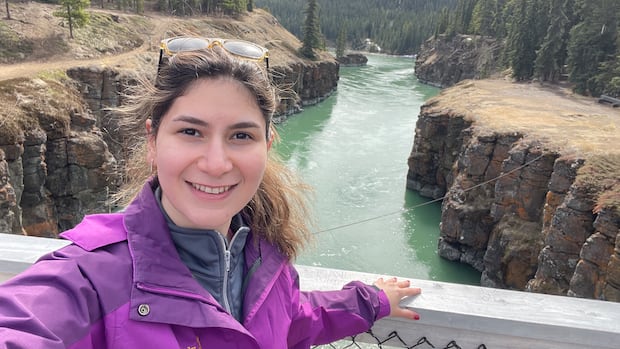
In Iran, Mahya Rezaei was a doctor. In the Yukon, she’s a relief librarian at the Whitehorse Public Library.
She’s trying to get her medical licence in the Yukon, but can’t without leaving the territory for several years. While an estimated 10,000 Yukoners don’t have access to a primary care provider, there’s no option for her to get licensed in the territory.
She moved to Whitehorse three years ago to join her husband, who works in the city as an electrical engineer.
“When you immigrate you abandon everything you had. I came here, I start, make a house, make a friend,” she said.
She says she wants to stay – in the snow, in her house that looks out at Grey Mountain, among the people she’s met. And she wants to again practice medicine.
She’s tried to stay involved in health-care, working at a pharmacy in Whitehorse and volunteering at the hospital – even though it’s hard for her, to be so close to what she loves but unable to really participate.
“Sometimes I cannot recognize myself because now I’m totally apart from what I used to be.”
2 pathways, but no options
There are two ways to get a full medical licence in the Yukon.
One is to apply directly to the territory. That route includes membership with either the College of Family Physicians of Canada or the Royal College of Physicians and Surgeons of Canada.
To get membership, applicants need to have practiced medicine in Canada for at least two years, says Felipe Santos, a consultant for internationally trained physicians who want to stay in Canada.
But to practice medicine in Canada, they need a licence. That’s the situation Rezaei is in.
There are limited practice licences and other temporary measures that people use to fulfill the two-year requirement, Santos says. Those aren’t available to Rezaei in the Yukon.
The other option for a full medical licence in the Yukon is arrive with a licence from one of the provinces.
For Rezaei, the shortest pathway could be completing a three-month practice-ready assessment, says Santos. In every province, that comes with a return-of-service requirement. She’d have to stay and practice in that province for three to five years.
Another pathway is retraining, which Santos says is like redoing a medical residency. It takes two years, and likely also involves return-of-service. That option could see her spending up to seven years outside of the Yukon.
“If you’re from Iran, really it’s not going to happen in less than three to five years,” Santos says.
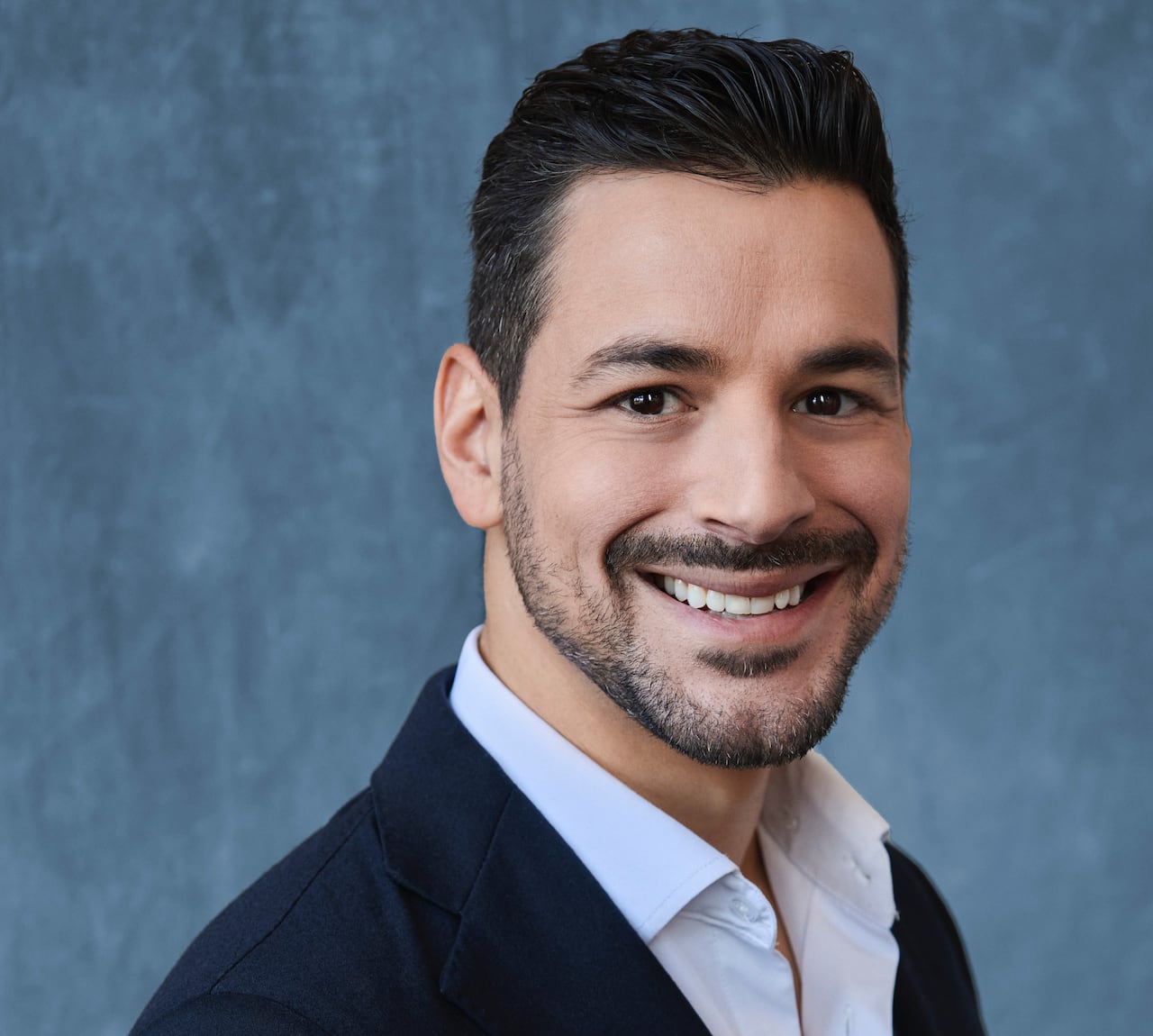 Filipe Santos is a consultant for internationally trained physicians who want to stay in Canada. (Submitted by Filipe Santos)
It’s not just the Yukon that’s set up like this, says Santos – the same is true for N.W.T. and Nunavut.
The territories are making it hard on themselves, Santos says, by not being flexible in how they accept internationally trained physicians.
Who’s in charge?
In the Yukon, medical licences are regulated by the Yukon Medical Council, under the territory’s Health Professions Act.
Derek Bryant, president of the Yukon Medical Association (YMA) which represents doctors in the territory, says “the problem needs to be addressed by the Yukon Medical Council and by Yukon government.”
He says many Yukoners don’t have access to a doctor.
“And we have a doctor living in our community with ties to the Yukon who wants to practice here but doesn’t have a clear pathway to be able to do so,” he said.
There are recruitment initiatives in the territory, including a new partnership with the University of Alberta, and new recruitment incentives as of this fall.
It’s also easier for physicians from Australia, Ireland, the U.S. and UK to get licensed in the Yukon.
Neither the government nor the Yukon Medical Council would speak about the issue while the territorial election campaign is underway.
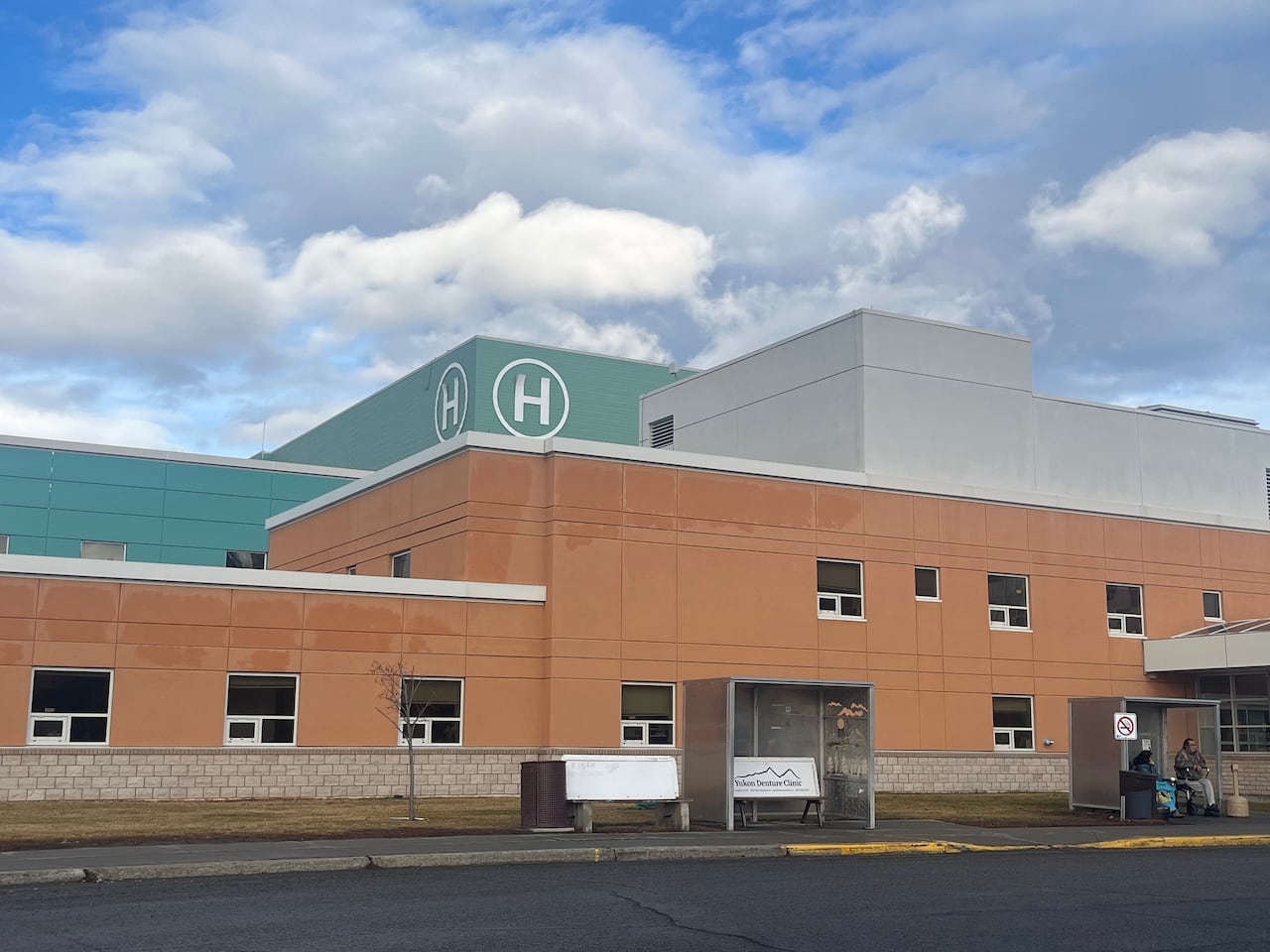 The Whitehorse General Hospital (Isabel Ruitenbeek/CBC)
For Rezaei, navigating the regulations and options has been part of her struggle. In her efforts to figure out a way to stay over the past years, she’s reached out to the Medical Council, the Medical Association, and various politicians of all stripes.
She’s suggested being assessed in Nova Scotia, with a commitment to return and practice in Yukon’s rural areas for three to four years. She knew when she moved to Yukon that there wasn’t a Yukon-specific pathway, but was hopeful something could work out.
She’s also tried the Yukon’s Foreign Credential Recognition Navigation Service, a territorial pilot program meant for internationally educated health professionals living in the Yukon, who are legally entitled to work in Canada, don’t have a licence to practice yet, and demonstrate a commitment to practice in the Yukon within the next two years.
“I tried all of them,” Rezaei said. “They don’t have any option for me.”
Santos says there are more options for people like Rezaei in the provinces, because the medical regulatory authorities elsewhere have realized that the criteria to sit the national college exams are “extremely strict and very limiting.”
The colleges require international training to match up very closely with the Canadian system, which eliminates many applicants before they’ve even started, says Santos.
“The medical regulatory authorities have the authority to issue a licence without … requesting those certificates.” So, he says, they started doing exactly that, “they started being innovative.”
That’s why there are options in the provinces like the practice-ready assessments, associate physician licences or clinical assistant licences.
Rezaei knows that if she went to any other province, she’d have a better chance. She says when she connects with other internationally trained doctors, they ask her, “why are you living there?”
“I love [it] here,” she said.