
GSMArena Team,
03 November 2025.
1. Introduction, specs, unboxing2. Design, build quality, handling3. Lab tests – display, battery life, charging speed, speakers4. Software, performance5. Camera, photo and video quality6. vivo Professional Photography Kit7. Competition, verdict, pros and consvivo X300 Pro specificationUser opinions and reviewsReview comments (37)
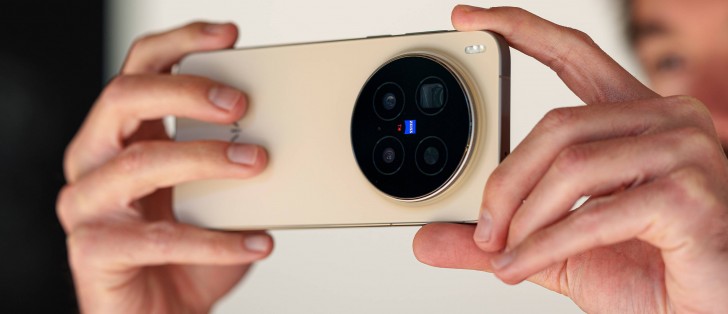
A couple of sensor tweaks on the back, new selfie camera
The X300 Pro’s camera system isn’t much different from the X200 Pro’s, with the rear three modules looking the same at a passing glance, and the only obvious change being on the front. As it turns out, though, there are modifications on the back as well.
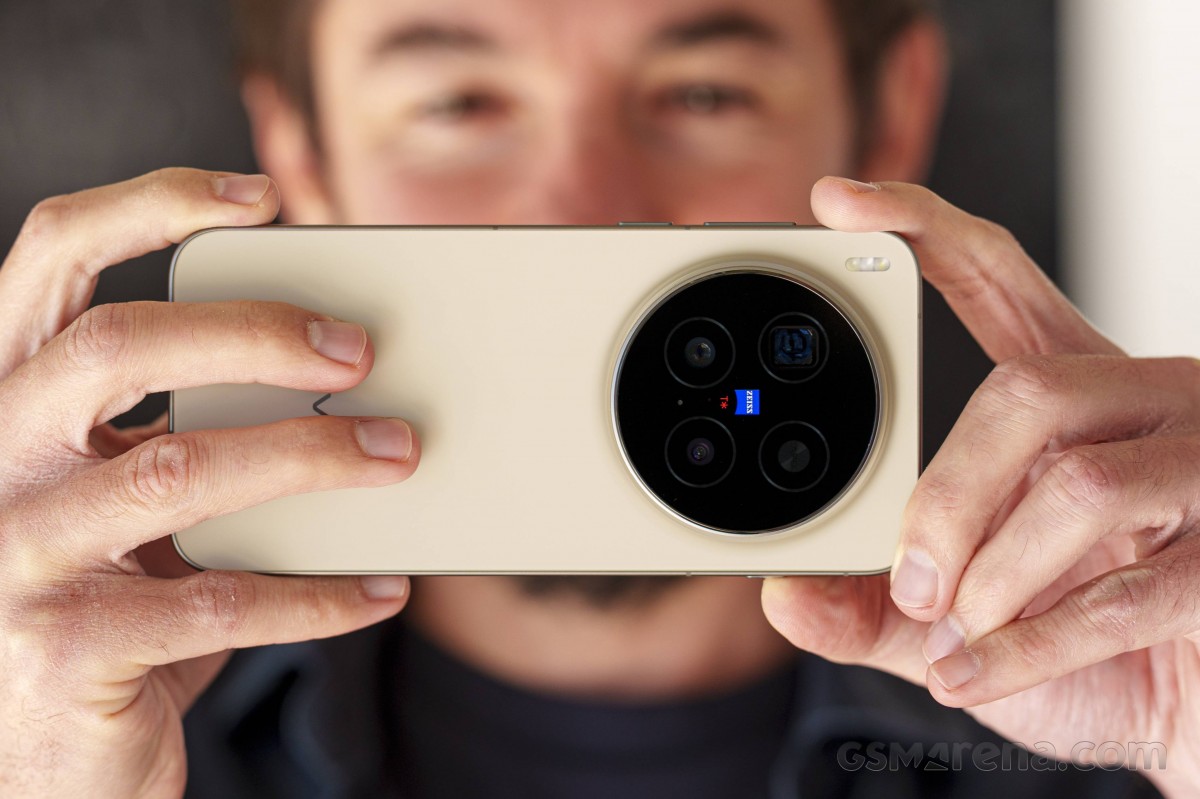
The main camera has gotten a new-generation sensor, the Sony Lytia LYT-828 replacing the 818 of the previous model. Still the same size, at 1/1.28″, the new imager promises wider dynamic range and improved noise performance. The lens has gotten a little narrower, the focal length now being 24mm, as opposed to the 23mm of yesteryear (24.2mm vs. 22.7mm, according to some hardware apps, making the gap in coverage even wider). The aperture is still f/1.6 and the lens is stabilized (5.5 stops CIPA rating).
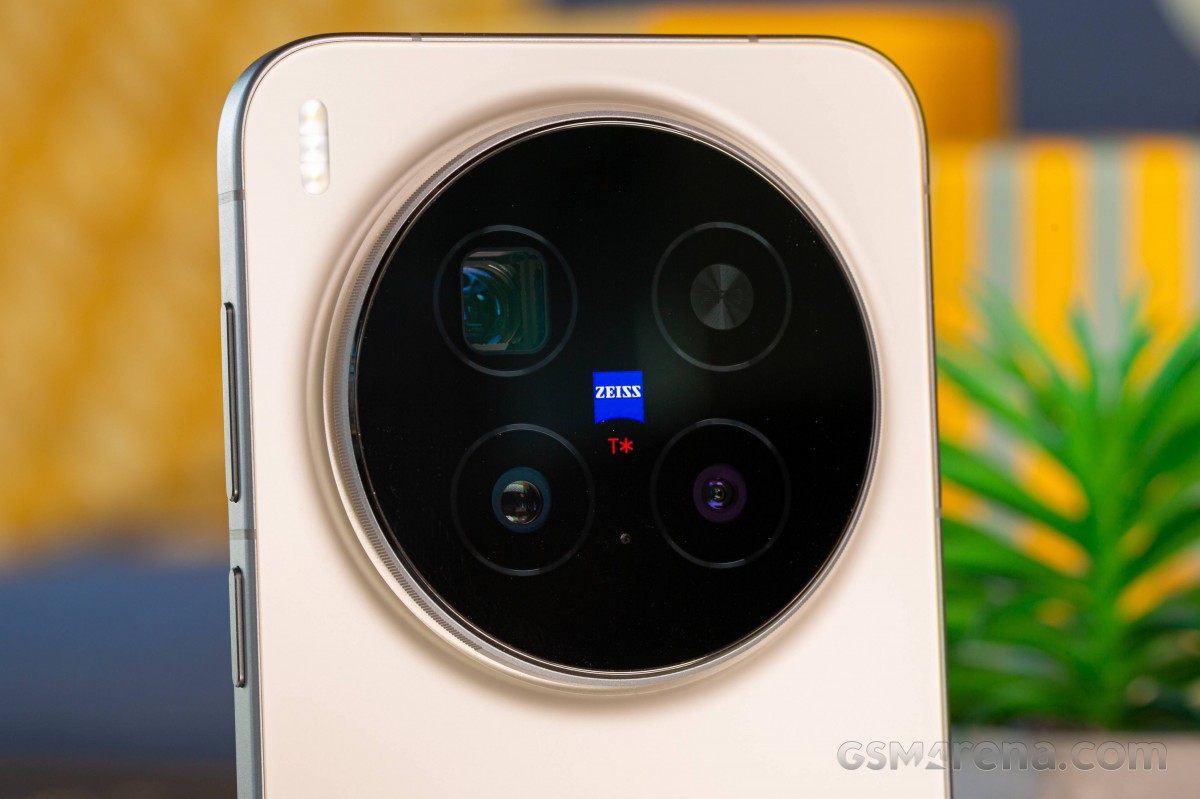
The telephoto swaps out the Samsung Isocell HP9 sensor of the previous generation for what vivo calls the HPB – it’s an evolution of that design, albeit further customized to vivo’s needs, we’re being led to believe. With an optical format of 1/1.4″, it’s still one of the largest sensors used in a smartphone telephoto camera – larger than the Oppo Find X9 Pro’s Isocell HP5 imager (also 200MP, but 1/1.56″). It’s paired with an 85mm equivalent lens with OIS and close focusing capabilities (14cm minimum focusing distance).
The ultrawide is seemingly unchanged, at least looking at the specsheets. It’s still the same Samsung JN1 sensor, coupled with a 15mm lens (with autofocus). The Find X9 Pro’s ultrawide uses the JN5 sensor, which is theoretically a more advanced piece of kit.
Speaking of the Find, which has the same sensor on its selfie camera that it does on its ultrawide, the X300 Pro features the same JN1 on its front – with an AF-capable lens too, and a pretty wide one at that (20mm equivalent). It’s a most welcome development, after years of fixed-focus vivo X Pros.
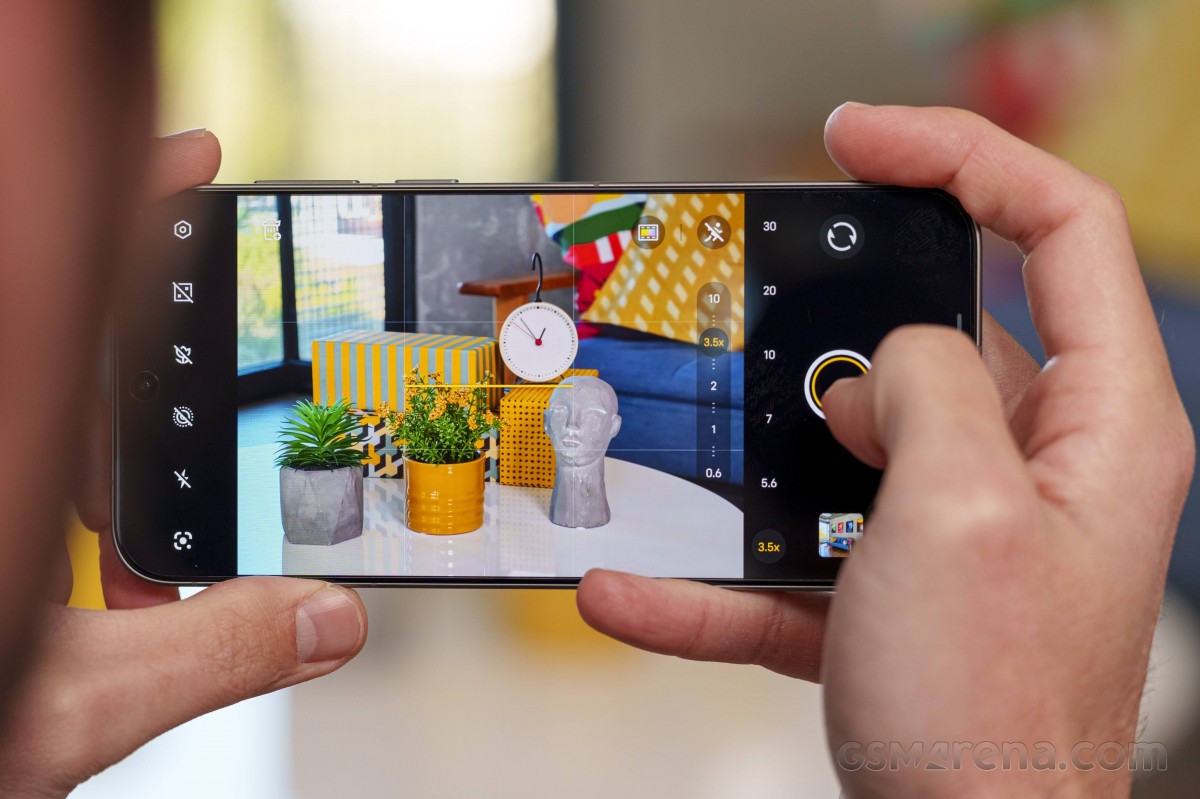
Wide (main): 50MP Sony Lytia LYT-828 (1/1.28″, 1.22µm-2.44µm), f/1.57, 24mm, multi-directional PDAF (13cm – ∞), OIS; 4K@120/8K30
Telephoto 3.5x: 200MP Samsung ISOCELL HPB (S5KHPB, 1/1.4″, 0.56µm-2.24µm), f/2.67, 85mm, multi-directional PDAF (14cm – ∞), OIS; 4K@120fps
Ultrawide: 50MP Samsung ISOCELL JN1 (S5KJN1, 1/2.76″, 0.64µm-1.28µm), f/2.0, 15mm, PDAF; 4K@60fps
Front camera: 50MP Samsung ISOCELL JN1 (S5KJN1, 1/2.76″, 0.64µm-1.28µm), f/2.0, 24mm, PDAF; 4K@60fps
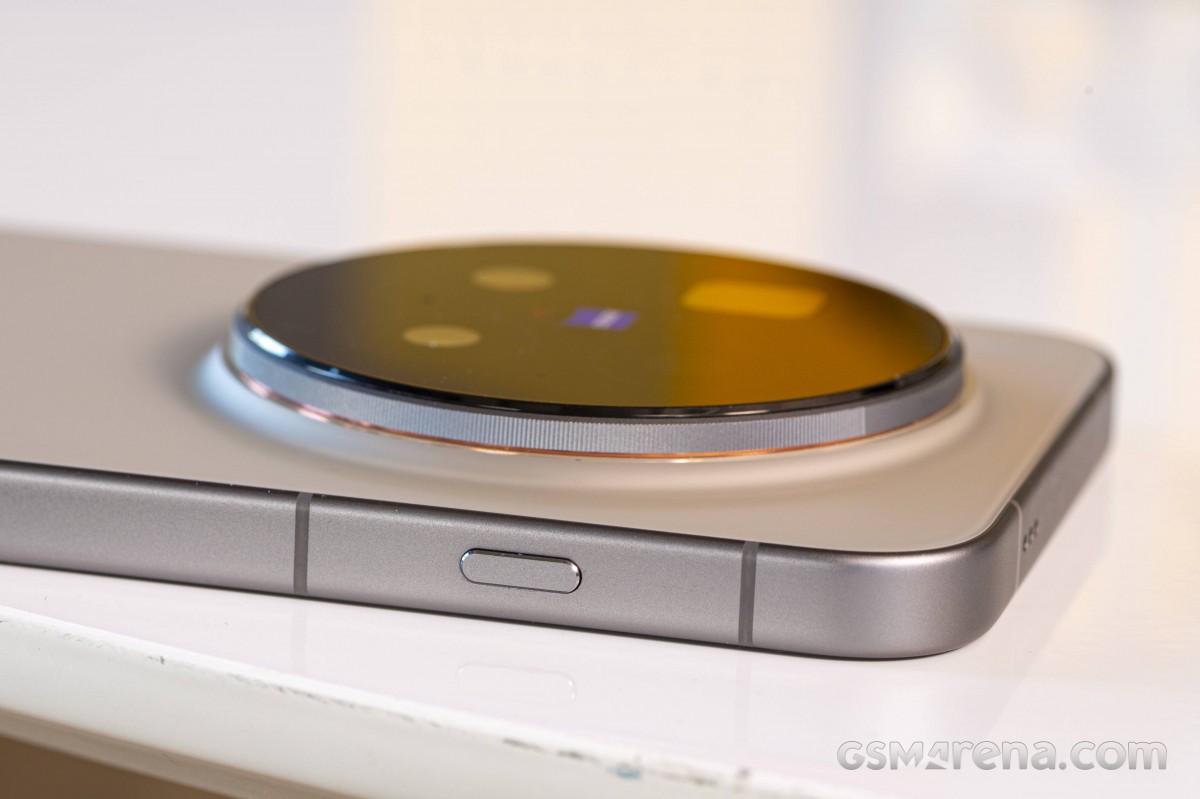
The X300 Pro didn’t get the X200 Ultra’s pressure-sensitive camera control on the right, but it does have the clicky shortcut button on the left that can be used to launch the camera and take a photo once there. If you rotate the phone the other way around, it’s where a shutter button would be, but this one lacks both the two-stage action of mechanical solutions and the capacity swiping functionality of the pretend-buttons. We’re not necessarily advocating for dedicated camera buttons, but we’d have expected to find one here – last year’s vivo Ultra has one, the Finds have one (Pros too).
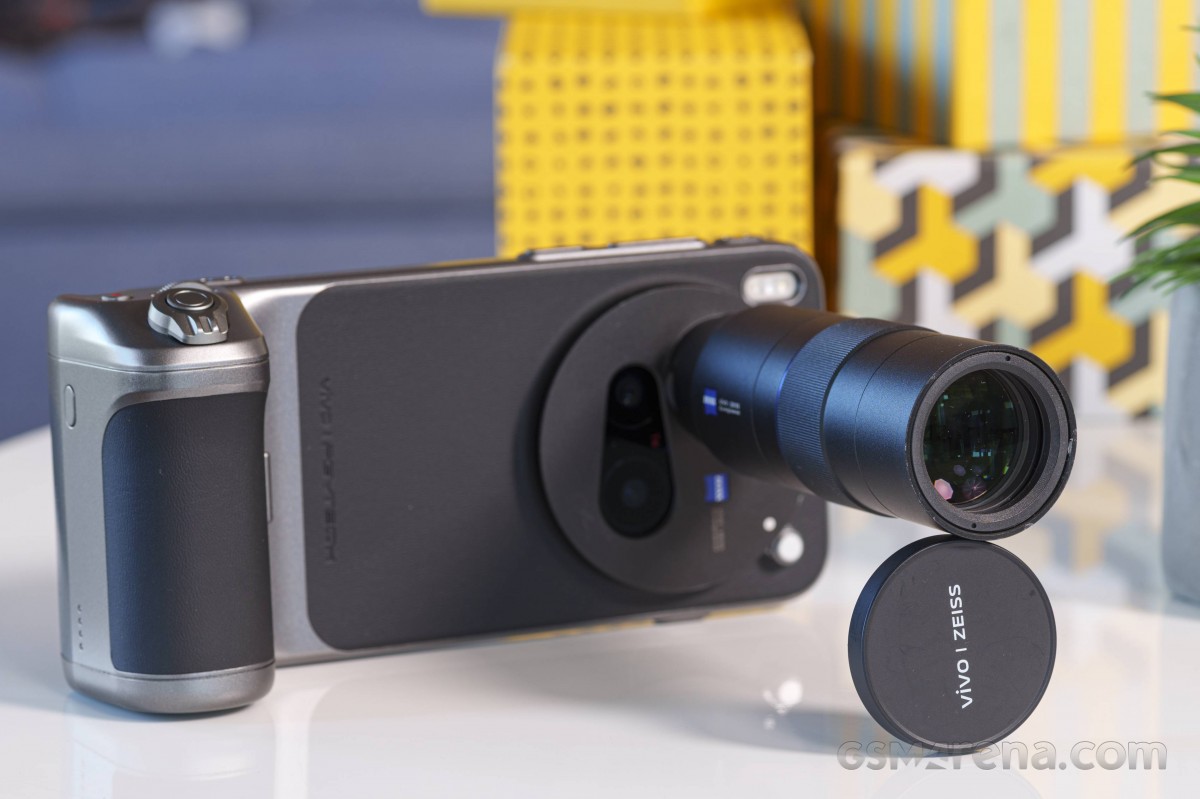
Something that has trickled down from the X200 Ultra to the X300 Pro (and even the X300 non-Pro too) is the capability to attach a telephoto extender. It’s a full kit of accessories, including a dedicated case with a bayonet mount for the lens, a battery grip, a neck strap, and a few extra rings. We’ll have a closer look at it on the next page.
Daylight photo quality
Main camera
We’ve come to love vivo’s default camera output and the X300 Pro isn’t giving us any reasons to feel otherwise. Its main camera’s daytime photos look great from afar and up close alike. Dynamic range and wide but there’s also excellent development at both ends of the tonal range. The auto white balance is dependable in outdoor and indoor scenarios, and the vivid colors are likeable without being too much. Detail is great too, with even random textures looking more natural than most other phones will give you.










Daylight samples, main camera (1x)
Skin tones are lifelike and easily likeable. Portrait mode adds a touch of extra blur to the already decent optical-level separation. We shot the Portrait mode samples in the Zeiss color style that’s slightly less contrasty and a touch warmer than the Photo mode rendition, but you can have the same tonal rendition in both modes if you opt out of the Zeiss profile.




Daylight samples, main camera (1x), Photo mode




Daylight samples, main camera (1x), Portrait mode, 24mm
The full-res 50MP samples are a notable improvement over last year’s model – they now do look like they have some extra detail in there as opposed to the X200 Pro’s notably soft output.








Daylight samples, main camera (1x), 50MP
The 2x shots are also very nicely detailed – the X200 Pro wasn’t as consistent at that level.











Daylight samples, main camera (2x)
The improvement extends to people shots at 2x, where you can now use the more sensible perspective of the 50-ish mm equivalent focal length without significant loss of quality. The 35mm zoom level is also a solid choice.




Daylight samples, main camera (2x), Photo mode




Daylight samples, main camera, Portrait mode, 50mm




Daylight samples, main camera, Portrait mode, 35mm
3.5x telephoto camera
The 85mm telephoto cameras of vivos in recent times have been highly regarded in the office, and the one on the X300 Pro is set to continue on the same path. We’re getting detailed shots with great contrast and vibrant colors. There’s hardly anything that’s not to like here.












Daylight samples, telephoto camera (3.5x)
People shots also look wonderful, taken on this camera. The perspective is flattering, there’s a nice level of natural subject separation and detail is excellent. Portrait mode will add its own share of background blur with some additional effects possible. A 135mm Portrait mode option is also available, for tighter framing from afar.




Daylight samples, telephoto camera (3.5x), Photo mode




Daylight samples, telephoto camera, Portrait mode, 85mm




Daylight samples, telephoto camera, Portrait mode, 135mm
Shooting in 50MP on the telephoto you might get a smidge more detail out of a scene in the right conditions (light and subject matter), but it’s not something we’d normally do. The 200MP mode, on the other hand, we’d entirely avoid.






Daylight samples, telephoto camera (3.5x), 50MP




Daylight samples, telephoto camera (3.5x), 200MP
On the other hand, shooting in ‘normal’ resolutions beyond the nominal 85mm focal length makes more sense. Detail is good at 7x – under most conditions it’s better than the 50MP 3.5x shots. It remains decent at 10x, albeit with extra sharpening.








Daylight samples, telephoto camera (7x)








Daylight samples, telephoto camera (10x)
Close-ups
Close-ups are one of the main strengths of the X300 Pro’s telephoto camera, its minimum focusing distance of around 14cm allowing for good magnification while also leaving you some room to work with. Detail is excellent, the out of focus backgrounds are typically nicely soft (unless grass/foliage, which can be a little busy).











Close-up samples, telephoto camera (3.5x)
The 7x zoom will get you tighter framing and more impressive magnification (or more comfortable subject distance) at the expense of some absolute pixel-level detail, but it can be the right tradeoff for some situations. We do like the 7x results too.








Close-up samples, telephoto camera (7x)
There’s the usual vivo Super macro mode which gives you a manual focusing option in the viewfinder, plus it can add some computational blur on top of the optical one.
Ultrawide camera
The X300 Pro’s ultrawide is doing a remarkable job outdoors in abundant light, outperforming what you’d expect from its sensor. It’s a major step up from the X200 Pro’s ultrawide, which is surprising, given that the hardware is unchanged on paper. The previous model was already great in terms of color and dynamic range at 0.6x and so too is the X300 Pro, only now things are noticeably sharper. A meaningful improvement then.










Daylight samples, ultrawide camera (0.6x)
The full-res images are also looking a lot better now than on the previous generation, though once again we’re not entirely sure there’s much reason to shoot in 50MP.








Daylight samples, ultrawide camera (0.6x), 50MP
Selfies
The front-facing camera is one of the more obvious upgrades this year, the 50MP AF-capable unit replacing the 32MP fixed-focus module of years past. It’s a most welcome development that lets you capture closeups of your face in sharp focus, as well as generally sharper images at arm’s length. Colors are great, dynamic range is nicely wide, detail is excellent in good light but does deteriorate in dimmer conditions.








Selfie samples
Low-light photo quality
Main camera
In the dark, the X300 Pro’s main camera does a great job too. It exposes well, and has wide dynamic range giving you well developed shadows while keeping highlights in check. Detail is excellent too. We’re not entirely sure about the phone’s rendition of amber light sources – it’s not so much that the white balance isn’t accurate, but rather saturation could be dialed down a couple of notches.








Low-light samples, main camera (1x)
At 2x, image quality isn’t exactly stellar. There are flashes of goodness (samples, 1, 3, 6), but oftentimes the images are too soft for our liking.








Low-light samples, main camera (2x)
3.5x Telephoto camera
You’ll enjoy the 3.5x telephoto results in the dark though, that’s for sure. At its native zoom level, it captures sharp images with great detail and dynamic range is once again excellent. The colors are a touch oversaturated here as well, but a little less so than on the main camera.










Low-light samples, telephoto camera (3.5x)
The 7x results aren’t as hot – up-close inspection reveals a general softness. They’re not unusable, but they’re not superb either.










Low-light samples, telephoto camera (7x)
Oddly enough, the 10x zoom level will get you noticeably sharper images across multiple scenarios – we’re speculating that there’s some sort of a magical AI-based algorithm that kicks in above a certain zoom level and the 10x images benefit from it, unlike the 7x ones. Or maybe the processing is optimized for the ‘named’ zoom levels you have shortcuts for in the viewfinder, so the 7x 170mm got left behind. Whatever it is, you should shoot predominantly at 3.5x and 10x, and try to avoid in-between zoom settings.










Low-light samples, telephoto camera (10x)
Ultrawide camera
The ultrawide camera’s detail levels are okay at night, without being impressive. Dynamic range is great, white balance is accurate and there’s only a touch of oversaturation in some scenes.








Low-light samples, ultrawide camera (0.6x)
Video quality
The X300 Pro has wide-ranging video recording capabilities. For starters, you get 4K30 and 4K60 on all four of its cameras – the three on the back, and the front-facing one. The main camera and the telephoto are also capable of 4K120, and the main one can do 8K30 at 1x and 2x. The Pro video mode unlocks numerous other framerates – 24fps, naturally, but also a variety of PAL options (25, 50, and 100fps).
The default codec is h.265 but you can switch to h.264. Dolby Vision capture is available in all quality settings on all cameras, except for 8K. Pro mode allows for Log recording with an optional real-time preview with a single preloaded LUT.
There is ‘regular’ video stabilization available in all resolutions and frame rate combos (including 4K120), and it can’t be disabled (not even in Pro mode). There’s also ‘Ultra stabilization’ which offers added stability but limits your resolution to 2.8K (still, at either 30fps or 60fps), and it works at 1x, 2x and 3.5x zoom levels, plus 10x.
You can check out the playlist below, which includes multiple video samples.
The main camera footage in 4K is very good at 30fps, with solid detail, albeit a little too heavily sharpened. The 60fps and 120fps modes are a touch softer, but still pretty good. Dynamic range and colors are easy to like, no complaints there. 2x clips are on the soft side. The telephoto is very good at 3.5x globally, but lackluster in terms of sharpness. At 10x things are already pretty soft, but the footage is also shaky in a weird jumpy way that makes it almost unusable. The ultrawide footage is what you’d expect – great color and dynamic range, alright detail.
The X300 Pro’s low-light videos are a little bit less exciting than what we’d like. The main camera’s footage has very good dynamic range and color rendition, but it’s softer than what you’d want from a phone at this level. The ultrawide’s clips, in turn, are particularly noisy, if otherwise not too bad. The telephoto is perhaps the best of them all, with wide dynamic range and good detail, even if it too is somewhat grainy.
Stabilization on the X300 Pro is superb. 4K30 clips shot handheld from a standing position from all three cameras look almost tripod-like, and pans are smooth too. Walking-induced shake on the main camera is expertly removed as well.