
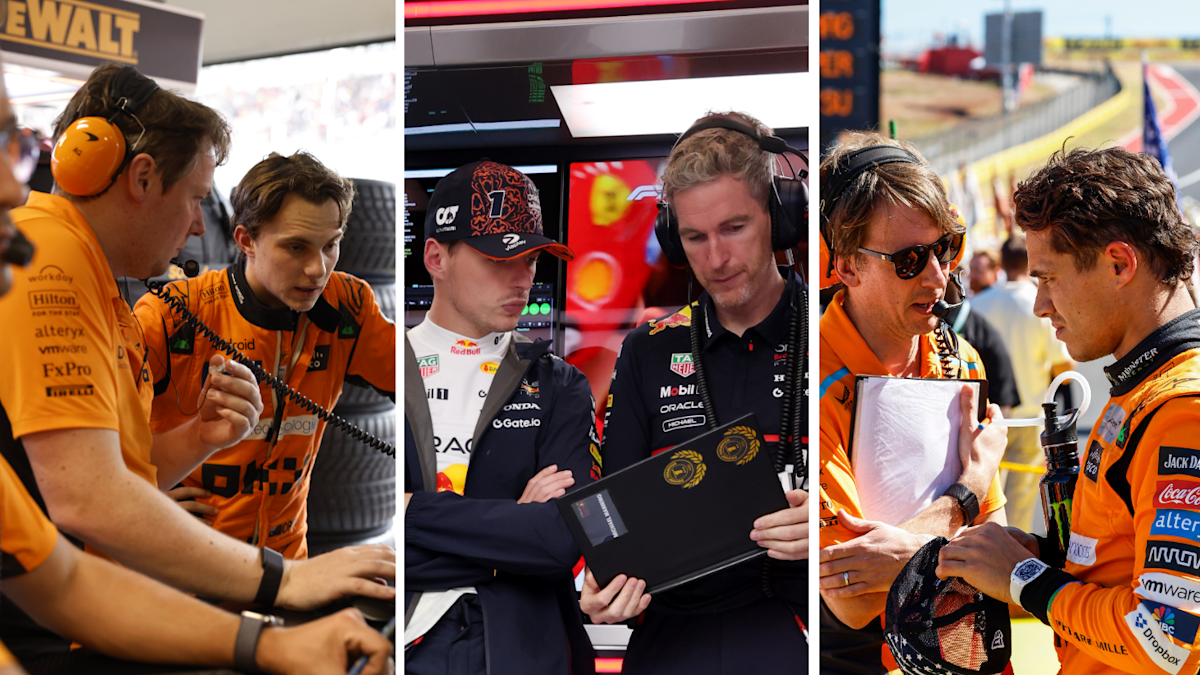
Oscar Piastri will be heading into Brazil with a vengeance to take back the championship lead from his teammate. His best chances may lay in the hands of his McLaren engineers.
Speaking to Wide World of Sports in an exclusive interview, Dr. Sammy Diasinos, Formula 1 aerodynamicist, said that whoever can combat the side-effects of a demanding season in the final few races, and extract the most out of their car’s power unit, will be the team taking home the drivers’ championship in 2025.
Dr. Diasinos is a highly experienced aerodynamicist who began his Formula 1 career at Toyota Racing in 2007.
FORM GUIDE: ‘Double-figure odds’ roughie tipped for major Oaks boilover
READ MORE: Uncle speaks on ‘awake’ Katoa’s condition after horror incident
READ MORE: Dragons overhaul continues as club great lands new role
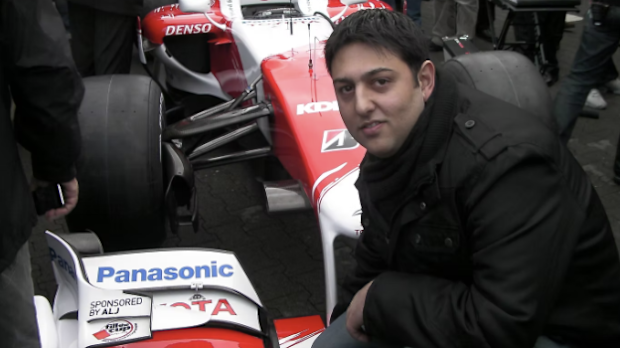
Dr. Sammy Diasinos worked for Toyota, Williams and Caterham on the F1 grid. Supplied
After Toyota’s departure from F1 in 2009, he then headed up the CFD development teams at Williams and Caterham until 2013, working extensively on front wing design and aerodynamics innovation.
“I think whoever manages their engine bank between now and the end of the year is going to be a big advantage because that’s really how much power you have to work with,” he admitted to WWOS.
“We haven’t seen many teams make tactical penalties to increase their allocation of components in their engine bank or their power unit bank.
“So hopefully that doesn’t push anyone out towards the next four races.
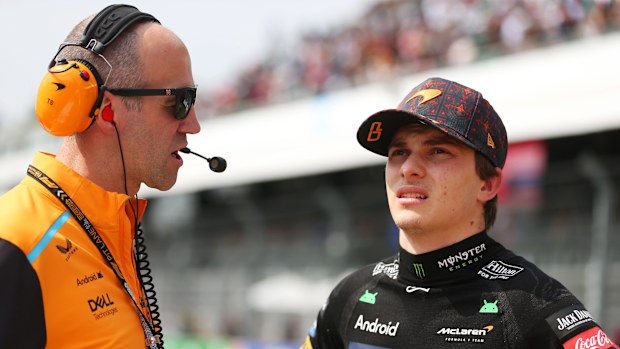
Oscar Piastri on the grid with an engineer during F1 Grand Prix of Mexico. LAT Images
“What everybody wants to see is a head-to-head fight between these three drivers as opposed to engine manufacturers deciding who becomes champion.”
Frantic season conclusion
The last four races are spread over less than a month; the 2025 season ending with the Las Vegas, Qatar and Abu Dhabi races on three back-to-back weekends.
Dr. Diasinos believes it will be the team that can survive the “gruelling” amount of stress placed on engineers to manage intercontinental travel and have the car set up for each track’s intricacies that will prevail.
This is alongside the drivers having to individually adapt to the driving style of each circuit with less than a week between, while also battling jetlag and the mental workload of the drivers’ championship battle.
“It is extremely gruelling. I think [that] now that we’ve gone to 24 races, we’ve seen a lot more than three races in a row…all the triple headers,” he revealed to Wide World of Sport.
“For me, the amazing thing is the amount of travel that has to be done within those three weeks as well.
“The Las Vegas round was the week before the Middle Eastern round, and that was drivers to get used to the new turbines and the new conditions when they arrive.
“And they’re going to be facing this again this year.
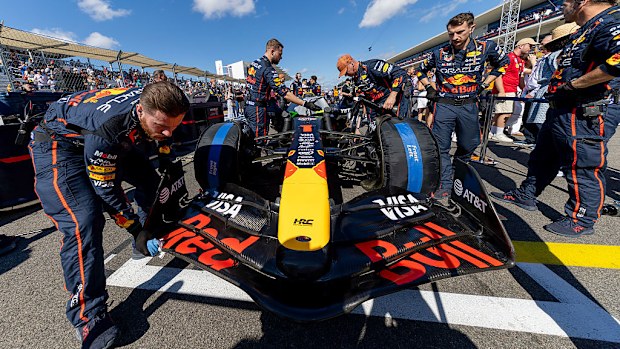
Red Bull mechanics on the grid at the United States Grand Prix. Icon Sportswire via Getty Images
“It’s just a one-week turnaround between Las Vegas and Qatar. So this is what makes them professional athletes. This is what they’ve been training for.”
Alongside the travelling staff, the factory will have a host of engineers working throughout the weekends to decipher data and what set-up changes will benefit the team.
Drivers and engineers have ongoing discussions throughout the year about the car and its development, each circuit a new challenge to minutely change the set-up to suit the corners and straights.
“Each of these circuits, the driver is definitely going to be instrumental in explaining to the engineer what it is that they’re required to improve the performance of the car,” Dr. Diasinos revealed.
“The head race engineer will also have a big group of engineers behind them, also analysing data and providing information on what can be done in order to improve the performance of the car as well.”
Engineering prowess to prevail
For the final four races, the theories have delved into Lando Norris’ successes at tracks with low grip and Piastri’s masterclasses at tracks with higher grip.
Dr. Diasinos gave an insight into the engineers’ thought process when arriving to a new track.
“So a track like Brazil and Abu Dhabi, they’ve got a lot of high-speed corners and medium-speed corners, which means that you’ve got a lot of benefit from having the downforce,” he said.
“Particularly, Brazil has a very short straight, and then if you compare Brazil’s straights with Las Vegas, Vegas has a lot of slow-speed corners where the aerodynamics can’t help you as much.
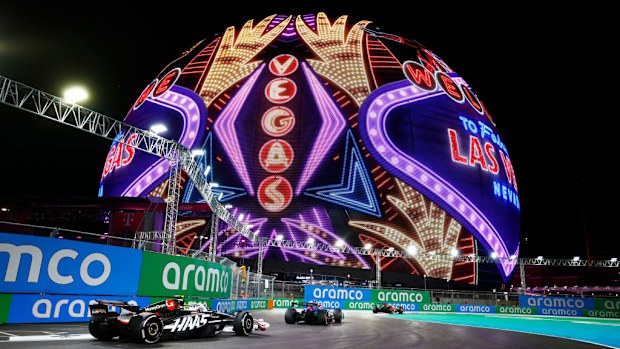
Cars race by the MSG Sphere during the Formula 1 Heineken Silver Las Vegas Grand Prix. Icon Sportswire via Getty Images
“[Las Vegas has] got a lot of long straights in between, where having a lot of downforce on the car means if you want to drive it, that would be a really big problem on those long straights.
“So that’s why, for me, the Las Vegas race is unique of the next four coming up, because of its nature of having long straights with short, tight corners in between them, which means it’s a slightly different demand on the car.
“So it’s the first thing to get right [for the engineers]. How much downforce do we run?
“The next thing is trying to understand how close to the ground these cars are, because the closer the car runs to the ground, the more efficient the downforce is going to be producing.
“There’s less comfort, there’s going to be less compliance in the car setup. And what that means is it’s much easier to make mistakes.
“It’s much easier for the driver to make an error that [means] you finish up within the two laps.
“So this is where you’ve got a decision to make, how aggressive are you going to be in your setup?
“Are you going to change the optimum and just trust yourself that you’re not going to make a mistake? Or are you going to make it a little bit easier to drive over a long distance?
“Then there’s decisions like how much braking is done at these tracks.”
Dr. Diasinos explains that Las Vegas is a “high-braking track” with drivers decelerating from top speeds of nearly 340km per hour into quick hairpin-like turns.
Engineers combat this by bringing a car with bigger brake pads to Vegas, while in Brazil, the unpredictable weather conditions are the biggest concern.
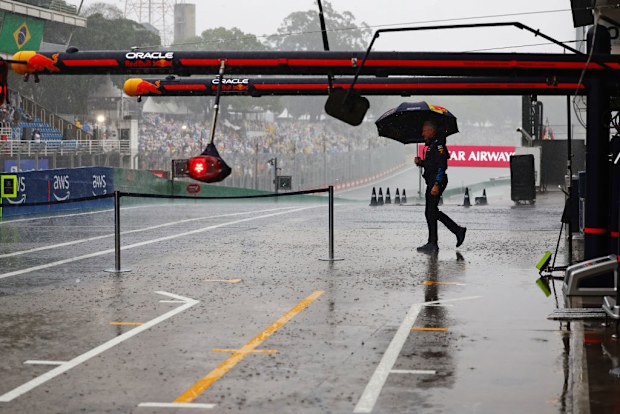
Rain falls outside the Oracle Red Bull Racing garage prior to qualifying ahead of the F1 Grand Prix of Brazil. Getty
“There’s so many little details like that, that the engineers will have determined a lot of these answers before they even look at the distance,” he admitted.
“The world is going to be fine-tuned and stay out of it, and then the weather can completely change what those setups are going to be as well.
“So if there’s a 30 per cent chance of rain for Brazil, if you look at historically, the number of affairs that have been handled in the rain in Sao Paulo.
“The moment it starts raining, a lot of the engineers’ analysis just goes out the window, because how much wet it is and how cold it is can really change what all those requirements are.”
Set for November 8-10, the FIA has outlined a high chance of thundery showers in Sao Paulo on Saturday morning for the sprint race.
The rain is forecast to decrease in the afternoon and for Sunday’s grand prix only a 30 per cent threat of rain is forecast.
Power unit wars
In 2025, only the Red Bull-owned teams are running Honda engines while Mercedes has eight cars on the grid through their works team, McLaren, Aston Martin and Williams all running the Mercedes power unit.
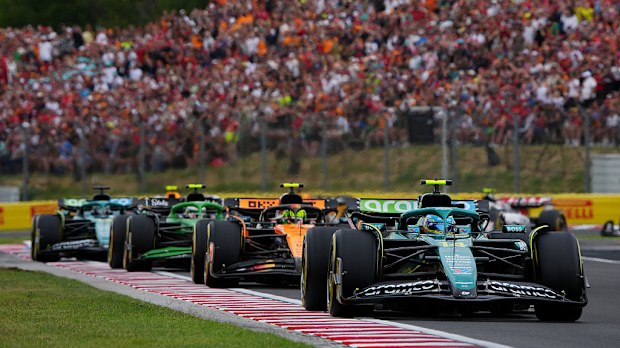
Aston Martin and McLaren run Mercedes PUs alongside Williams. Formula 1 via Getty Images
With double the amount of cars with Mercedes PU’s, Dr. Diasinos admitted that this would be helping the papaya team in their data extraction.
The ability to take data from other teams to understand how the power unit is faring in different conditions will be the difference in understanding the stress loads this late into the season, he said.
“The reason I think that’s an advantage is because they’re getting so much more data, getting so much more information about race and how to interpret them in terms of upcoming failures.
“That’s a little bit harder for Honda to do with having less cars going around.
“But what both engine companies are going to be doing is really meticulously logging the hours that all the components are doing in those engines.
“They would have stress-tested those engines. It would have allowed dynos to really get a good understanding of what the life of all these components are going to be.”
For teams, the 2026 regulations have taken up a huge amount of engineering development from staff, looking to put themselves in good steed for next year.
But the risk of overdeveloping in 2025 also poses a threat, the constructors’ champions, McLaren, already have a disadvantage with less time in the wind tunnel due to the sliding scale allowance.
“[This] doesn’t just impact the results that they’re going to get this year, but also the results they’re going to get next year,” said Dr. Diasinos.
“So there’s two things to consider; one is, given the final amount of time to develop, teams that win the Constructors Championship actually get less in the wind tunnel, they get less safety resources in the rest of the grid.
“So McLaren have to be very careful not to overdevelop this year’s car and to leave themselves underdeveloped for next year.
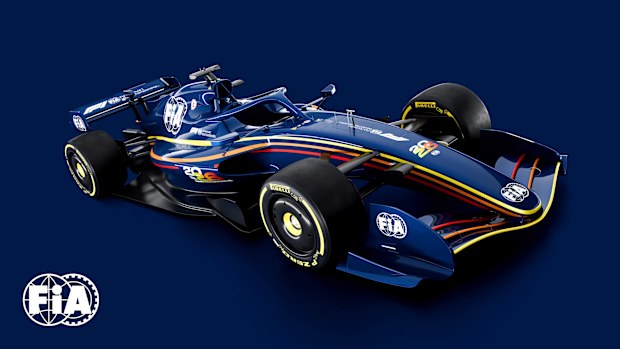
The 2026 challenger will be the most dynamic change the sport has seen in years. Formula 1
“The reason it’s more critical now than it would have been in previous years [is] because we’re seeing a big pool change coming on for 2026.
“This means that the cars that they’re going to be competing with next year are going to be very different to the cars that they’ve seen.
“It’s unlikely that a lot of development is going to happen.”