
With questions regarding such things as parkland and its impact on the city’s 30×30 protected land database, the planning committee of city council deferred a decision on allowing renewable energy generation as a land use
A proposed zoning and official plan allowance for renewable energy generation as a land use in Greater Sudbury was deferred during this week’s planning committee meeting to Feb. 8.
Capping a lengthy discussion on the matter, meeting chair and Ward 10 Coun. Fern Cormier expressed some frustration regarding the matter.
Council’s potential opposition to future renewable energy projects “doesn’t matter at the end of the day,” he said, since the province can ultimately push through whatever they want.
“There’s a lot of confusion about who’s in charge of what of this stuff and the impact it has, and I’m not discounting that because I share a lot of these same questions,” he said.
“We need to be careful as we’re doing this,” Cormier said, cautioning that the kind of blanket exclusions city council members were debating when it came to parkland and hydroelectric power generation are “not, in my opinion, how good planning works.”
Two presentations during the day’s public hearing contributed to the city council deferral, including one by Coalition for a Livable Sudbury chair Naomi Grant and another by fellow environmental advocate Linda Herron, who serves on Vermilion River Stewardship.
Grant said changes were needed to protect lands as part of the 30×30 protected land database effort, “and to protect our parkland, greenspaces, and sensitive ecological areas.”
“As written, the proposed framework unintentionally undermines Council’s 30×30 goals, and may harm the ecological and recreational value of our parks and greenspaces,” Grant wrote in her submission to city council. “Specifically, it opens the door for large-scale renewable energy projects in ecologically sensitive sites.”
For her part, Herron objected to the city’s proposed inclusion of hydroelectric power, pointing to its various adverse environmental impacts.
At issue is a proposal by city staff, which follows through on a December 2024 motion by Mayor Paul Lefebvre and would open the doors for renewable energy generation as a permitted land use in Greater Sudbury.
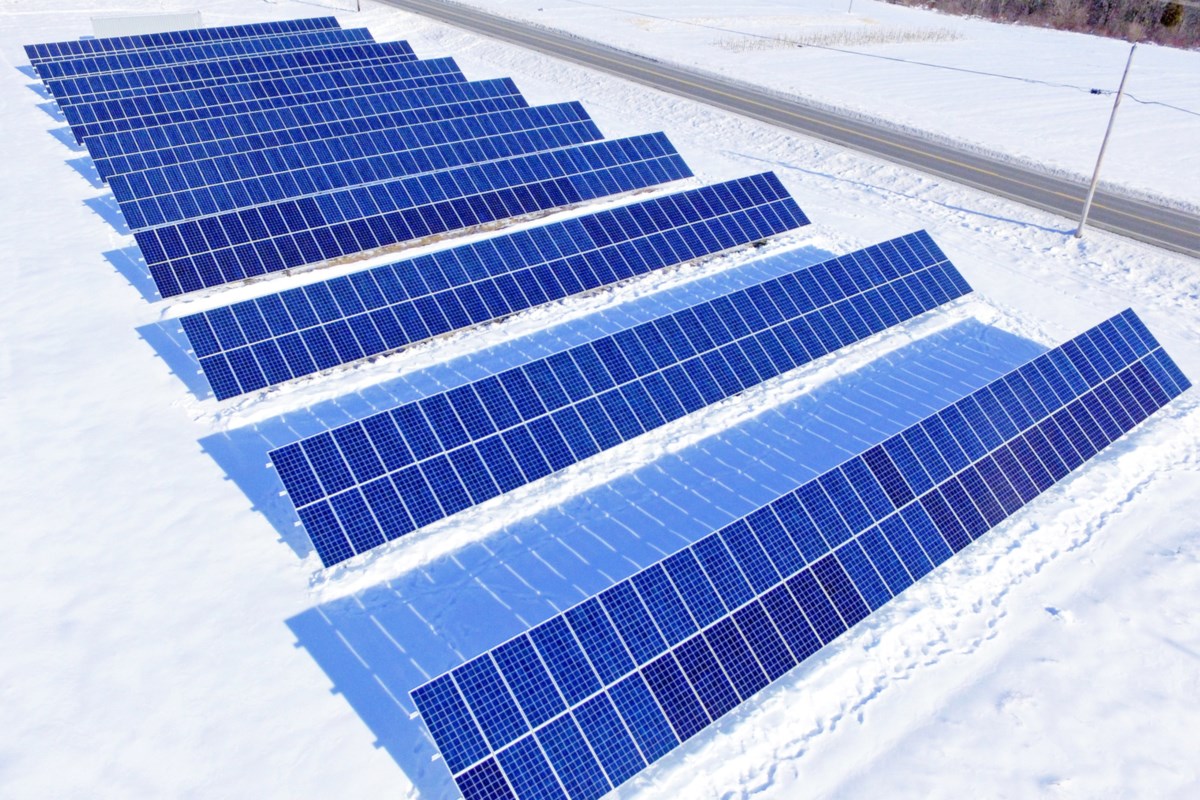
City senior planner Bailey Chabot walked city council members through the proposal this week, clarifying that it would allow for large-scale solar, wind, hydroelectric and geothermal land uses in Greater Sudbury via zoning and official plan amendments.
In the proposed zoning amendment, renewable energy generation will be permitted on any lot, in any zone, except for:
Settlement areas
Agricultural reserve lands
Environmental protection zones
Provincially significant wetlands
Central to city council members’ concerns is the allowance for renewable energy generation on parkland.
Although true, Chabot clarified, “Fundamentally, the city is not nor is it ever required to lease or sell lands if it is in conflict with some of its priorities or interests.”
While renewable energy generation would be permitted on parkland, it would be up to future votes of city council on a case-by-case basis whether to proceed, which would be accompanied by a public consultation process.
As for the city’s 30×30 commitments, this is in reference to a city commitment to join a broader global effort in conserving 30 per cent of lands by 2030, with Greater Sudbury’s obligation 109,000 hectares of land and water.
“It’s my understanding that we are committed to those parcels, and they will remain so and be flagged for future generations of council as 30/30 protected lands,” Ward 9 Coun. Deb McIntosh said.
The arguments against proposed allowances for renewable energy generation are environmental, but so, too, are the arguments in support of the proposal.
City Strategic and Environmental Planning manager Stephen Monet noted that the Greater Sudbury Community Energy and Emissions Plan (CEEP), which sets the city’s environmental goals, includes five goals regarding local clean energy generation.
Goal No. 13 is, “Install 10 MW of ground mount solar PV each year, starting in 2022.”
The city is “woefully behind that,” Monet said, clarifying that the city’s sole solar farm is a 10-megawatt facility on private land in Capreol, which the CEEP flags as “a template.”
In September, an application for a 15-megawatt solar power project at the Greater Sudbury Airport received preliminary support from city council. However, this application from the Independent Electricity System Operator still needs a proponent and final city approval to proceed.
With the renewable energy generation matter deferred to Feb. 9, it’s anticipated that more information will be presented to the public at that time and the planning committee will make their final decision. Included in their considerations will be additional context regarding park land, the 30×30 pledge and hydroelectric power.
Tyler Clarke covers city hall and political affairs for Sudbury.com.