

Listen to this article
Estimated 3 minutes
The audio version of this article is generated by text-to-speech, a technology based on artificial intelligence.
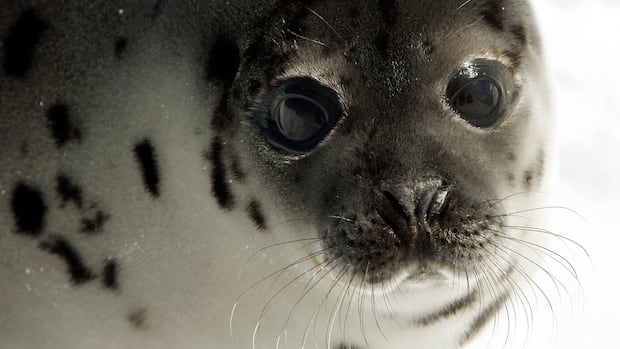
A new study from the Marine Institute says harp seals are playing a key role in the slowed recovery of cod stocks and other fish populations in Newfoundland and Labrador.
An estimated 4.4 million seals live in the region, according to the study. North American harp seals are the second-largest seal species in the world by population, and feast on fish like Atlantic cod, capelin and other groundfish.
The study, led by masters student Hannah West, found that the amount of fish that seals eat is consistently outpacing the amount of fish caught by harvesters. From 2018 to 2020, the animal’s consumption rate of cod, Greenland halibut and American plaice were 24 times higher than catch rates in those fisheries.
Tyler Eddy, a research scientist at Memorial University’s School of Fisheries and Marine Institute, told CBC News the study aimed to understand what harp seals eat, how it changed before and after the cod collapse in 1992, and whether or not diets change over the course of the year.
“Our estimates were that harp seals were eating about one-and-a-half times more fish than fisheries were harvesting in the mid-80s,” Eddy said Monday.
“And then if we look after the cod fishery collapsed and then the moratorium era … we found that harp seals were eating, you know, 20 times more in terms of weight or volume than the fisheries were harvesting.”
 Tyler Eddy is a research scientist at the MUN School of Fisheries and Marine Institute. He co-authored the study, and hopes harp seals can be included in future cod stock assessments. (Mark Cumby/CBC)
The study was completed using synthesized data from the Department of Fisheries and Oceans to create a numerical model of the food chain, Eddy said, along with collaboration with DFO to see inside the stomachs of harp seals.
Harp seals can be seen as an indicator species, meaning their diet can often indicate changes in the ecosystems they prey in.
As diets and fish populations shift, Eddy said, the seals need to be better accounted for in future stock assessments in the same way as capelin to help the stock better recover.
“They are a significant source of mortality on northern cod, and … it would be a kind of comprehensive modelling approach if we did include them in the stock assessment models,” he said.
“Understanding the productivity of the system is important … so I think including that in the stock assessments make sense.”
Download our free CBC News app to sign up for push alerts for CBC Newfoundland and Labrador. Sign up for our daily headlines newsletter here. Click here to visit our landing page.