

Listen to this article
Estimated 3 minutes
The audio version of this article is generated by text-to-speech, a technology based on artificial intelligence.
When Cleo Gratton told his family he would rather die than go back to Health Sciences North in Sudbury, he wasn’t exaggerating, his daughter says.
The 84-year-old from Chelmsford died last week of natural causes, shortly after he was approved for a medically assisted death, often known as MAID.
His daughter Lynn said he made that decision after a recent stay at the Sudbury hospital left him “beyond floored.”
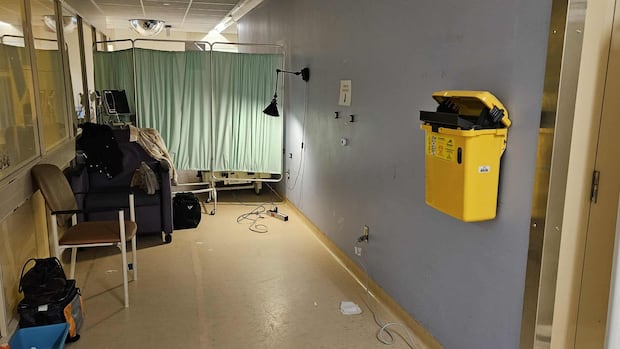
Gratton— who had a variety of health problems, including kidney failure and heart disease— spent a night in the emergency room before being moved to a bed in a hallway on the seventh floor.
“There were no lights, all the bulbs in that hallway had been completely removed. The only light we had was almost like a desk lamp that had been bolted to the wall,” Lynn said.
“Patients are passing by, nurses are going by, no privacy, no compassion, no dignity.”
She said watching nurses using headlamps to examine her dad’s feet was “beyond ridiculous.”
 The late Cleo Gratton of Chelmsford (seated) is flanked by his son Ricky and his daughter Lynn. (Submitted by Lynn Gratton )
“It was just one thing after another and it really opened our eyes to what’s going on in our hospitals,” she said.
‘My dad said: ‘Push, push, push for change. Make people aware of what’s going on. Open the discussion, bring it your MP, your MPP, keep going straight up.’”
Lynn said she found the doctors and nurses at Health Sciences North “amazing,” but wonders why they remain so overworked, considering how much the hospital is taking in from parking fees and its 50/50 lottery.
“Why are they still taking in patients if we have an overcrowding issue and they have no place to put these people?” she said.
Lynn has started a Facebook page where other patients and families can share the experiences they had at Health Sciences North.
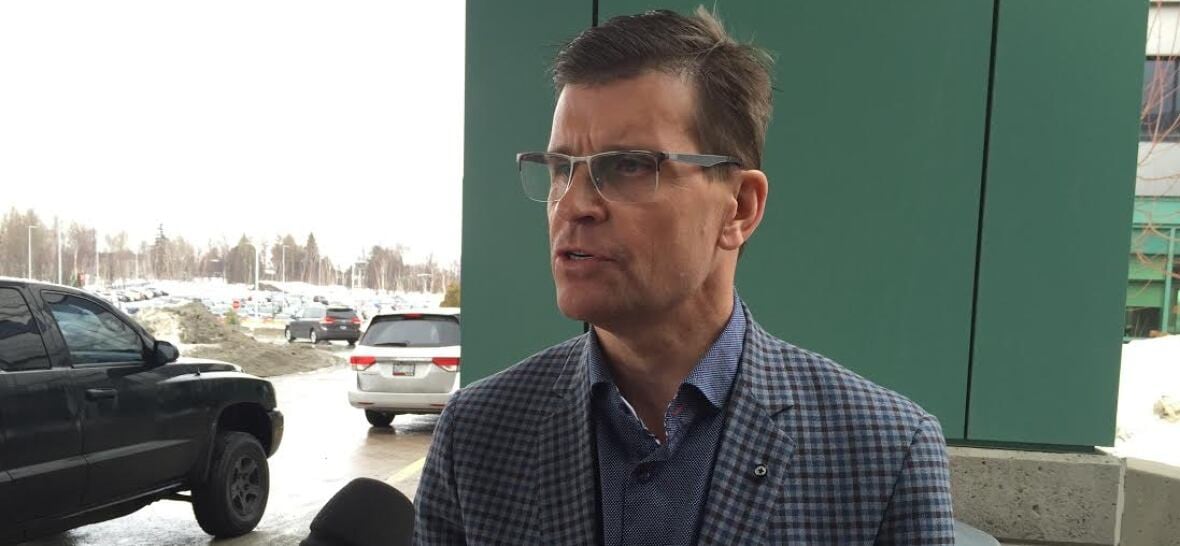 David McNeil is the CEO of the regional hospital in Sudbury, Health Sciences North. (Claude Gagnon/Radio-Canada)
David McNeil, president and CEO of Health Sciences North, said chronic overcrowding is an issue that many of the province’s hospitals are facing and said the hospital was “built too small” to manage patients from across the entire region.
He said about one-third of their patients come from outside Sudbury, and the population they serve in northeastern Ontario is both aging and growing.
“Today at Health Sciences North, like many days, we have about 100 patients in what we call unconventional bed spaces,” he said.
“We have 526 physical beds… and most days, we’re managing about 630 patients that are admitted to the hospital.”
In response to Gratton’s questions about the use of fundraising dollars, MacNeil said the 50/50 money pays for medical equipment that isn’t funded by the Onario government and parking revenue goes back into hospital infrastructure, including the maintaining of the parking lots.