

The UCI confirms it’s taking preemptive action as online gambling surges worldwide.

The UCI confirmed it’s tracking gambling platforms for irregular bets. (Photo: Gruber Images/Velo)
Updated November 10, 2025 02:25PM
As online betting surges to record levels, cycling’s governing body is stepping up its defenses.
The UCI confirmed to Velo that it is actively monitoring suspicious betting activity across gambling platforms as concerns rise over potential race-fixing and results manipulation in professional cycling.
Following a string of high-profile betting scandals in U.S. mainstream sports, cycling’s governing body is keeping close tabs on global betting platforms to detect any unusual patterns that could signal corruption or race-fixing.
“The UCI carries out regular monitoring of the risk of competition manipulation due to betting, in particular, by analyzing the bets put on offer by betting operators and any unusual betting patterns or sporting conduct,” the federation told Velo.
The confirmation follows Velo’s recent in-depth report outlining how cycling’s complex tactics, team dynamics, and growing visibility on online betting platforms make it uniquely vulnerable to manipulation.
With online gambling booming globally, billions of dollars are being wagered annually across sports.
Though cycling is considered to be a relatively small betting market, the vastness of cycling’s calendar and its broad mix of disciplines could make it open to manipulation and race-fixing.
With so much money sloshing around on legal online betting platforms as well as in illegal backroom betting halls, some wonder if cycling could deliver sport’s next big betting scandal.
Here’s what the UCI is doing to knock down that risk.
As big a threat as doping or technological fraud
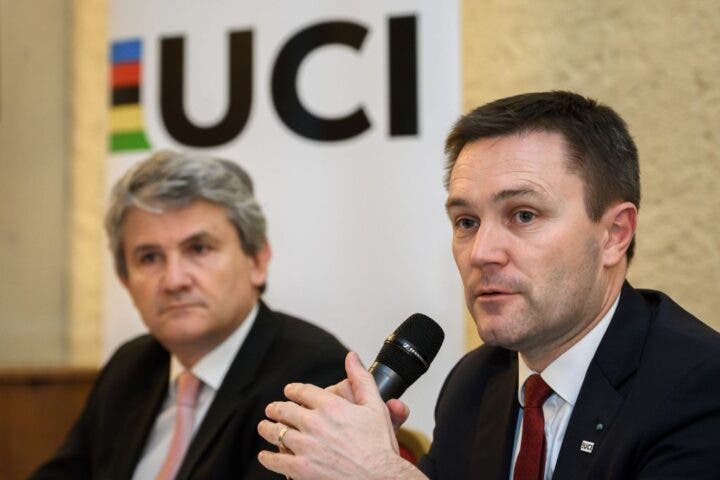 UCI president David Lappartient helped push through new rules on betting and gambling. (Photo: FABRICE COFFRINI/AFP via Getty Images)
The topic has gained urgency across all sports following the recent high-profile NBA betting scandal, where current and former players were accused of influencing games to sway betting outcomes.
A new scandal broke over the weekend involving two Major League Baseball pitchers who have been indicted by federal prosecutors for conspiring with bettors to rig individual pitches in games.
Both of these cases involved “spot” or “prop” bets — small, hard-to-detect wagers on specific in-game actions — the same type of bets experts warn could threaten cycling.
UCI president David Lappartient has long signaled gambling as one of the greatest risks to the sport’s integrity, alongside doping and technological fraud.
Insiders fear a race-fixing scandal centered around illicit gambling could crush cycling’s credibility.
Since taking office in 2017, he has put protecting cycling from betting-related manipulation as a top priority.
In 2019, he helped push through the first anti-gambling language in the UCI rulebook. Article 1.1.088 is a sweeping regulation that prohibits all license holders from any form of betting involvement.
“All license holders are forbidden to be involved, directly or indirectly, in the organization of bets on cycling events or to place any bets, themselves or through an intermediary, on events in which they could participate,” the rule reads.
Riders or others involved in any sort of conspiracy could face a two-year suspension and loss of their racing license for breaching the UCI’s ethics code.
Outside legal authorities would also be notified and face legal charges, similar to what’s happening in the NBA and MLB betting scandals.
UCI sharpens rules on sponsorship and betting
 The UCI has strengthened its stance against gambling and race-fixing. (Photo: DIRK WAEM/Belga/AFP via Getty Images)
The UCI’s move to streamline its gambling and betting rules is part of a larger push within the Olympic movement to provide a legal framework on how to deal with any perceived or real threats from illicit gambling.
The federation also published a detailed report on betting manipulation risks, aligning with the broader Olympic movement’s integrity standards in the lead-up to the 2024 Paris Games.
The UCI strictly bans “spot” and “head-to-head” bets, the two wager types insiders say are most easily abused, and has imposed tight limits on sponsorships from private betting operators.
State-run lotteries such as Belgium’s Lotto or Spain’s former ONCE foundation remain exceptions, as they fund teams but their platforms do not wager directly on race outcomes.
“The UCI Regulations also strictly govern the sponsorship of betting operators in cycling not authorizing the stakeholders of cycling to give any visibility to betting operators which organize bets that are susceptible of posing risk to the sport by creating an incentive of favoring the outcome of a bet rather than the competition (e.g. head-to-head bets, bets on junior races, spot bets, etc.),” a note read.
The cycling governing body urges anyone in the sport to report suspicious activity through UCI SpeakUp, its confidential whistleblower platform for cheating, abuse, and other ethical breaches.
So far, cycling has avoided its own “Pete Rose moment” — no rider or team official has been caught fixing results for betting gain — but the UCI is hoping deterrence will make people think twice.