
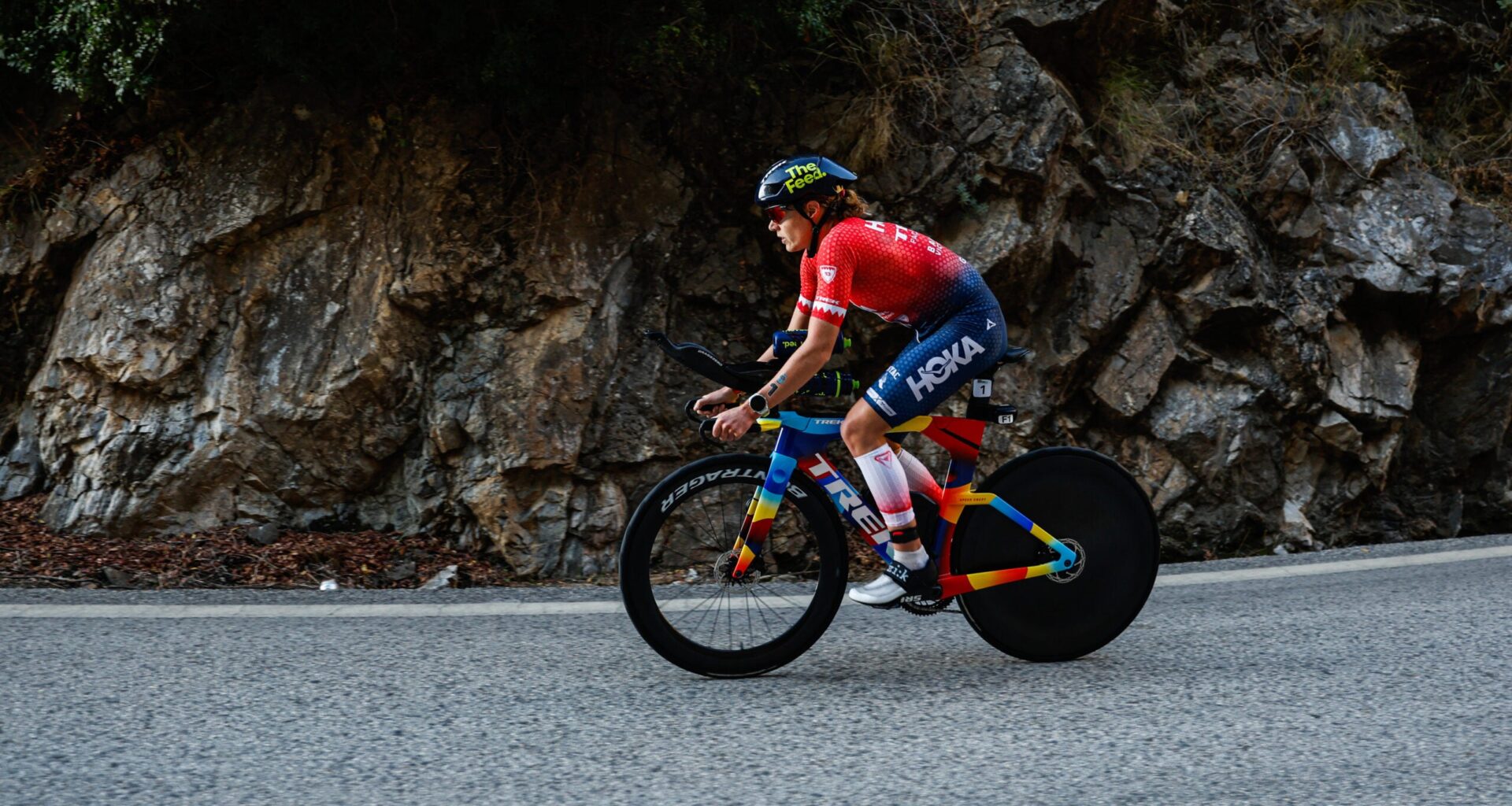
We look at the bikes ridden by the five fastest cyclists in both the women’s and men’s pro races at the 2025 70.3 World Championship in Marbella, Spain.
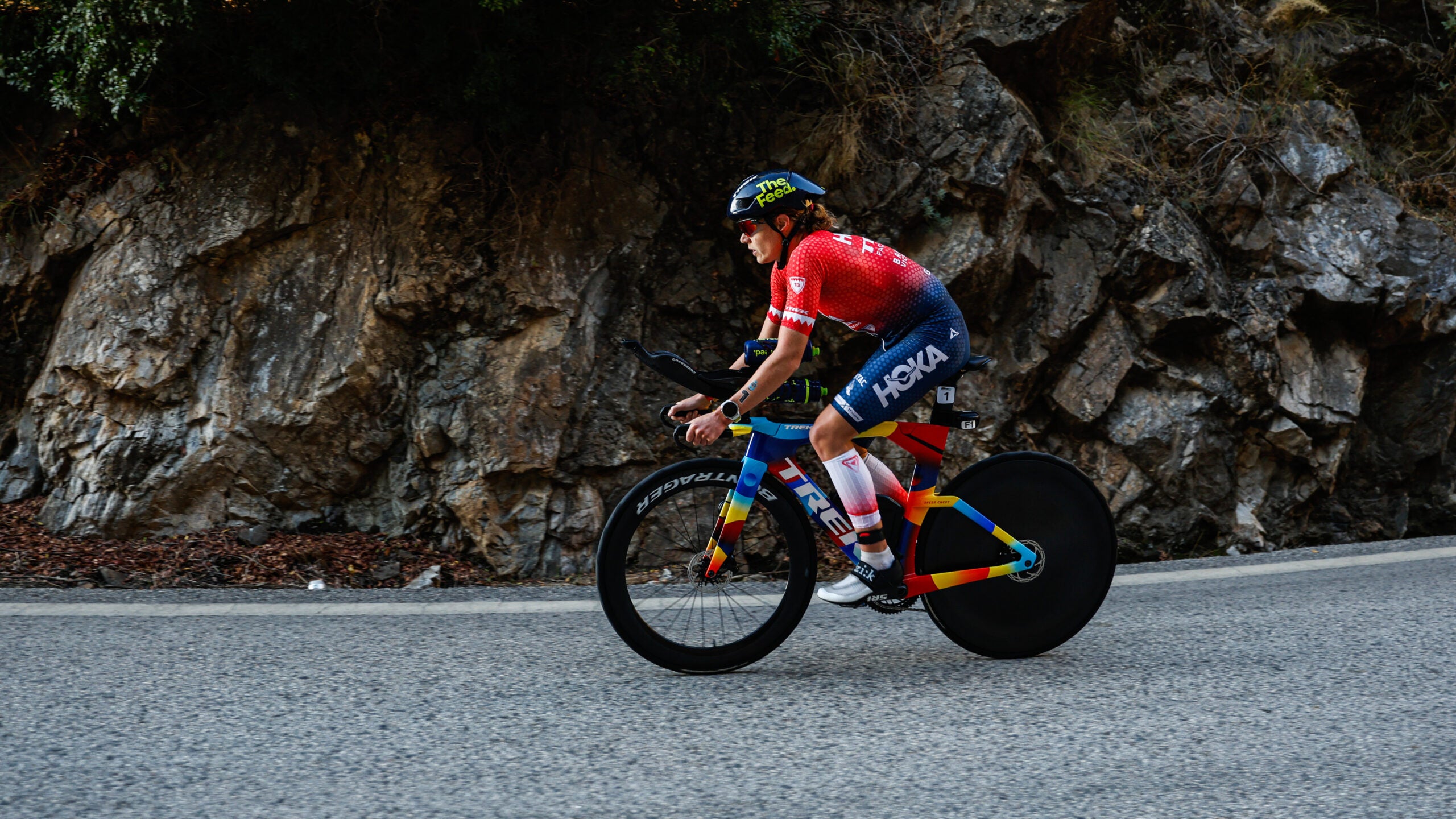
Marbella featured a challenging bike course. Here’s a look at the fastest bikes at the 2025 70.3 World Championship. (Photo: Ironman)
Published November 10, 2025 12:21PM
Fastest bikes at the 2025 70.3 World Championship
The 2025 Ironman 70.3 World Championships in Marbella delivered not just blistering performances, but also a showcase of the most advanced triathlon bikes and aero technology in the world. With rolling Mediterranean terrain and gusty coastal winds, athletes balanced aerodynamic optimization with handling stability, tire choice, and drivetrain efficiency.
Here’s a look at the top performers and the machines that carried them to the fastest bike splits of the day.
2025 70.3 World Championship: Top five fastest women’s bike splits
1. Taylor Knibb (USA) – 2:28:36 – 2nd 0verall
Bike: Trek Speed Concept SLR
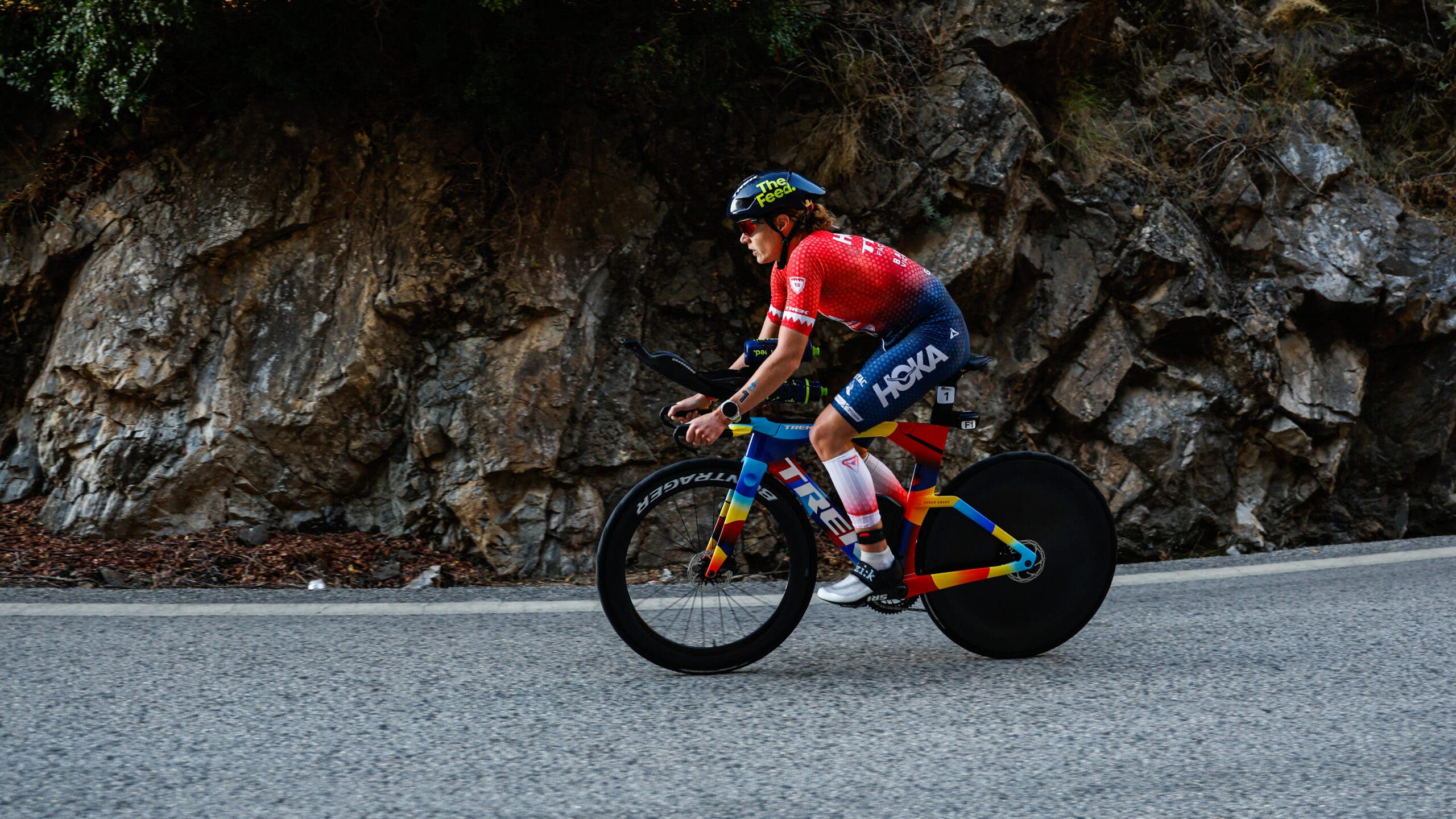 Taylor Knibb was the fastest female cyclist while riding a Trek Speed Concept SLR at the 2025 70.3 World Championship. (Photo: Ironman)
Knibb once again demonstrated her world-class power output aboard Trek’s flagship superbike. Her setup paired a Bontrager Aeolus 62 front wheel with an unbranded rear disc, wrapped in 28 mm Continental GP 5000 S TR tires for reduced rolling resistance and improved comfort on the Spanish roads. A Sram Red 2x drivetrain and Drag2Zero cockpit completed a configuration built for precision control and raw speed.
2. Lucy Charles-Barclay (GBR) – 2:29:41 – 1st overall
Bike: Cube Aerium C:68X
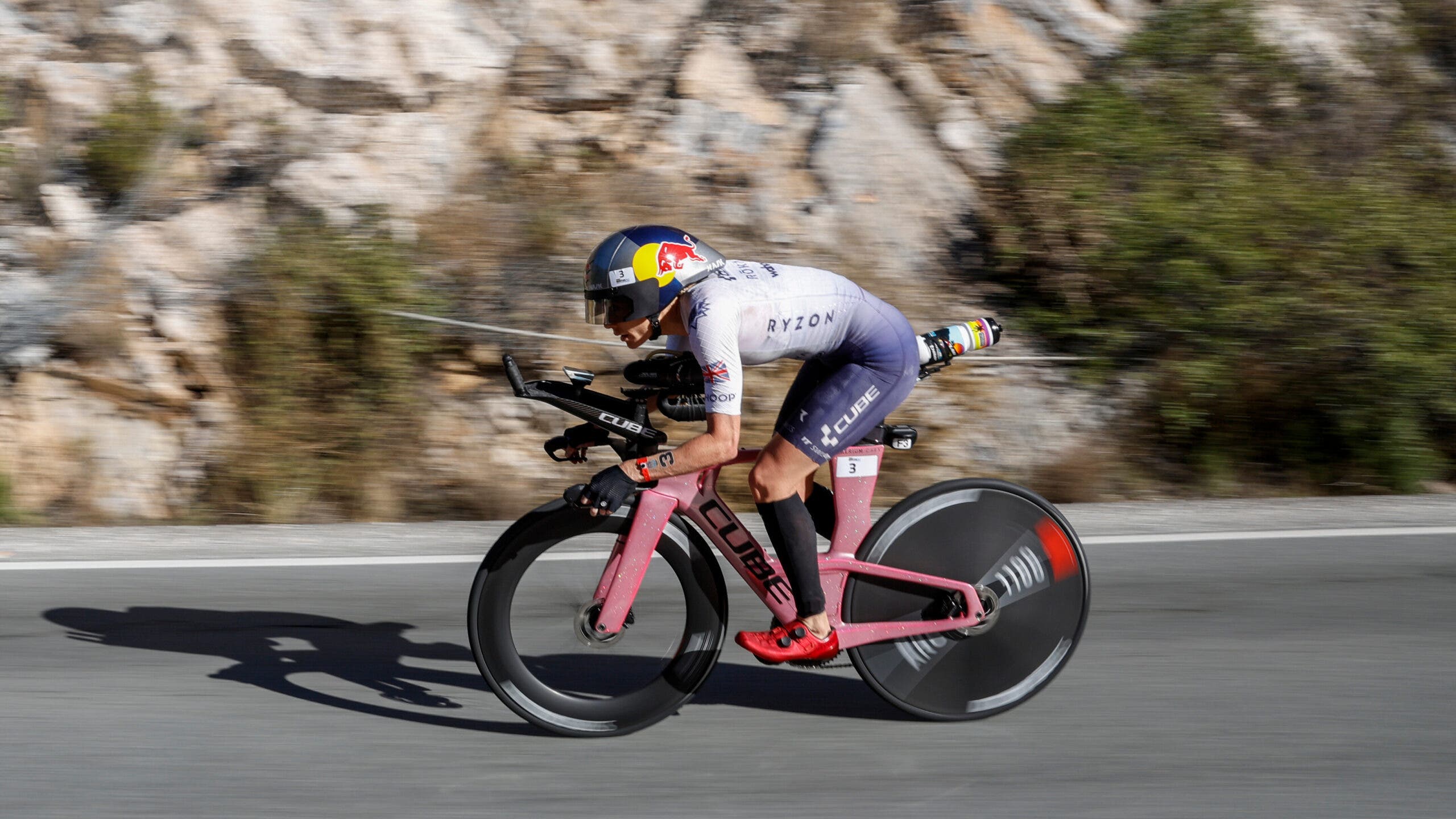 Lucy Charles-Barclay rode a Cube Aerium C:68X on her way to the second-fastest bike time and winning the 2025 Ironman 70.3 World Championship. (Photo: Pablo Blazquez Dominguez/Ironman)
Charles-Barclay piloted the same aerodynamic rig that carried her to world titles in Kona, but with a new pink paint job. Equipped with DT Swiss ARC 1100 85 front and rear disc wheels, and a Shimano Dura-Ace Di2 2x groupset, the setup emphasized smooth shifting and maximal efficiency at high speeds.
3. Sif Madsen (DEN) – 2:31:25 – 11th overall
Bike: Scott Plasma RC LTD HMX
Madsen’s minimalist setup favored balance and stability. Her Sram Red 2x drivetrain and smaller front wheel profile (62mm DT Swiss Arc 1100) paired with a rear disc indicated an aero approach optimized for variable crosswinds on the Marbella course.
4. Jess Learmonth (GBR) – 2:32:34 – 7th overall
Bike: Argon 18 E-119 Tri+
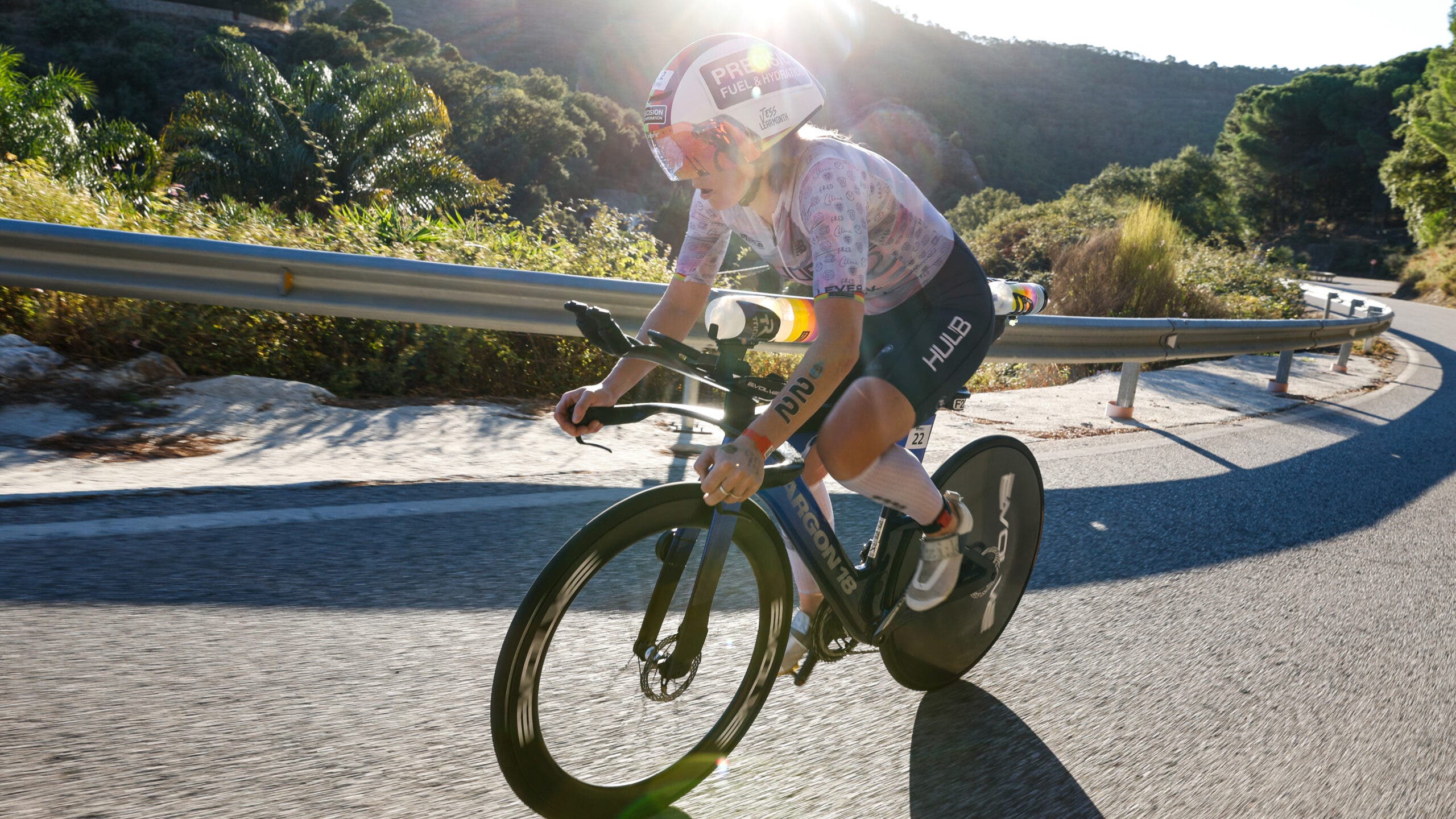 Jess Learmonth rides an Argon 18 E-119 Tri+ at the 2025 70.3 World Championship.
Learmonth went with a bold combination – Evolve Aero 79 mm Kronostok XW8 front and Asymmax rear disc – pairing speed with confident cornering on an Argon E-119 Tri+, a bike we haven’t seen much of at the front of the pro pack. Her Sram Red 2x setup remains a proven workhorse for consistent gear transitions under load.
5. Marjolaine Pierre (FRA) – 2:32:26 – 5th overall
Bike: Canyon Speedmax CFR
Twenty-four-year-old Pierre kept it classic and efficient with DT Swiss ARC 1100 65 front and rear disc, powered by Shimano Dura-Ace Di2 2x. The Speedmax’s integrated hydration and storage systems once again proved their worth on the world stage, helping establish that Pierre is the real deal with a very bright future.
2025 70.3 World Championship: Top five fastest men’s bike splits
1. Rico Bogen (GER) – 2:08:54 – 5th overall
Bike: Canyon Speedmax CFR
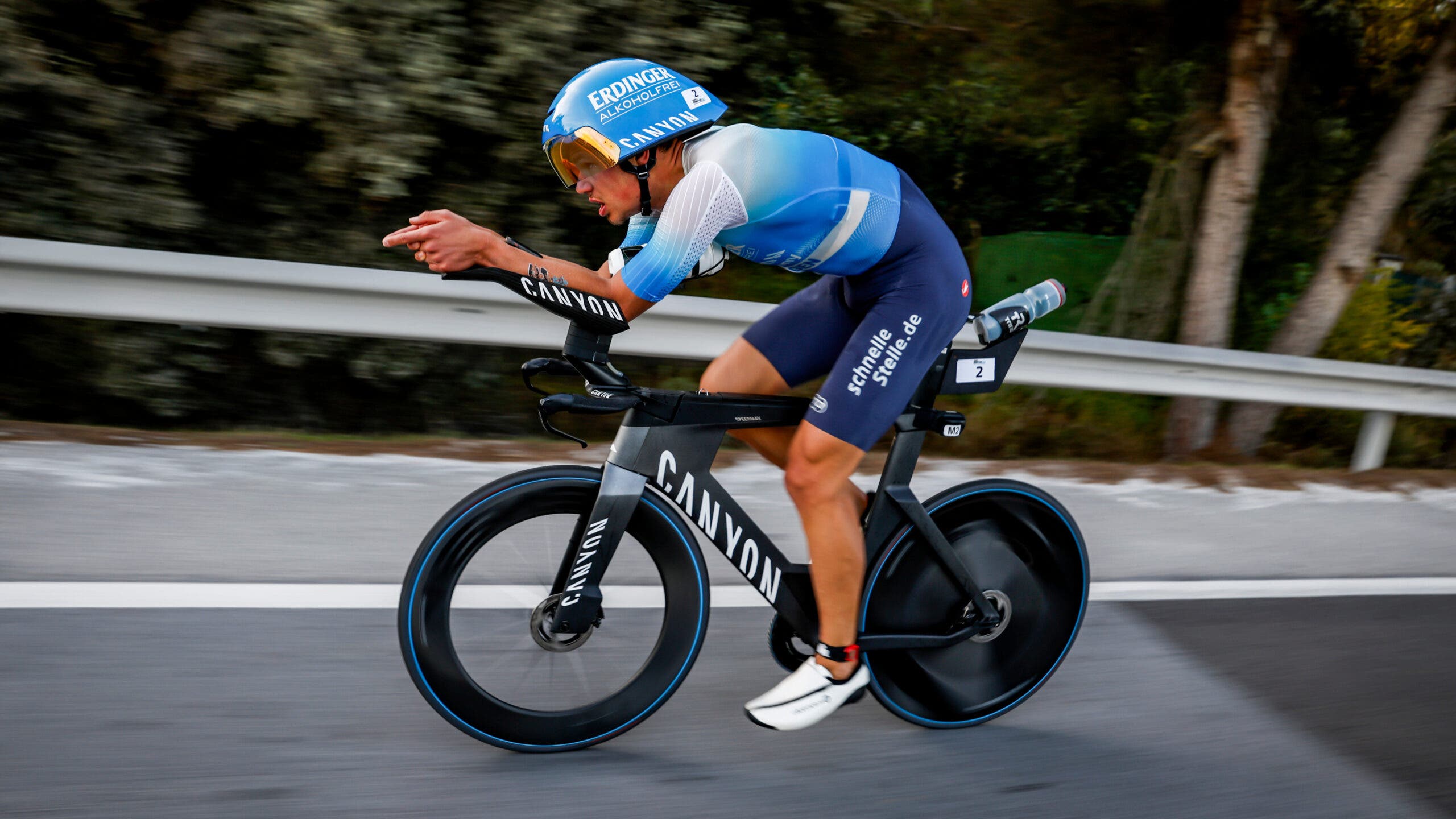 Rico Bogen posted the fastest bike split at the 2025 70.3 World Championship riding a Canyon Speedmax CFR. (Photo: Ironman)
The 2023 world champion brought German precision to Spain with an 85mm DT Swiss front wheel and rear disc, driven by Shimano Dura-Ace Di2 2x. His balance of power and poise kept him near the front of the race from start to finish.
2. Mathis Margirier (FRA) – 2:09:09 – 15th overall
Bike: Cervélo P5
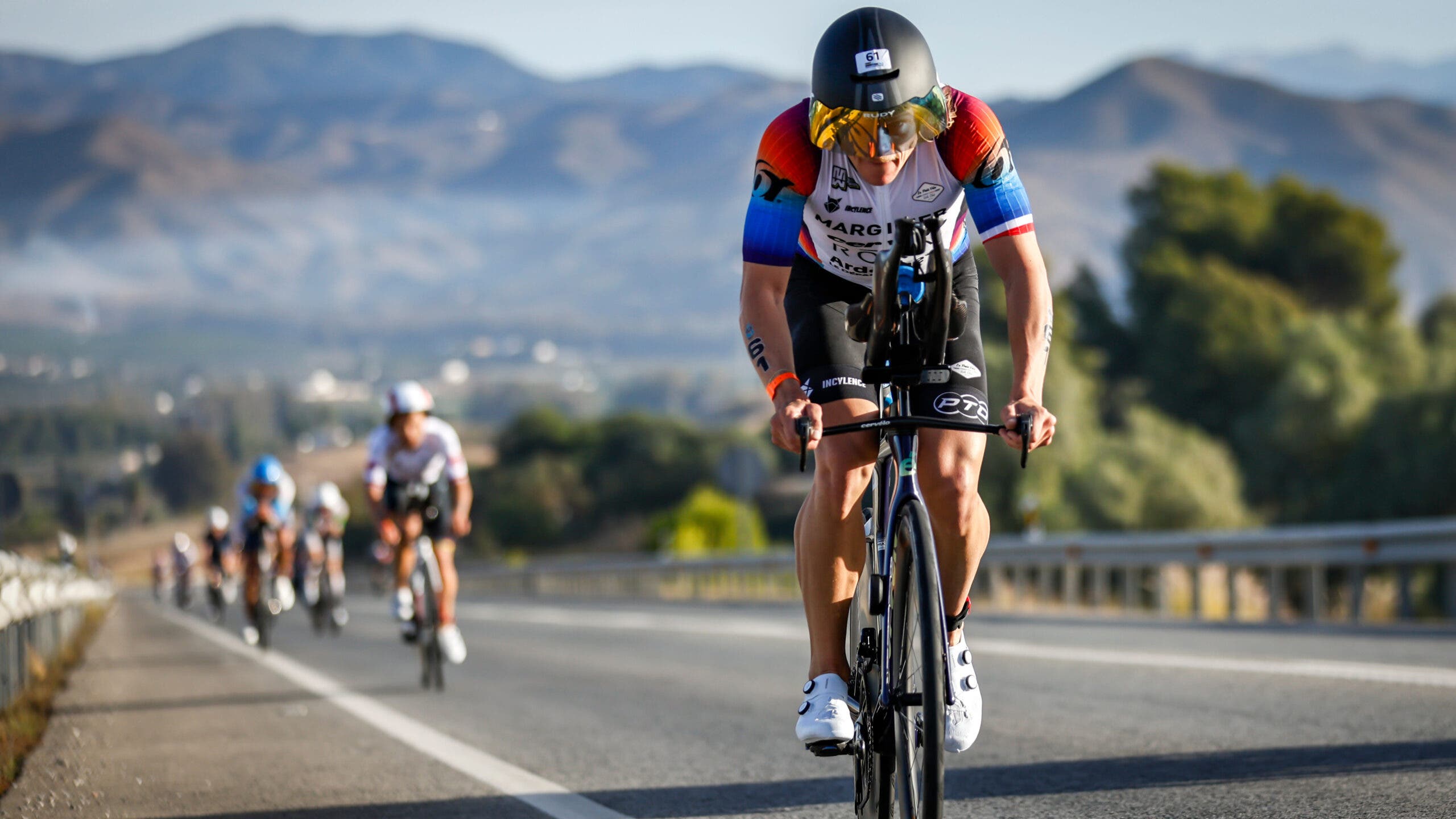 Mathis Margirier rode a Cervélo P5 at the 2025 70.3 World Championship. (Photo: Ironman)
Margirier’s Cervélo featured Reserve Wheels’ 77mm Turbulent Aero front and Infinity rear disc, paired with Sram Red 2x. The unique wheel choice reflects a growing shift toward boundary-layer-controlled aero rims designed for managing real-world turbulence outside of the wind tunnel.
3. Kristian Blummenfelt (NOR) – 2:09:12 – 2nd overall
Bike: Cadex Tri
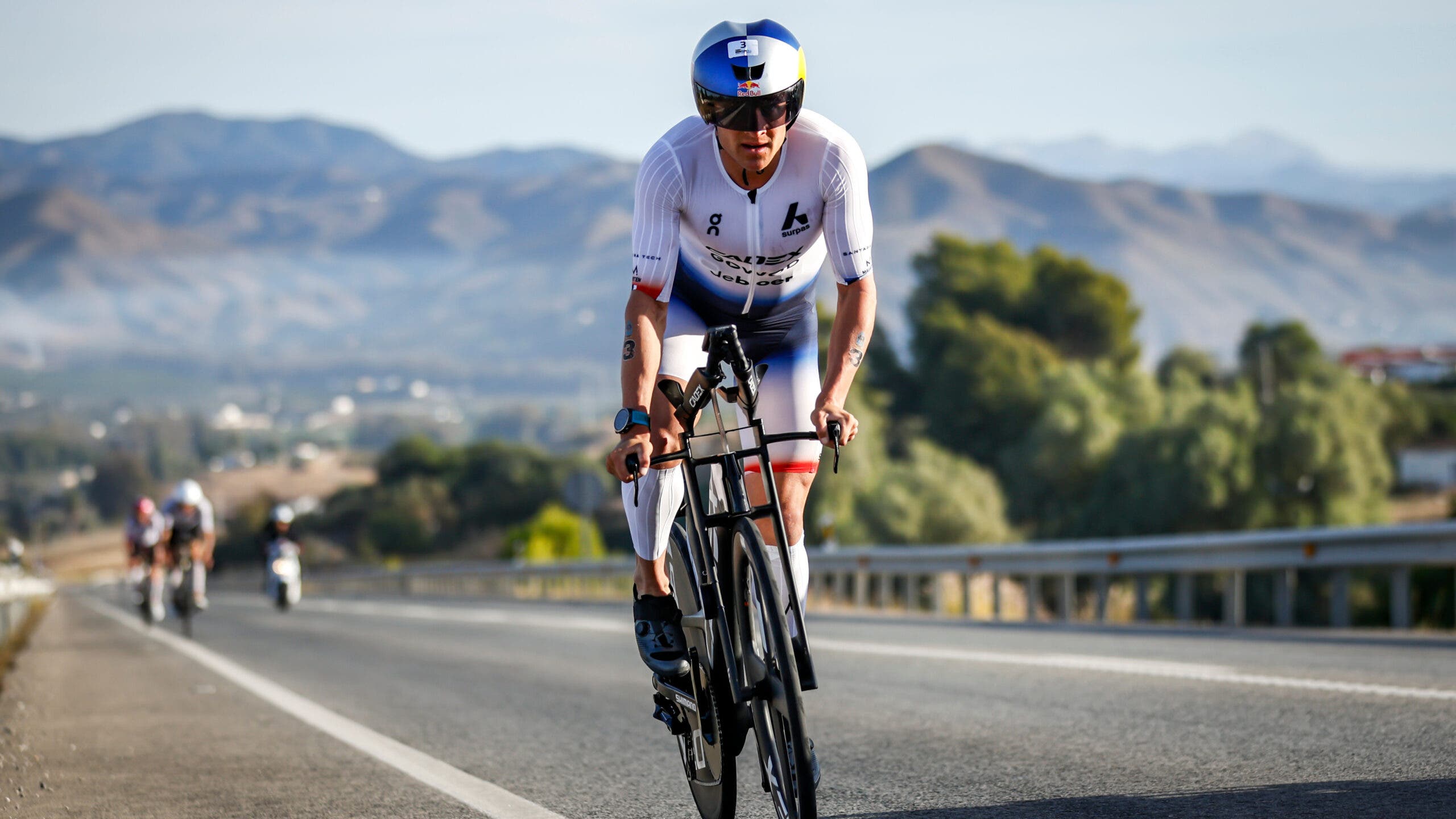 Kristian Blummenfelt rode a Cadex Tri at the 2025 70.3 World Championship, where he took second place. (Photo: Ironman)
Blummenfelt continues to push prototype tech and fight for world titles with his Cadex Aero four-spoke front and Cadex Max Aero rear disc. The Shimano Dura-Ace Di2 2x drivetrain and the bike’s integrated front-end represent the next evolution of Cadex’s performance platform.
4. Magnus Ditlev (DNK) – 2:09:23 – 6th overall
Bike: Scott Plasma RC LTD HMX (Prototype Unpainted)
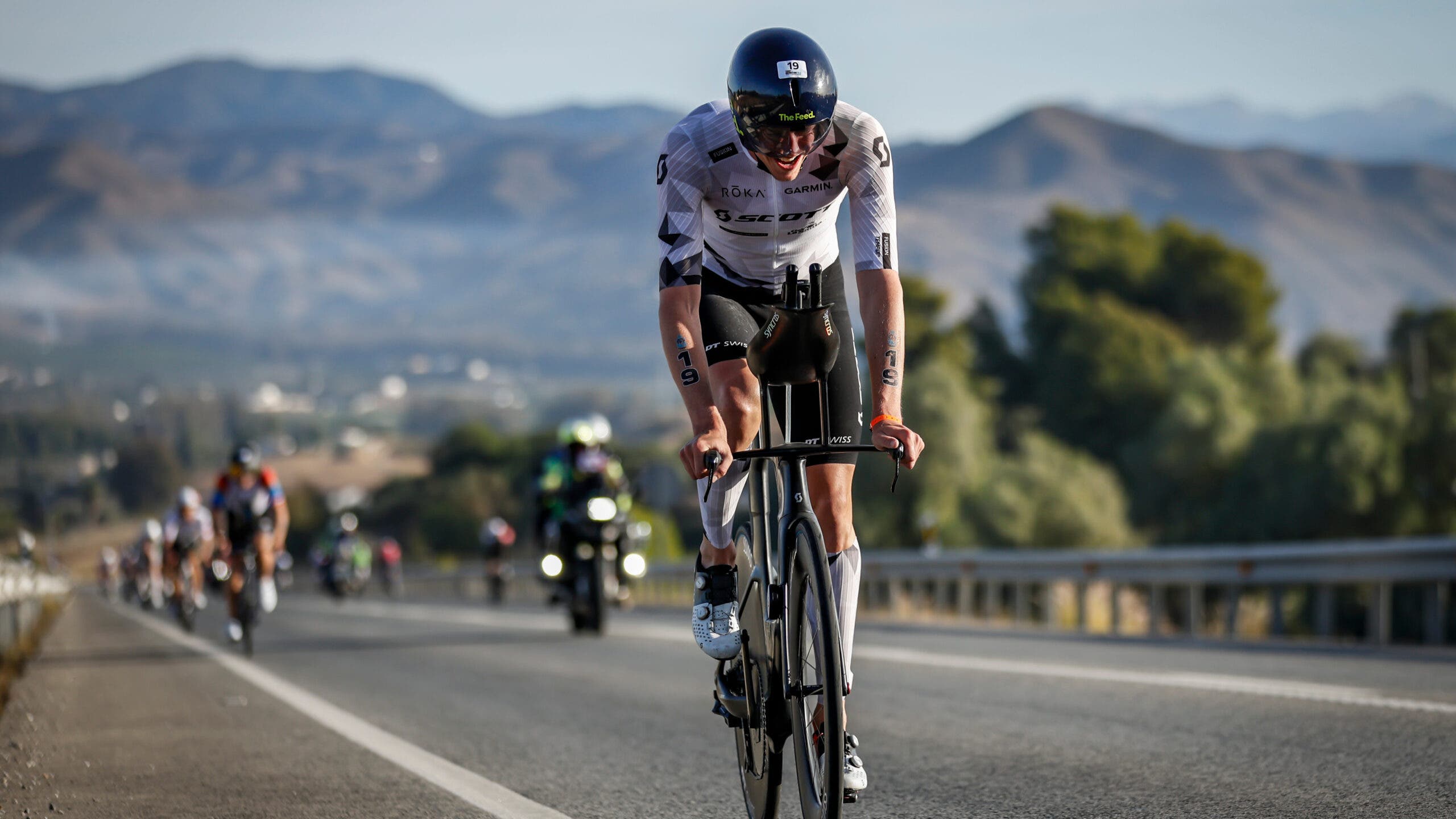 Magnus Ditlev rode a Scott Plasma RC LTD HMX Prototype at the 2025 Ironman 70.3 World Championship. (Photo: Ironman)
Running another experimental and custom 1x Dura-Ace Di2 drivetrain, Ditlev trimmed weight and reduced drag while maintaining top-end torque. His DT Swiss Arc 1100 85 front/rear disc pairing proved brutally efficient on Marbella’s long false flats, and yet he was able to efficiently climb with the limited gear ratio in the 1x drivetrain.
5. Jelle Geens (BEL) – 2:09:38 – 1st overall
Bike: Ridley Triton FAST
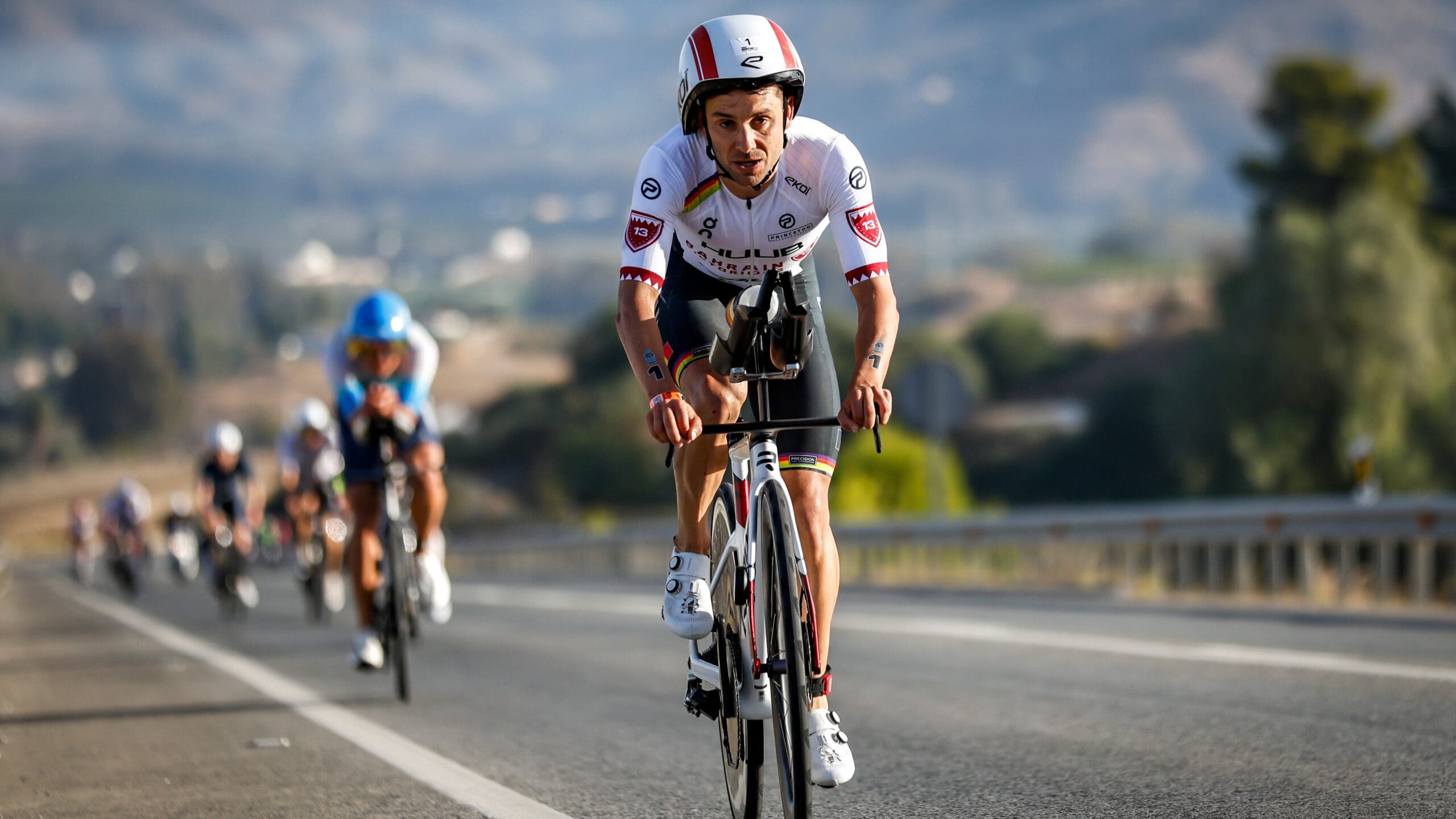 Jelle Geens rode a Ridley Triton FAST on his way to winning the 2025 70.3 World Championship. (Photo: Ironman)
The back-to-back men’s world champion piloted a bold 1x Sram Red setup with a 58T chainring, feeding power into Princeton Carbon Works Wave 6560 front and Blur rear disc wheels. Despite having a crash early in the race, Geens still managed a top-five bike split on a rarely seen Belgian-made Ridley Triton FAST, proving his stellar riding ability. Belgian engineering is certainly at its finest when powering a Belgian two-time world champion with a design that is radical, aggressive, and fast.
Championship season recap – Top tech trends of 2025
1x drivetrains lose momentum: Both Ditlev and Geens showed that well-executed 1x systems can rival or even surpass 2x setups on undulating terrain, but most of the top cyclists opted for the range and small step size of the 2x systems on the hilly Marbella course.
Front wheel depths hover at 85 mm: Most athletes opted for 62–85 mm fronts paired with discs – a sweet spot between crosswind control and aero efficiency.
Tire widths increase: 28 mm GP 5000 S TRs and similar sizes are now the norm, combining lower rolling resistance with better comfort and grip.
Integration is everything: Storage, hydration, and cable routing continue to define top-tier frames.
70.3 World Championship – The tech takeaways
Marbella’s mix of climbs, coastal winds, and fast descents rewarded athletes who balanced aerodynamics with control and reliability. The dominance of integrated cockpits underscores the arms race for aero, but the standout stories came from the details – wheel choice, gearing innovation, and rider integration.
The pursuit of speed never slows. And as this year’s championship proved once again, the fastest bike is the one perfectly matched to its rider.
70.3 World Championship drivetrain deep dive: 1x vs. 2x, Sram vs. Shimano
The 2025 World Championship revealed a subtle-but-significant evolution in drivetrain preferences among elite pros – the ongoing tug-of-war between simplicity and precision, between Sram’s wireless 1x innovation and Shimano’s mechanical perfectionism in 2x systems.
1x vs. 2x: A tectonic shift?
Of the 10 fastest riders (five men, five women), two men – Magnus Ditlev and Jelle Geens – opted for 1x setups, while every other athlete ran 2x. That’s 20% adoption at the elite level, way lower than last year’s 60% rate in New Zealand.
The rationale is clear: On hilly terrain like Marbella, a 1x drivetrain saves weight, reduces frontal drag, and simplifies decision making, but it comes at a cost of either gear range or gear step size. The Marbella course clearly pointed toward a trend in 2x versatility.
Two 1x standouts explained:
Magnus Ditlev ran a Shimano Dura-Ace Di2 1× with a large single chainring, a setup designed around his 350+ watt average power and steady cadence.
Jelle Geens pushed the concept further with a Sram Red 1x and an aggressive 58T chainring, signaling absolute confidence in gear range and mechanical efficiency.
The tradeoff? Less versatility for climbing and cadence finesse. Riders who favor micro-cadence adjustments on variable grades – like Knibb, Charles-Barclay, and Blummenfelt – continue to choose 2x for smoother transitions and tighter ratios.
Sram vs. Shimano: The brand battle continues
Sram: Five athletes
Shimano: Five athletes
It’s an even split – but how they’re used tells a deeper story.
Sram dominates the women’s field, powering three of the top five bikes (Knibb, Madsen, and Learmonth). The appeal lies in wireless setup and 10t small cog for increased range.
Shimano holds ground through consistency and legacy with precision front derailleur shifting. The Dura-Ace Di2 platform remains unmatched for ultra-reliable shifting under load and chainline stability on 2x configurations.
The verdict
The data points to a transitional moment in triathlon tech:
Sram continues to drive innovation in wireless and 1x simplicity.
Shimano maintains its dominance in refined 2x precision and power transfer.
Expect 1x adoption to rise further as riders like Ditlev and Geens validate its real-world performance even on hilly, technical courses.
In short, 2025 showed that drivetrain choice is no longer about brand loyalty (however, sponsorship is also a part of the equation) – it’s about matching the athlete’s physiology and terrain profile.