
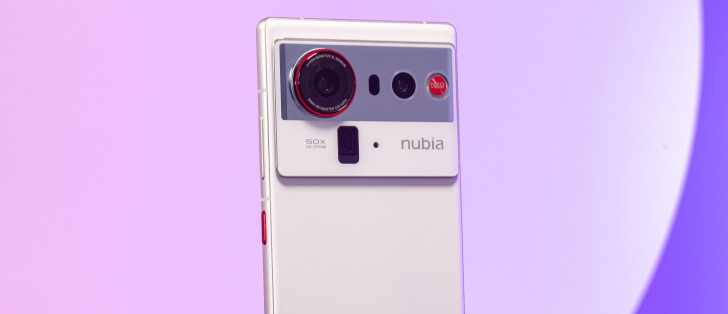
Large-sensor ultrawide, main and tele same as before
There’s a bit of a back and forth in the nubia camera system from generation to generation, and the Z80 Ultra moves back to the ultrawide camera of the Z60 Ultra that it decided to replace with a different one on the next two Ultras (Z70 and Z70S). The main camera – a 35mm staple of the brand, and the telephoto – an 85mm unit (but really 70mm), remain unchanged.
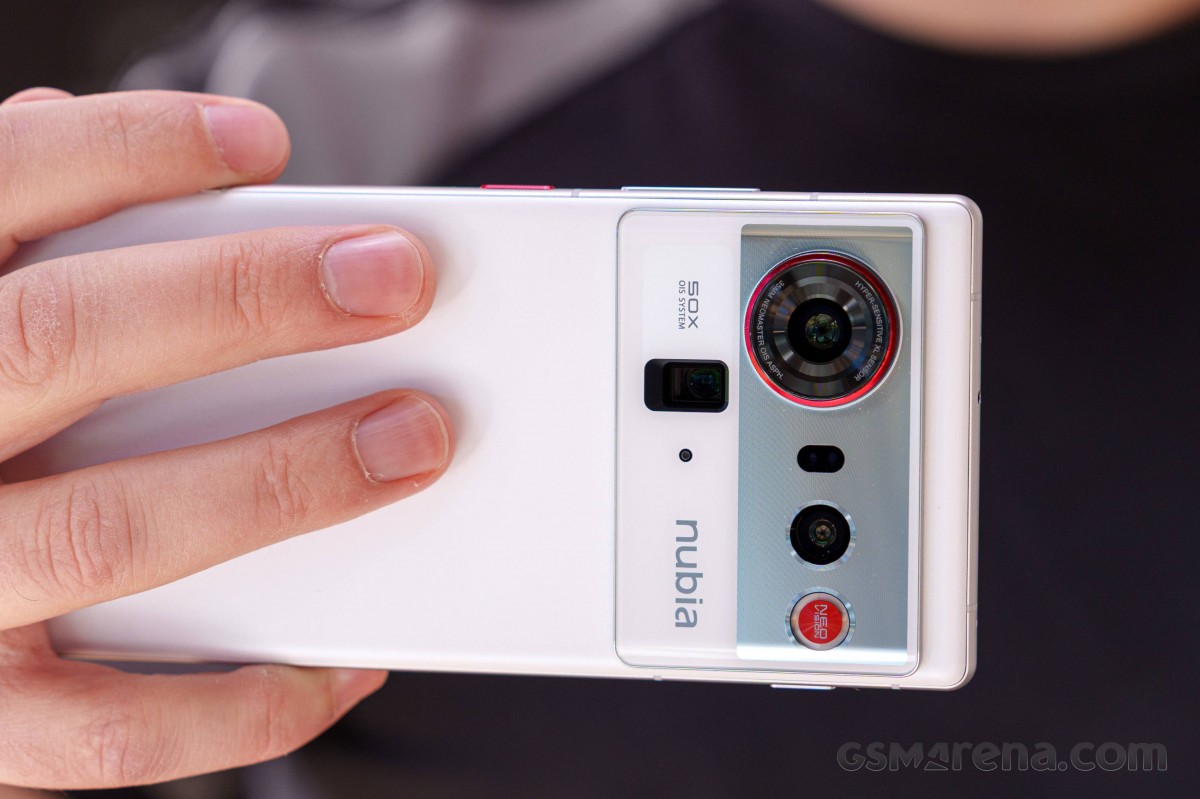
The main camera is based on the OmniVision OV50H sensor – a pretty large 1/1.3″ 50MP imager. The 35mm equivalent lens has an f/1.7 aperture and it’s stabilized.
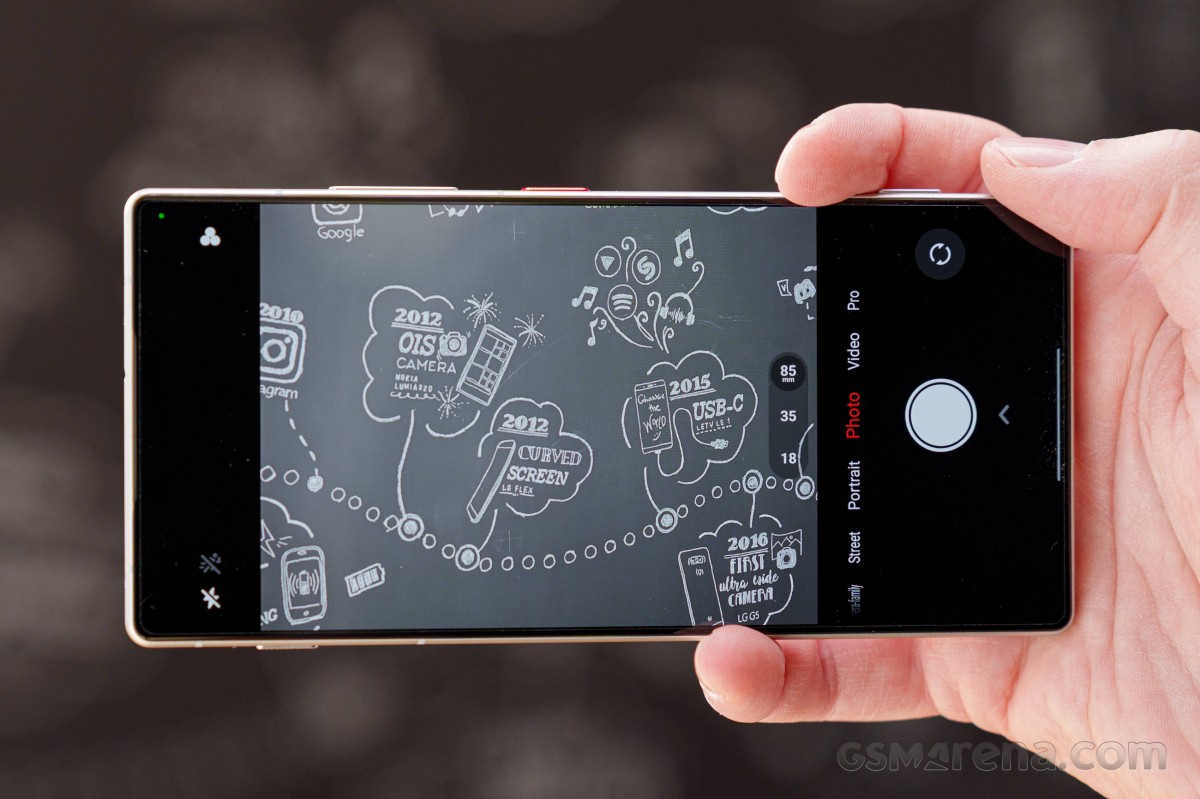
The telephoto camera uses the OmniVision OV64B – this one has been untouched on nubias since at least the Z60 Ultra. It’s a 1/2.0″ 64MP sensor mated to a 70mm equivalent lens, though the phone’s viewfinder will default to an 85mm-equivalent crop from it – a long-standing peculiarity of the nubia camera interface.
The new ultrawide, which is a barely forgotten older ultrawide, features the OV50E sensor – at 1/1.55″, it’s one of the bigger sensors to be found on an ultrawide camera these days. The trade-off is that it’s not that wide of a lens in front of it, at 18mm. In all fairness though, an 18mm and a 35mm lens sound like a better pair than the 13mm and 35mm combo we had on the Z70S Ultra, plus that saves us having to go through hoops on yet another camera to get to its native focal length – the ultrawide on previous model defaulted to 18mm.
Of course, there’s the underdisplay selfie camera, the 16MP sensor’s pixels fighting for light with those of the display above it.
Standard/wide (main): 50MP OmniVision OV50H (1/1.3″, 1.2µm-2.4µm), f/1.7, 35mm, multi-directional PDAF, OIS; 4K@120fps/8K@30fps
Telephoto: 64MP OmniVision OV64B (1/2.0″, 0.7µm-1.4µm), f/2.4, 70mm, multi-directional PDAF, OIS; 4K@120fps
Ultrawide: 50MP OmniVision OV50E (1/1.55″, 1.0µm-2.0µm), f/1.8, 18mm, multi-directional PDAF; 4K@120fps
Front camera: 16MP OmniVision OV16E (1/2.8″, 1.12µm), f/2.0, 24mm, fixed focus; FullHD@30fps
The Z80 Ultra has a two-stage shutter release button on its right, which is still mechanical (unlike the Oppo/vivo pressure-sensitive/capacitive solution, and similar to what the Xperias have been doing) and it can also be used as a shortcut to launch the camera. More is often better, particularly when it comes to shortcuts and control options, it’s just that we’re not entirely sure smartphone cameras need dedicated physical buttons.
There’s also the slider on the left, which can be set to launch the camera too, but only in Street mode – the shutter release button gives you more options. Street mode shows exposure parameters, has a manual focus capability, as well as pre-set focus distances that you can use for zone focusing to channel your inner Henri Cartier-Bresson.
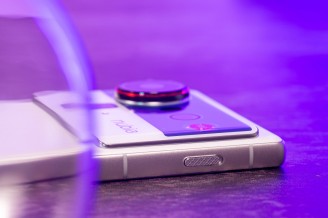
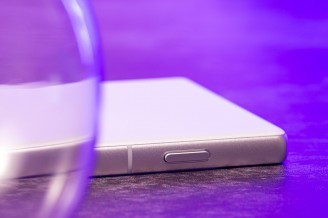
Slider on the left • Two-stage shutter release button on the right
Daylight photo quality
Main camera
The Z80 Ultra’s main camera captures very good images in bright daytime conditions. It’s got great detail and no noise. Dynamic range is very good and shadows and highlights are well developed. Colors are generally good with the notable exception of reds which are never quite red.








Daylight samples, main camera (35mm)
The 50MP shots look like upscaled versions of the above ones and are not worth the extra bytes.


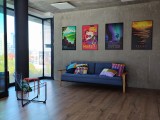





Daylight samples, main camera (35mm), 50MP
Photos of people are good at 35mm, mostly thanks to the focal length that lends a more flattering perspective than the average 24mm camera. The natural subject separation is most welcome too. There’s a bit of a digital rendition to detail here – perhaps facial hair makes it more obvious than shots of objects, but it’s not too bad.
Portrait mode adds a bit of extra blur, and it’s not overdone and looks natural. The thing is though, HDR appears to not be working in Portrait mode, so you can expect some pretty harsh highlights.




Daylight samples, main camera (35mm), Photo mode




Daylight samples, main camera (35mm), Portrait mode
Tapping on the 35mm button will get you to 50mm where quality is alright but not really anything special.








Daylight samples, main camera (50mm)
People shots at 50mm are also an option if you’re a fan of the focal length, though perhaps you’d be better off at either 35mm or 70mm if you’re after better image quality.




Daylight samples, main camera (50mm), Photo mode




Daylight samples, main camera (50mm), Portrait mode
Telephoto camera
As we mentioned, the telephoto defaults to 85mm, but by the looks of it, its native focal length is a 70mm equivalent, which you can get to after tapping twice on the 85mm button – it cycles through three focal lengths (85-140-70mm). At this zoom level, things are nice and sharp, though detail can look overly digital. Dynamic range is good, but there might be a bit of tendency for overexposure. Colors are better here than on the main camera – the reds are certainly more accurate.












Daylight samples, telephoto camera (70mm)
People shots are good at 70mm, but you’d once again be put off by the pixelated look of facial hair and fine detail in general. There’s no 70mm option in Portrait mode, though in practice, the 85mm portraits do, in fact, come out at 70mm.




Daylight samples, telephoto camera (70mm), Photo mode
Images aren’t particularly sharp at the 85mm ‘default’ telephoto zoom level. They’re usable, but we’d still prefer the 70mm counterparts.











Daylight samples, telephoto camera (85mm)
The 85mm Photo mode people shots are softer than the 70mm ones, predictably. The 85mm option in portrait mode captures a wider frame – the native 70mm focal length is a safe bet. Why does it have to be like that, nubia?




Daylight samples, telephoto camera (85mm), Photo mode




Daylight samples, telephoto camera (85mm, but really 70mm), Portrait mode
That behavior continues into the full-res 64MP mode, which says 85mm but is in fact 70mm. The images are much too soft for our liking, rendering this mode impractical.








Daylight samples, telephoto camera (85mm, but really 70mm), 64MP
The 140mm zoom level returns usable results, though if you have a lot of random detail, you may not be loving its rendition.








Daylight samples, telephoto camera (140mm)
The Z80 Ultra’s telephoto camera can capture pretty good closeups too, thanks to its minimum focusing distance of around 14cm. Again, we’d prefer the native 70mm results.




Closeup samples, telephoto camera (70mm)




Closeup samples, telephoto camera (85mm)
Ultrawide camera
The ultrawide camera is also in the okay camp. We can appreciate the wide dynamic range, and colors are looking good too. Detail is alright, but we would have hoped for a bit better results given the relatively modest coverage.


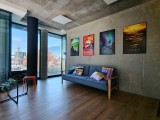





Daylight samples, ultrawide camera, 18mm
There’s not much use in shooting at the nominal 50MP on this camera either.


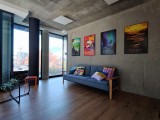





Daylight samples, ultrawide camera, 18mm, 50MP
The 24mm zoom level will get you acceptable results – certainly nowhere near main camera grade, but much better than the Z70S Ultra’s 13mm ultrawide would have captured.


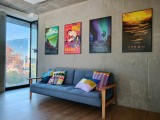





Daylight samples, ultrawide camera, 24mm
Selfies
Selfie image quality is the natural tradeoff you’ll need to accept in order to have the uninterrupted display. Difficult lighting will result in some harsh highlights and detail is pretty soft to begin with, but let’s say the quality is good enough as a last resort. It’s certainly no selfie machine, the Z80 Ultra.






Selfie samples
Low-light photo quality
Main camera
The main camera’s low-light results are very good. Exposures are well judged and there’s good development at both tonal extremes, and colors are quite likeable. Detail is solid too, with only the deeper shadows turning a little mushy.




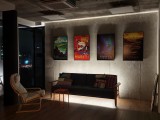





Low-light samples, main camera (35mm)
The 50mm zoom level maintains reasonable sharpness and is quite alright.




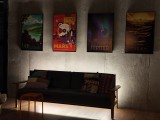






Low-light samples, main camera (50mm)
Telephoto camera
At 70mm, the telephoto camera will get you great detail, wide dynamic range, and excellent colors.








Low-light samples, telephoto camera (70mm)
The 85mm results are a little softer, but otherwise mostly the same.








Low-light samples, telephoto camera (85mm)
The 140mm focal length may not be where the nubia gets its finest shots, but it’s still usable all things considered.








Low-light samples, telephoto camera (140mm)
Ultrawide camera
The ultrawide camera’s low-light performance is quite good at its nominal 18mm. Dynamic range is wide, though a nudge in exposure wouldn’t hurt. colors are generally good, detail is solid for an ultrawide camera.

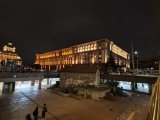


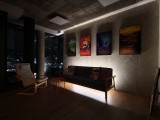



Low-light samples, ultrawide camera, 18mm
The 24mm images are more into usable territory – they’re on the soft side if you look up close, but still pretty good globally.




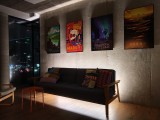



Low-light samples, ultrawide camera, 24mm
Video recording
The Z80 Ultra records video at up to 4K120 with all three of its rear cameras, while the 35mm camera can also do 8K30. Selfie videos max out at 1080p30.
The default codec is h.264, which is also used for 8K30 and 4K120, though you can choose h.265 if you prefer. It’s in the codec menu where the HDR option is hiding – you get HDR10 in 4K30 on the main camera only. Electronic stabilization is optional and is available for all quality settings except for 4K120 and 8K, though 4K60 clips are not really electronically stabilized in practice, even if the stabilization toggle is active.
There’s a pro video mode that allows for manual focus (with optional focus peaking), exposure, and white balance. There’s also focus peaking, but no zebras or waveforms.
You can check out the playlist below, which includes multiple video samples.
The Z80 Ultra’s video quality is almost surprisingly good. The main camera’s 4K30 clips have excellent detail, wide dynamic range and great color rendition. 4K60 and 4K120 footage is also top-notch (if you can stabilize it). The ultrawide’s videos are a little soft at 18mm, but global properties remain excellent, so not half bad overall. The 24mm level’s sharpness (or, rather, the lack thereof) is closer to a dealbreaker, though. The telephoto continues to deliver likeable vibrant colors and wide dynamic range and it offers very good detail at 70mm, slightly less so at 85mm.
In the dark, the main camera and the ultrawide both offer very good sharpness and detail and both tend to render highlights a bit too harshly, though they do also develop the darker areas well. The telephoto is a bit less convincing, producing soft clips with some stabilization jelloing.
Speaking of stabilization, both the ultrawide and the main camera will get you expertly stabilized walking footage. All three cameras are also pretty proficient when it comes to getting rid of general handholding shakiness when shooting from a fixed position. Pans can be that little bit jumpy though, if you’re not extra careful with the speed.