
There are countless ways to get to know a city: on foot, by car, maybe even through the window of a sightseeing bus. But hop on a bike, and suddenly the rhythm changes. You glide, you pause, you stumble into places you’d never find otherwise. Cycling turns the everyday commute into an adventure, and in some cities, it’s more than just a way to get around — it’s the coolest way to explore.
Here are seven cities that have transformed biking into the perfect passport for discovery. Each one comes with ten stops that prove two wheels are all you need for a full day of urban adventure.
Utrecht, Netherlands
If Amsterdam is the obvious cycling capital, Utrecht is the connoisseur’s choice — smaller, friendlier, and just as madly devoted to bikes. You can feel it the moment you step out at Utrecht Centraal, where one of the world’s largest bike garage hums with the quiet shuffle of thousands of riders.
From here, start with a loop around the Dom Tower, Utrecht’s Gothic landmark. Just behind it lies the Pandhof gardens, a cloistered courtyard where ivy creeps along stone arches — a perfect pre-ride breather. Then dip down to the Oude Gracht canal, where old warehouses now hold wharfside cafés; grab a cappuccino at one of the terraces and watch boats slide past.
Heading west, cross the Moreelsebrug, the sleek pedestrian-bike bridge linking the station to office towers and hidden murals. For longer spins, follow the Vecht river out of town — you’ll pass moated estates, waterside cafés, and families towing kids in cargo bikes. Loop back toward Maximapark, a sprawling greenbelt built with riders in mind, or push further for a day trip to Kasteel de Haar, the fairy-tale castle complete with turrets and gardens.
Cycling in Utrecht also pairs beautifully with food and drink: Maximus Brewery on the city’s edge is a local favorite for craft beer, while the cafés around Neude Square fill with students and commuters swapping stories at sunset. And if you want a true sense of Dutch history, pedal the Castles route into nearby villages, where cobblestones and crooked houses remind you that Utrecht’s cycling culture is centuries deep.
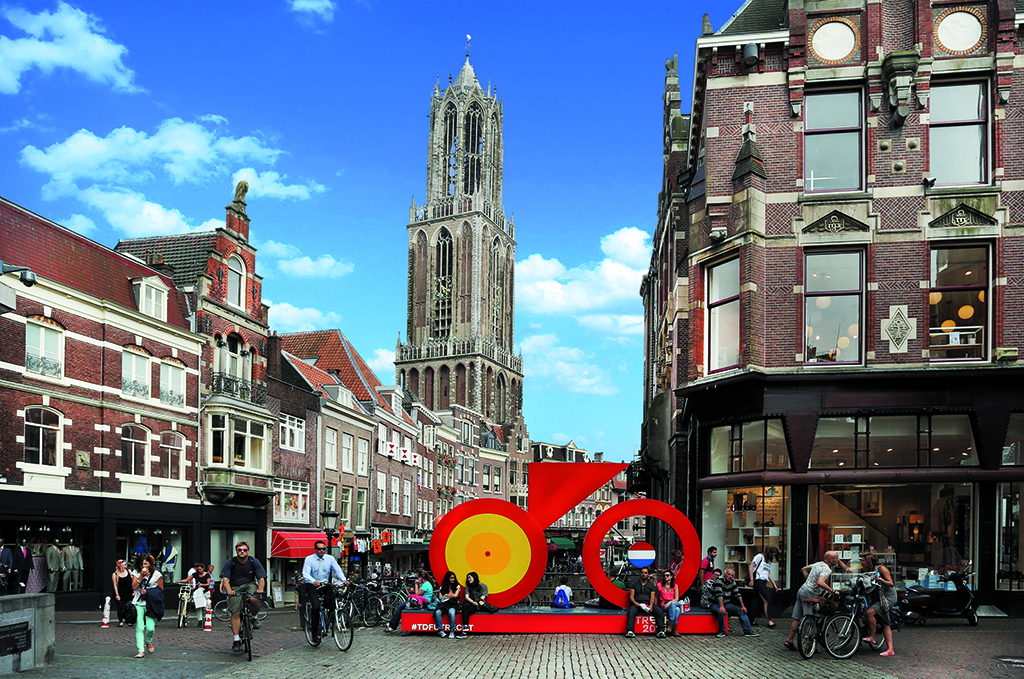
Photo courtesy of Le Tour Utrecht
Copenhagen, Denmark
Copenhagen’s bike culture isn’t just infrastructure — it’s choreography. Stand at a major intersection during rush hour and it feels like watching a ballet: waves of riders flowing in silence, bells chiming like cues. The city is famously flat and compact, but what makes cycling here magical is the way it folds culture, design, and daily life together.
Begin at Nyhavn, the postcard harbor of rainbow-colored houses, then follow the waterfront to the glowing orange Cykelslangen (Cycle Snake), a swooping bike bridge that feels like riding a roller coaster in slow motion. Cross the Inderhavnsbroen into Christianshavn, where canals hum with boats and cafés spill onto cobblestones.
Food is never far away in Copenhagen, and Torvehallerne Market is a must: hop off for smørrebrød piled with herring or roast beef, then ride to Fælledparken, the city’s largest park with wide, shaded paths. From here, drift down to the Søerne, the string of lakes that cut through the city, where cyclists and joggers orbit in lazy loops.
If the weather’s warm, take your wheels to Islands Brygge, the harborside swimming area where locals cannonball into surprisingly clean water. Feeling ambitious? The Cycle Superhighways stretch far into the suburbs, letting you ride smooth, separated lanes straight to beach towns and fishing villages.
Of course, no Copenhagen ride ends without a café stop in Nørrebro, the multicultural hub where bike racks overflow outside bakeries and kebab joints. Craft beer seekers will want to park at Mikkeller Bar, the city’s brewing pioneer, while design lovers can pedal past Superkilen Park, a living art project celebrating global culture. As the sun sets, loop back along the harborfront and watch the city’s lights reflect off the water — proof that cycling here isn’t just transport, it’s lifestyle.
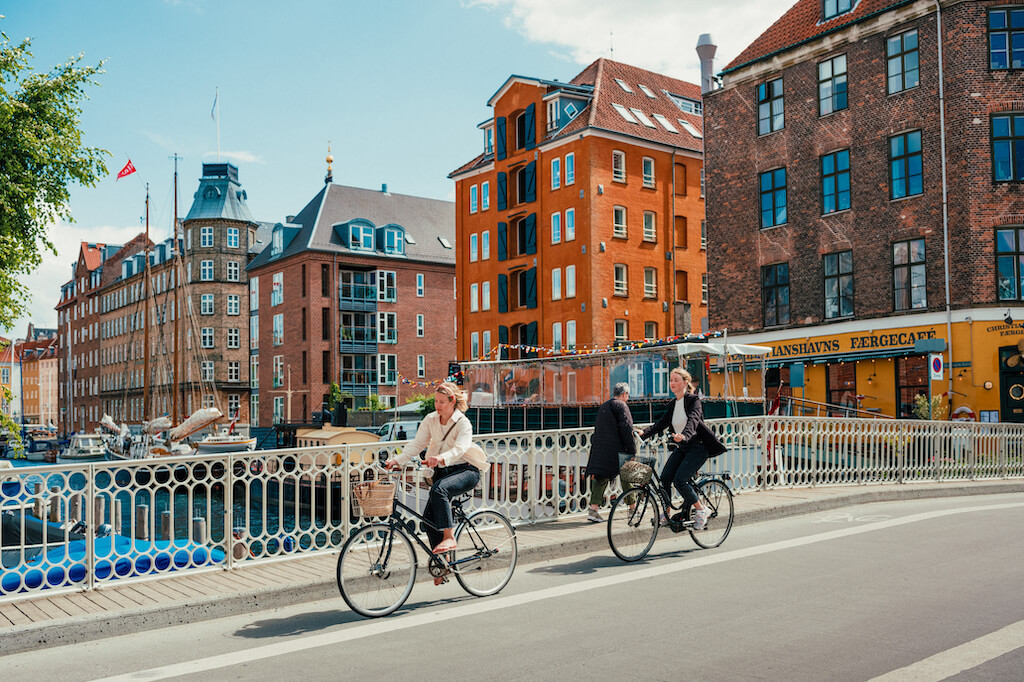
Few people wear bicycle helmets in Copenhagen
Montreal, Canada
Montreal is Canada’s cycling soul: a French-infused, café-dotted island city that has quietly built one of North America’s best biking networks. The Lachine Canal path is the perfect launchpad — a waterside greenway framed by lofts, murals, and bike-friendly terraces. Stop at Atwater Market, where fresh pastries and flowers tempt you to linger longer than planned.
From here, climb up to Mount Royal Park, designed by the same landscape architect who gave New York Central Park. The ride to the lookout is a workout, but the panorama of the skyline against the St. Lawrence River is worth every pedal. For a more relaxed spin, head east to Parc La Fontaine, where shady loops and pond-side picnics slow you down.
Montreal’s island geography also means bridges: cross to Parc Jean-Drapeau for riverside rides and even a lap around the Circuit Gilles Villeneuve, a Formula One track that opens to bikes when cars aren’t racing. The Jacques-Cartier Bridge offers a dramatic climb-and-view experience, with bike lanes that feel like a victory lap over the city.
Back in the neighborhoods, cycling is practically a religion. In the Plateau and Mile End, you can café-hop between Fairmount Bagel and St-Viateur Bagel, argue about which one is better, then drift to indie shops and bars. Foodies will want to explore Marché Jean-Talon, a massive produce market bursting with cheese counters and maple treats.
And no ride ends without a toast: Dieu du Ciel! brewery pours some of Canada’s most beloved craft beers, and its outdoor terrace is packed with helmet-toting locals. Montreal is that rare city where a bike isn’t just welcome — it’s celebrated, from morning bagels to late-night pints.
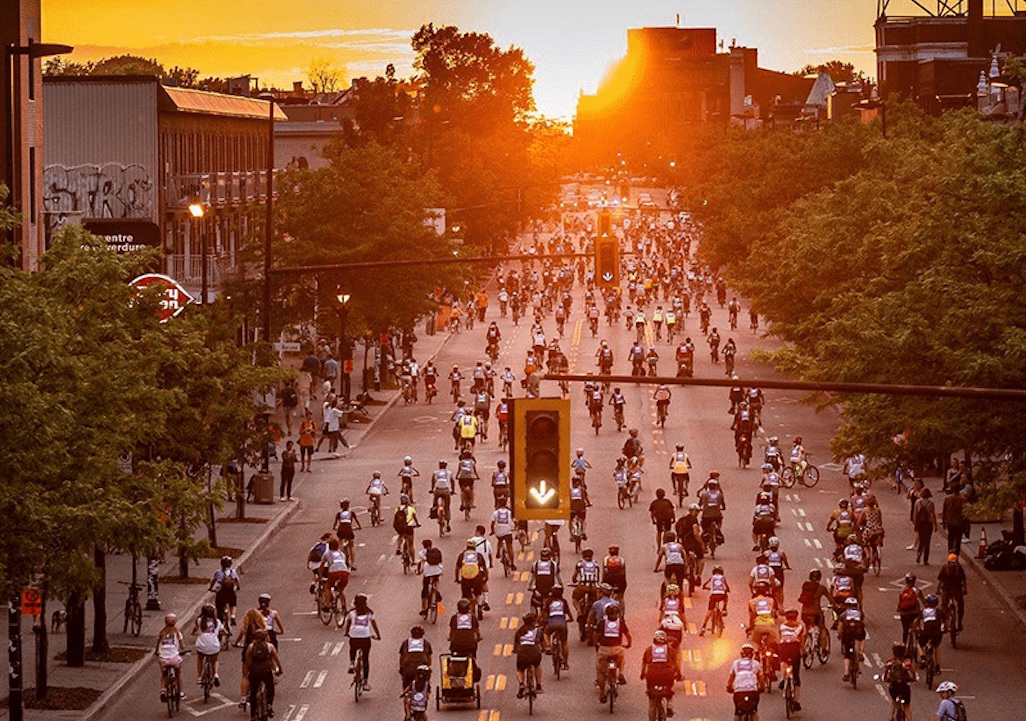
Go Bike Montreal bicycle festival
Berlin, Germany
Berlin is messy, historic, artistic — and best digested on two wheels. The city is sprawling, but its wide boulevards, growing bicycle network, and endless parks make riding less intimidating than it looks on a map.
Start with the East Side Gallery, where the longest surviving stretch of the Berlin Wall has been transformed into a 1.3 km canvas of murals. From here, pedal the Spree River path to Museum Island, a cluster of grand museums framed by bridges. Just beyond lies Tiergarten, Berlin’s green lung, where tree-lined paths wind past monuments and the lakeside Café am Neuen See, perfect for a beer garden pause.
The most surreal ride in Berlin? Tempelhofer Feld, a decommissioned airport turned public park, where cyclists race down old runways with kitesurfers overhead. Sundays call for Mauerpark, home to a sprawling flea market and impromptu karaoke, best reached by bike.
Bridges here double as landmarks: the Oberbaumbrücke arches over the Spree like a red-brick crown, linking Kreuzberg to Friedrichshain. Kreuzberg itself is worth locking up the bike for — stop at Markthalle Neun for street-food Wednesdays, or join the eternal queue for Mustafas Gemüse Kebap, Berlin’s most famous döner stand.
If you’ve got stamina, ride the Berlin Wall Trail, a 160 km loop tracing the Cold War border, passing memorials, lakes, and meadows. Or keep it local with an art crawl through side streets in Friedrichshain and Mitte, where bike racks double as gallery invitations. Berlin is never polished, always surprising, and absolutely best when explored with pedals underfoot.
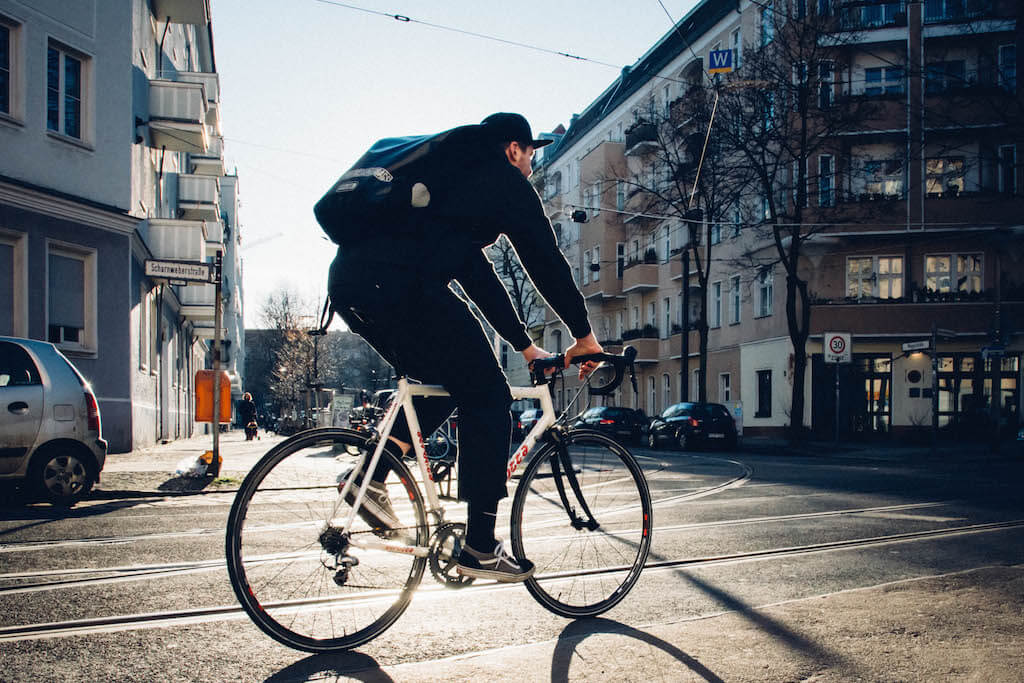
Cyclist in Berlin
Tokyo, Japan
Tokyo isn’t the first city people picture for cycling — but once you’re in the saddle, you realize how much of it opens up when you ride. Despite its density, Tokyo hides long, peaceful river paths and compact neighborhoods perfect for slow exploration.
The Arakawa River path stretches nearly 80 km, offering calm rides with views of Mount Fuji on clear days. Closer to central Tokyo, the Tamagawa Cycling Road runs along the Tama River, connecting quiet suburbs and waterside parks. For a taste of Tokyo’s creative heart, pedal through Shimokitazawa, a bohemian district of vintage shops and record stores, or drift into Yanaka, where temples and old wooden houses feel like stepping back decades.
Culture-seekers can park the bike at Ueno Park, home to museums and spring cherry blossoms. For sleek urban vibes, ride Omotesandō, a wide, tree-lined avenue flanked by designer boutiques. Across town, Odaiba’s futuristic waterfront — complete with giant Gundam statue — is best reached by crossing the city’s bike-friendly bridges over the Sumida River.
Food, naturally, drives many Tokyo rides. Start the morning at the Tsukiji outer market for sushi and tamagoyaki, or swing by Kappabashi Street, where kitchen shops stock knives and noodle bowls. Coffee culture is thriving too: tiny third-wave cafés like Onibus or Blue Bottle outposts welcome cyclists with racks out front.
Cycling in Tokyo is a balance of contrasts — serene riversides, buzzing markets, neon skylines. Each ride is a reminder that this metropolis has as many quiet side streets as it does flashing billboards.
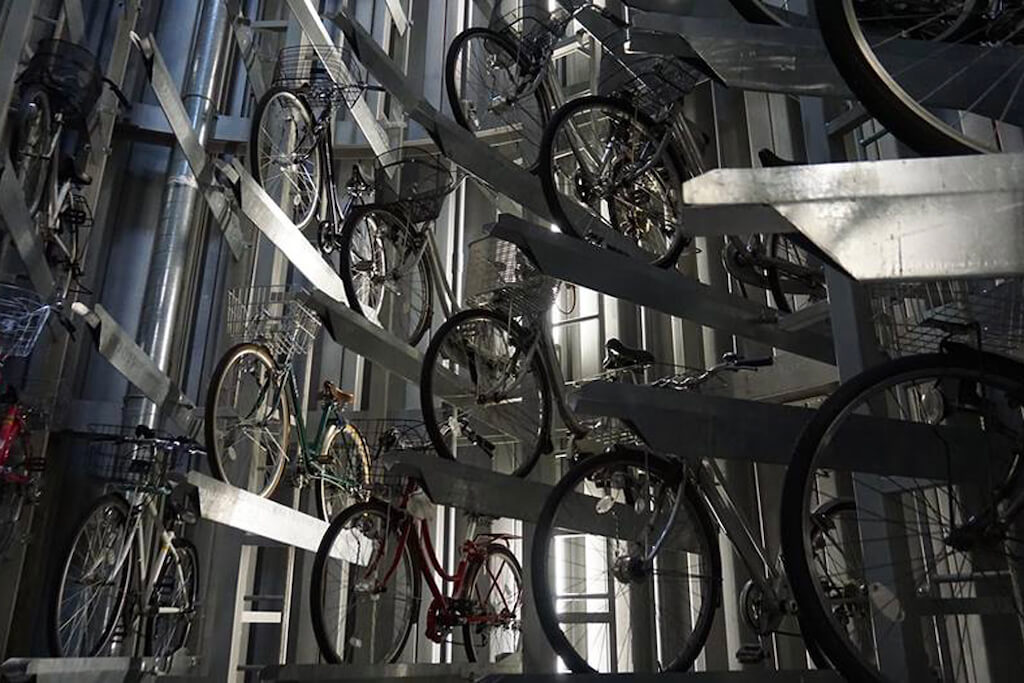
Tokyo Eco-Cycle bike parking
Seville, Spain
Seville is a dream for cyclists: warm, flat, and stitched with more than 180 km of bike lanes. It’s also a city where cycling isn’t just efficient — it’s romantic.
Begin at Maria Luisa Park, a shady oasis of tiled fountains and horse-drawn carriages, then roll into the sweeping Plaza de España, where the tiled alcoves tell the story of Spain’s provinces. The old quarter of Barrio Santa Cruz is a maze best done slowly, with orange trees perfuming the air.
The Guadalquivir River path is the city’s cycling backbone, leading you to the modern Puente de la Barqueta and into Triana, a neighborhood famous for flamenco, ceramics, and tapas. Back in the center, the Metropol Parasol — a futuristic wooden canopy nicknamed Las Setas (“the mushrooms”) — offers panoramic views. Just steps away is the Torre del Oro, a golden tower guarding the river since the 13th century.
Plazas define Seville’s rhythm, and none is more alive than Alameda de Hércules, buzzing with bars and street performers late into the night. For food, cyclists swear by El Rinconcillo, the city’s oldest tapas bar, where ham legs dangle overhead. And if you’re chasing modern flair, Mercado Lonja del Barranco, a gourmet market on the river, is a perfect lock-up-and-lunch spot.
By evening, Seville glows honey-colored, and the sound of guitars spills onto cobbled streets. A city this beautiful deserves to be savored at cycling pace.
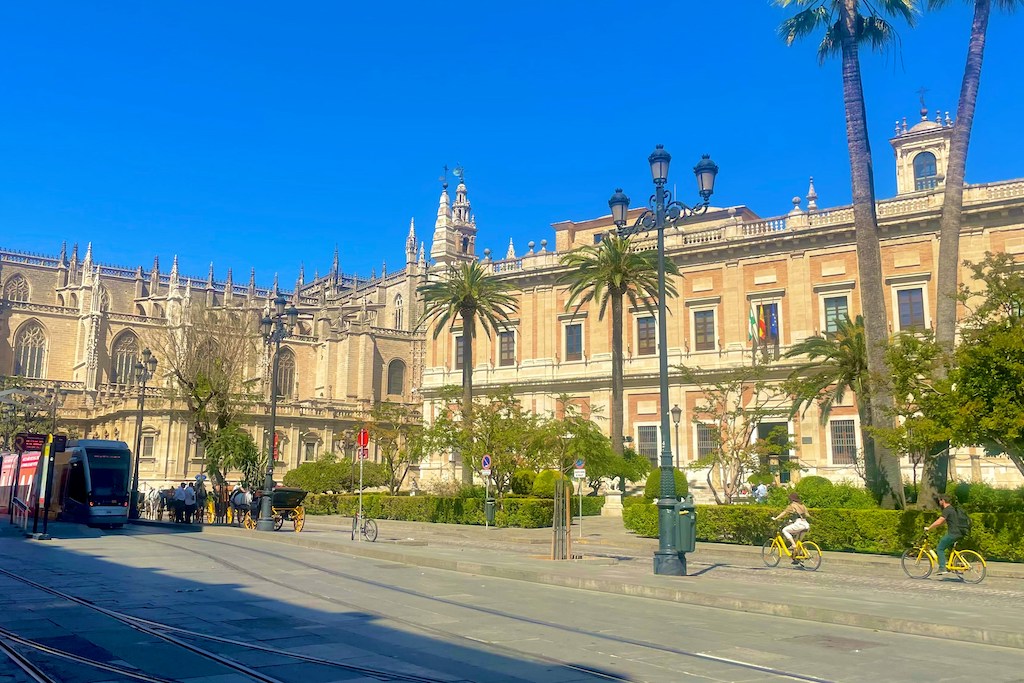
Seville, Spain
Antwerp, Belgium
Antwerp is compact enough to cross in 20 minutes, but don’t rush — it’s a city that rewards wandering. Start at the Grote Markt, where guild houses and the cathedral frame the central square. Then ride north to the MAS Museum, whose rooftop terrace offers sweeping views of Europe’s second-largest port.
The surrounding Eilandje district is a mix of old warehouses and new galleries, perfect for a mid-ride coffee stop. From here, pedal through the Sint-Annatunnel, a 1930s pedestrian-bike tunnel under the Scheldt River, whose wooden escalators alone are worth the detour. Back on the surface, the Parkbrug, a lattice-like pedestrian bridge, feels like riding through a sculpture.
The Leien boulevards circle the city like a ring road, connecting parks and neighborhoods. Along the way, duck into Brouwerij De Koninck for a brewery tour and tasting, or refuel with espresso at Caffènation, Antwerp’s coffee temple.
History lingers at Het Steen, a medieval castle on the riverfront, and in the shadow of the Cathedral of Our Lady, home to Rubens paintings. As dusk falls, lock up your bike in the Zuid district, where wine bars, bistros, and galleries spill into the streets.
In Antwerp, the best rides combine history, art, beer, and chocolate — and all of it fits neatly into one cycling day.
Closing Thoughts
Cities are often described as fast, stressful, crowded places. But in the saddle, they become playgrounds — a patchwork of parks, cafés, bridges, breweries, and markets that line up like pearls on a chain. In Utrecht, Copenhagen, Montreal, Berlin, Tokyo, Seville, and Antwerp, biking isn’t just a way to get from A to B. It’s how you feel the heartbeat of the city, meet its people, and stumble into the stories you’ll tell later.
So the next time you pack your bags, don’t just ask what to see. Ask how to ride it. Because the coolest way to explore these cities? Two wheels, one gear, endless detours.