

It will be a “big deal” if the proposed Iqaluit hydroelectricity project is included on the list of federal nation-building projects to be revealed Thursday, says the executive director of the Federation of Canadian Municipalities.
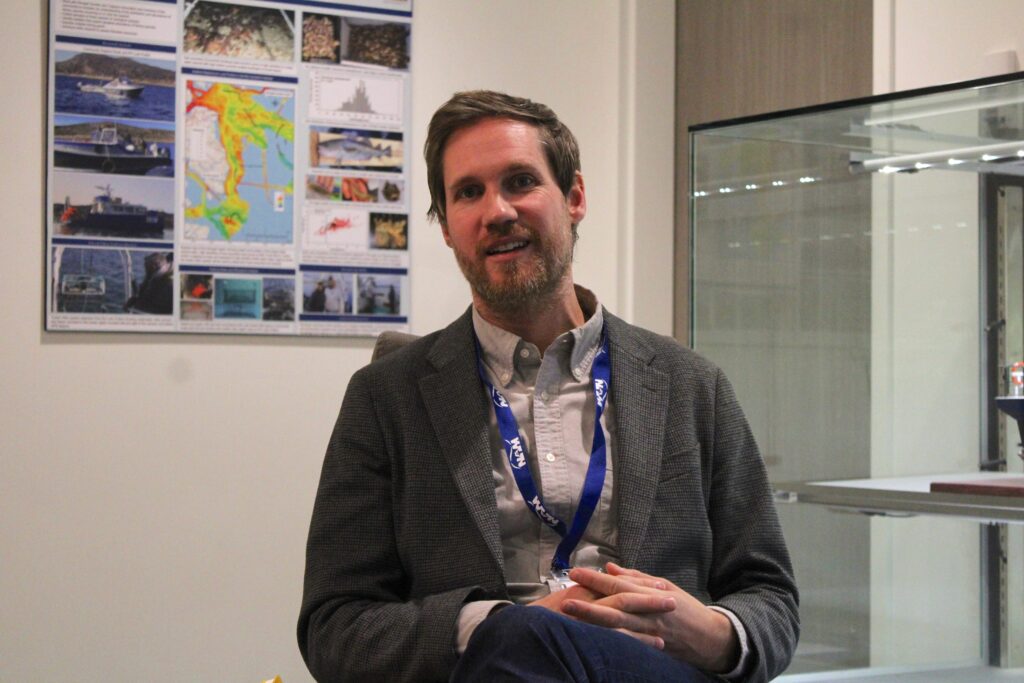
Matt Gemmel, executive director of the Federation of Canadian Municipalities, says the Iqaluit hydroelectric project could help enable local resilience and sustainability. (Photo by Arty Sarkisian)
“It seems like the kind of project that enables local resilience and sustainability,” Matt Gemmel said in an interview at the Nunavut Association of Municipalities annual general meeting in Iqaluit Wednesday.
The hydroelectric power plant proposed to be built along the Kuugaluk River, about 60 kilometres northeast of Iqaluit, is expected to make Prime Minister Mark Carney’s list of projects slated for fast-tracked approval, both the CBC and Globe and Mail reported Wednesday, citing anonymous sources.
This week, Carney said he will reveal the six projects on his list Thursday in British Columbia. Along with the Iqaluit hydroelectric plant, the other projects are believed to include mining and gas exporting, CBC’s sources said.
This summer, Carney announced the creation of the Major Projects Office to review projects recommended for fast-track approval, and in September he revealed the first five.
“I’m definitely happy about that,” Nunavut MP Lori Idlout said of the potential addition of the Iqaluit hydroelectric project to the list.

“It’s Inuit-led and it’s been something that the city has been exploring for a long time.”
Iqaluit Mayor Solomon Awa called the prospect “awesome,” but wouldn’t comment further.
The hydroelectric project is led by Nunavut Nukkiksautiit Corp., a subsidiary of Qikiqtani Inuit Association, the entity mandated to promote the rights of Qikiqtani Inuit.
The project would include an approximately 50-metre-high dam and a powerhouse and could be operational by 2033, generating 15 megawatts of electricity for about 100 years.
That would be enough power to replace all of Iqaluit’s diesel-generated electricity, which requires burning about 15 million litres of diesel fuel per year.
That would help make Iqaluit a “modern Arctic capital,” Heather Shilton, the corporation’s executive director, told delegates at the Travel Nunavut annual general meeting last week in Iqaluit.

There is no exact price tag available for the project, but in 2017 the cost was estimated to be approaching $500 million.
The federal government is expected to be the project’s main funder and has already allocated $26 million for studies. Also, the corporation is working to get a loan from the Canada Infrastructure Bank, a Crown corporation that funds Canadian revenue-generating infrastructure projects that are in the public interest.
On Wednesday, Shilton declined to comment until Carney’s announcement is made.
The consideration of Nunavut infrastructure for the nation-building projects list is a positive development, but there is a lot of “ambiguity” about what it will mean in practice for the projects and for Nunavummiut, Idlout said.
“It would mean in reality that it would still take a long time for any of those benefits to be seen in Nunavut,” she said, adding smaller projects like the paving of airport runways still lack funding.

“We need to see a balance between meeting the immediate needs of Nunavummiut, as well as investing in those strategic longer-term projects that will keep maintaining our goal toward self-determination,” Idlout said.