
Retired Ministry of Natural Resources manager says forum confirmed his own findings: Ontario’s bad management practices are killing the province’s moose population
I mentioned in a recent article that I attended a conference in Sweden to present my view of Ontario’s moose mismanagement efforts as a retired resource manager and former employee of the Ministry of Natural Resources.
I had neither their approval nor support, financial or otherwise.
I would like to mention that the credit (or blame) for my moose efforts over the past few years is due the amazing support of Mark Gentili, editor of Sudbury.com. When he required references for my first article (a true “opinion” piece), it caused me to take a more scientific, evidence-based approach.
Unfortunately, that required more words of explanation. The more information I received, the more concerned I became about the incompetence of MNR managers and the future of Ontario’s moose. Mark suggested that readers might be interested in the trip and the way Scandinavians manage moose.
I was anxious about going. Almost all the friends I knew, the founders of the annual Moose Conference and Workshops, have passed away. I don’t think they would consider heaven to be a very “happy hunting ground” if it was managed the same as the terrestrial equivalent.
Off to Sweden
I’ve been out of moose management for longer than most other participants have been in it. Times have changed and I felt that I would be viewed as an old man, way out of my league.
I discovered that my information was well received, although in the context of complete disbelief that Ontario managers were so backward. I met some amazing people, and, by chance, most of the major leaders in Scandinavian management. I even met someone who had read some of my articles and wanted to “consult” with me.
I was also concerned about interacting with Ontario’s moose managers, who I have referred to as “incompetent”. They didn’t show up, possibly for fear of having to defend the Ontario strategy to managers who would strongly disagree with them.
There were few “managers” there at all. I think the paper by Brian McLaren (professor of resource management at Lakehead University) and I was the only pure management paper presented. The rest of the moose world have functional management systems and are far more into research and fine tuning their programs, while Ontario ignores the evidence and “the obvious” to continue supporting a failed harvest control strategy with continued population decline.
Ontario managers might not have gained much from formal research presentations, but they might have learned from meeting the people who are practicing successful management, although they have shown little interest in listening or learning.
Ontario was represented mainly by two researchers with joint MNR/Trent University positions. They are co-operating in the study to discover why the moose population in WMU 13 has not responded to the near elimination of hunting in the past decade. Both stated the moose population was below the capability of the land and that hunting was one of the major drivers of moose populations in Ontario (and presumably the cause of the decline).
These things agree with what I (and the harvest planning and assessment information) have been saying for decades. Both are competent and respected researchers. I expressed my disappointment that they showed little interest in the poster presentations on the misinformation presented to the public in the 2019 review and the poor information system (which they depend on), and that they have not used their positions at the highest level of moose management in Ontario to influence the trajectory of the harvest control program.
The symposium was held in Ostersund, Sweden, a pretty, little city on one of the largest lakes in Sweden. It is just south of the Arctic Circle, and with the symposium being held just after summer solstice, the nights were very bright. I arrived at midnight and saw two moose on the 10-km drive from the airport to town. I’ve been north of the circle before, but it was still exciting to be able to walk around or read outside all night, had I wanted to.
Amazing moose science
The presentations were amazing, and there were several that I found especially interesting. One described how moose need nutrition that includes proteins (found in blueberrylike shrubs) and carbohydrates (found mostly in conifers or vice versa). Using GPS collars with video cameras, they watch what moose eat, then follow the path and collect samples of the vegetation for analysis.
They found that moose will feed on shrubs for a while, then switch to conifers, then back to shrubs again to get a balanced diet. Another study followed cow:calf groups and found that cows will learn from witnessing the death of a calf to predation and change their choice of habitat. They can also tell what moose are eating from plant DNA in their pellets.
Some folks in Tennessee (well south of moose range) have developed a blood test for brain worms. This will help track the occurrence and possible expansion of this parasite. This is important to adjust harvest for this possible cause of mortality.
The most concerning presentation, and one that may affect Ontario, related to the occurrence of moose ticks in Maine and New Hampshire. A slide of a cut piece of moose hide showed a black layer of ticks against the skin. It was so thick that most ticks couldn’t get near the skin to feed. A video of a calf dying from blood loss due to tick feeding touched the hearts of everyone.
More than 60 per cent of calves with low body weight in spring will die from tick infestations. The population in Maine has declined 30 per cent and one of the conclusions was that with climate change, moose may not continue to exist in those states.
I noticed that several pictures of moose used as leads to my articles and taken in the Sudbury area show signs of tick infestations. I found that very surprising. The impact of this problem needs to be assessed in Ontario and mortality included (compensated for) in moose harvest planning if necessary.
Ontario stopped tracking mortality other than sport hunting in the late 1990s, missing important management information. Managers care about hunting but not a complete management system. There were more studies with applications to Ontario, although I can’t present them all.
This was intended to be an information article telling how “the other half lives”, but you can’t go anywhere without finding evidence of how MNR staff are unable to do even the simplest things correctly.
Symposium organizers produced a census on the status of moose around the world (except Russia) (1). There were three noteworthy things regarding Ontario information. Ontario managers could not report the moose harvest (see figure), even though it is published annually (see here for example).

A map showing moose harvest figures with Ontario data conspicuously absent. . Graph: International Moose Population Census. 2025. Dave Kramer and Christer Kalen
The calf:cow ratio, reported at 24.3 calves/100 cows, is the lowest of all jurisdictions. I calculated it at 35 calves/100 cows (44 percent higher, see graph) from the moose aerial inventory summary published in the Data Catalogue.
In fact, Ontario is on par with six other jurisdictions, including Manitoba and Quebec, neither of which have direct harvest control. The bull:cow ratio was similarly understated by 20 per cent. The correct value, 66 bulls/100 cows, is equivalent to 40 per cent bulls of all adults, apparently the desired ratio in Ontario. It is also what Sweden is striving for. They want to raise the bull portion from 30 per cent to create more trophies.
The individuals who provided Ontario information were also responsible for collecting or using it. I’d like to say that their failure to understand their own information is surprising, but based on past performance, it really isn’t. Whether the misinformation is intentional or not, a “scientific publication” (albeit inaccurate) might support the illogical strategy of killing more cows and fewer calves to increase the population.

A graph showing Ontario moose demographics arranged by how the resource was counted, by plane, by helicopter or both. Image: Alan Bisset
The third point is that Ontario apparently has a “dedicated process to receive input from the general public and/or indigenous peoples.” Except for the Big Game Management Advisory Committee of paid, white hunters, I have never seen anything of that kind and have lots of evidence that it doesn’t exist in any meaningful way. To the extent that it might through the Environmental Registry, the “input” is ignored, as I’ve detailed here. There are no co-management efforts with First Nations to restore the moose population. Managers are trying to make Ontario look much more advanced in the eyes of the world than it really is.
One of the things I learned is that “Scandinavian Moose Management” is more complex at the social level than I expected.
All countries share the same fundamental habitat and harvest management strategies, but hunting and the expectations of hunters are different, at least in Sweden and Norway. I met participants from Finland, but didn’t discuss hunting with them.
Hunting is a very important and serious activity in all three countries. They have strict firearms laws and require annual shooting tests before participating in a hunt.
In all countries, a harvested moose belongs to the landowner, but in Norway the meat may be sold commercially for use in restaurants, etc. In that respect, they are a part of the formal economy. Swedes hunt for meat but it is not sold openly. “Fill their freezers” was used several times in the presentations. Magnus Hansson, a game management officer for the Swedish Association for Hunting and Wildlife Management, said that there are many ways hunters can acquire the rights to hunt on land owned by others and keeping moose that are harvested, but they boil down to either paying a fee or leasing the rights to hunt.
Harvest quotas are set through a hierarchy of management plans from Moose Management Areas (within counties) to the Swedish Environmental Agency. There are formal (public) “groups” at each level that write or co-ordinate plans (inventory, goals, harvest plan). This system was proposed for Ontario (Ref 2, for example) but never adopted, leaving MNR staff with the sole responsibility for harvest planning and control. I don’t need to tell you how successful that has been.
There are three major differences in planning moose harvests. Scandinavians manage based on pre-hunt population structure, while we manage on post-hunt (mid-winter) populations. They plan their harvests on calf production while we focus on total population size, and they use hunter observations while we use aerial inventories.
These are reasonable differences since they have nearly complete private ownership and access within the range, while hunting in Ontario is on remote public land. Another difference is that Scandinavian moose browse heavily on pine and spruce while North American moose (except in Newfoundland) eat mostly deciduous vegetation.
A paper by Christer Kalen, chair of the symposium, explained how hunter information, as “citizen scientists”, can be used to determine population size. The technique could save Ontario hunters more than $500,000 annually in aerial inventory costs. It is a bit of a stretch to think of Ontario hunters as “citizen scientists”, but it is a goal that MNR should work toward, and hunters should expect of themselves if they want successful moose management.
There is a strong link between forestry and moose at the socio-economic level. Moose are a valuable resource for the landowners. All three countries have state-owned forestry companies. Sweden has 300,000 private forest owners, while 60 per cent of the forests in Finland and 78 per cent of the forests in Norway are private. The remainder are owned by electric companies, and municipal and county authorities.
In all three countries there is also a “right-of-common-access”, a customary law that lets people use (hike and camp but not hunt) all lands regardless of ownership. I was told that the fear of losing that right was one of the reasons that Norway hasn’t joined the EU. Not sure if that’s true, but it illustrates the bond between ordinary Scandinavians and the land.
All three countries are concerned about their ecosystems, and appear to address them in different ways, but with apparently clear objectives. North Americans are currently big on concepts and words like “ecosystems” and “biodiversity”. They are political catchphrases, but I have seen little evidence that managers know how to manage for, or measure, them.
You can read the articles on caribou as examples here, here, here and here.
I asked about the lack of mid-story vegetation in the stands we visited. They were pure, even age Scots pine or Norway spruce stands, that didn’t have much of a middle layer. I acknowledge that my observation could be biased by the few stands we visited. Kalen, the symposium chair, noted that continuous forest cover is still something that they want to increase in Sweden. Most forest management is done with clearcuts, and silvicultural cleaning and thinning is encouraged to have more even-aged stands. That is the reason they lack many trophic levels within production forests. One proposed solution is less intensive thinning.

A stand of trees in Sweden. In Scandinavian countries, moose browse heavily on pine and spruce while North American moose (except in Newfoundland) eat mostly deciduous vegetation. Image: Alan Bisset
I presented a Swedish graph of the moose population in a recent article. From 1995, there had been a relatively stable, but declining population until 2022 when there was a rapid decline. As Kalen, the event chair, described the history, “the rapid increase from the 1960s was the result of two events. First, hunters finally realized that saving adult females would boost growth and secure reproduction. So, instead of saving the calves they started harvesting a higher proportion while saving adult females,” he said. “The second was that forestry had a campaign to get rid of low-productivity forests and start over with a new forest establishment. In a few years, we had 300,000 hectares of annual regeneration in forestry. The sustainable harvest level is 200,000 hectares per annum.
“In the 1970s there was an excess of habitat and a high proportion of adult females in the moose population. The expansion was tremendous. It took about 10 years of annually increasing moose harvests to get it stopped.”
Once the explosion was stopped, “hunters tended to be conservative so the decrease in harvest rate was too slow, allowing the population to decline. The excess of habitat was also being reduced by the high population, so food became more limited. This caused a reduction in reproduction. A small decrease in reproduction rate seemed to have a substantial impact on sustainable harvest rate and the population continued to decline. In addition, browsing damage since the 1980s had become intolerable for forest owners, so, they have called for a reduction in the population,” Kalen said.
“In the 1990s and forward there has been an increase of predators (wolves and bears now cause 21 per cent of mortality). Fallow deer and red deer have increased as well. They do not migrate like moose do and share parts of the food resource, so there is interspecific competition. This has contributed to the moose decline. Still, from an official point of view and from a forestry point of view, the decrease of the moose population has been deliberate.”
We visited a private forest plantation site where you could tell how deep the snow was last winter. Every tree was browsed back to 14 inches, destroying regeneration. This was the third time that had happened, and it was a major financial loss for the landowner. He can’t abandon it, because the law requires that it be replanted. One of the apparent problems is that nursery grown trees are more tender than wild seedlings and perfect browse for moose. They are looking at ways to make them less palatable, including natural regeneration.
Hunting seasons are long, and hunting is a relatively formal process with hunting teams like our hunting parties. The “jaktledare” (team leader) in Sweden is a formal position, signified with a very visible yellow, blue and orange cap.
Dogs trained specifically to hunt moose are used extensively and in Sweden it is mandatory to have access to a dog in case a moose is wounded. Dogs are used in two ways. They can be on a leash and worked through a forest with a line of hunters. “Baying dogs” that run free with GPS collars (also showing speed, direction, and barking rate) are also used. These dogs will hold a moose “at bay” until a hunter comes and either harvests it or calls the dog off. Apparently, champion dogs will hold a moose at bay for over a day. Since cows are largely protected, some get so used to being found that they continue to browse apparently undisturbed.
As a closing statement, I will offer an opinion from Christer Kalen that hunters most likely have tried to halt the population decline but so far have failed. They need to make more drastic changes. Instead of decreasing the harvest a few per cent and waiting years for the expected response that may not come (as is happening in Ontario), they need to be bolder with a 20-per-cent reduction or more.
If you have followed my articles, you might notice that recommendations for Ontario are similar to successful practices in Scandinavia, but adapted to the more open hunting system used here. Their harvests are roughly 50-per-cent calves, 30-per-cent bulls and 20-per-cent cows. That would not be acceptable to hunters here, and trade-offs will have to be made.
Nothing can be successful in Ontario without more effective hunter involvement and an effective harvest control system which managers have been ignoring or actively avoiding for at least 25 years.
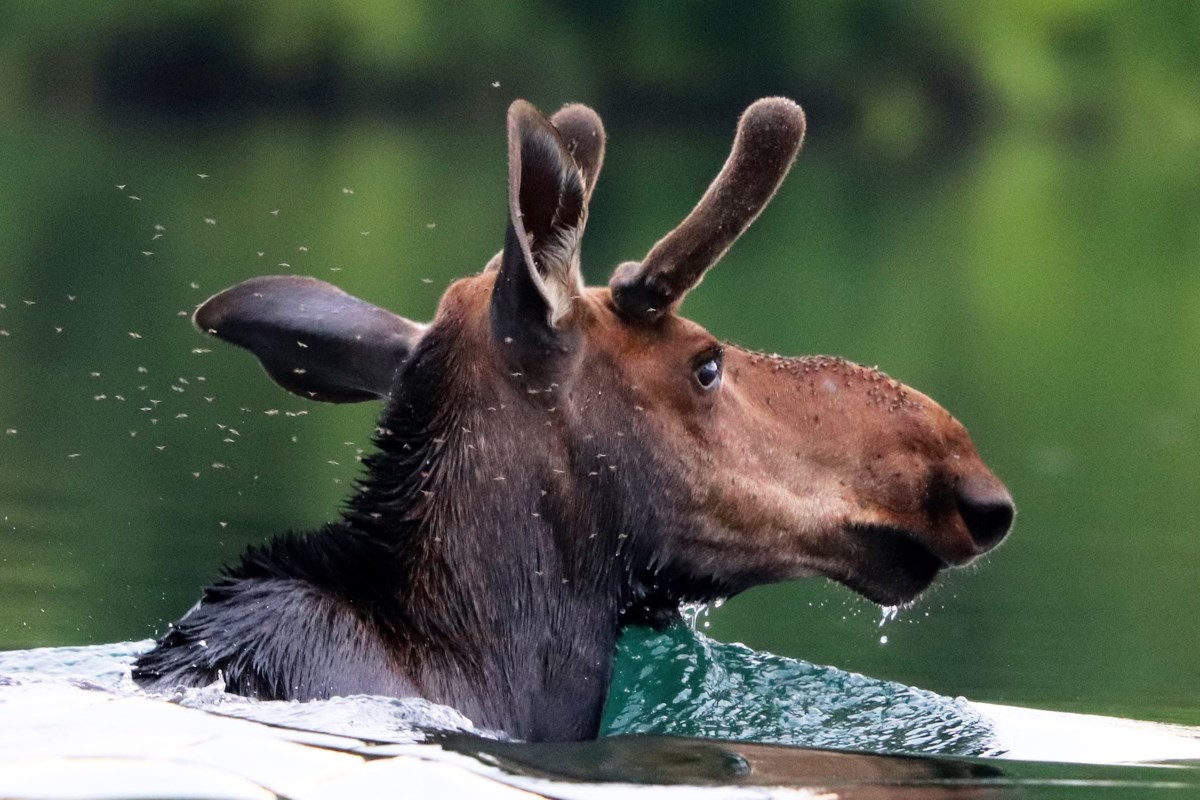
On another note, I noticed that my articles are accompanied by the same few moose photographs (with hair loss from ticks). It’s bad enough I keep repeating the same message of MNR failures without repeating the same pictures. I’d suggest (beg) that interested readers send original photos of moose to the Sudbury.com. I don’t know about payment, but I see photographers are given credit for their work. Please help my cause by attracting readers with your pictures.
Alan Bisset is a retired regional moose biologist and wildlife inventory program leader with the former Ministry of Natural Resources. He has written and published many papers on moose management, both Internally and in scientific journals. Bisset lives in Strathroy, west of London, Ontario. You can find his other submissions by typing “Alan Bisset” into the search bar at Sudbury.com.
REFERENCES
International Moose Population Census. 2025. Dave Kramer and Christer Kalen.
BISSET, ALAN R. 2014. Moose management in Ontario: an alternative strategy. https://tinyurl.com/Moose-alternative.