
Rachel Carson’s landmark 1962 environmental science book Silent Spring was an investigation of the environmental harm caused by the use of the synthetic pesticide DDT. The book took its title from the John Keats poem La Belle Dame sans Merci (The Beautiful Lady without Mercy), the first stanza of which ends with the sentence, “The sedge has withered from the lake, and no birds sing!”
Carson chose the title to evoke a horrific future in which human activities had so completely destroyed the environment that birdsong was a thing of the past. Fortunately, the work of Carson and her colleagues succeeded at demonstrating the harm, and DDT was banned.
More than 60 years later, we can still wake up to the sound of birdsong, but as ubiquitous as the dawn chorus is, it’s not totally clear why birds do it. Now, a new study (yet to be peer reviewed) posted to the preprint server bioRxiv offers an explanation.
Birds sing to celebrate the morning, and because they want to
Sunrise
Over the decades, scientists have proposed multiple motivations for the dawn chorus, but evidence was scant. Most of the studies relied on observations of birds in the wild where researchers couldn’t isolate the various stimuli at play.
The new study investigates the dawn chorus in controlled laboratory conditions. Researchers were able to control temperature, food availability, social environment, and age, to isolate and investigate the role of light in triggering the dawn chorus.
For more on bird science:
A Cassowary, the “World’s Most Dangerous Bird,” Emerges on Australian Beach
When Birds Attack, the Science Behind ‘The Birds’
Who You Calling Bird Brain? Turns Out Avian Minds are Way More Efficient Than Ours
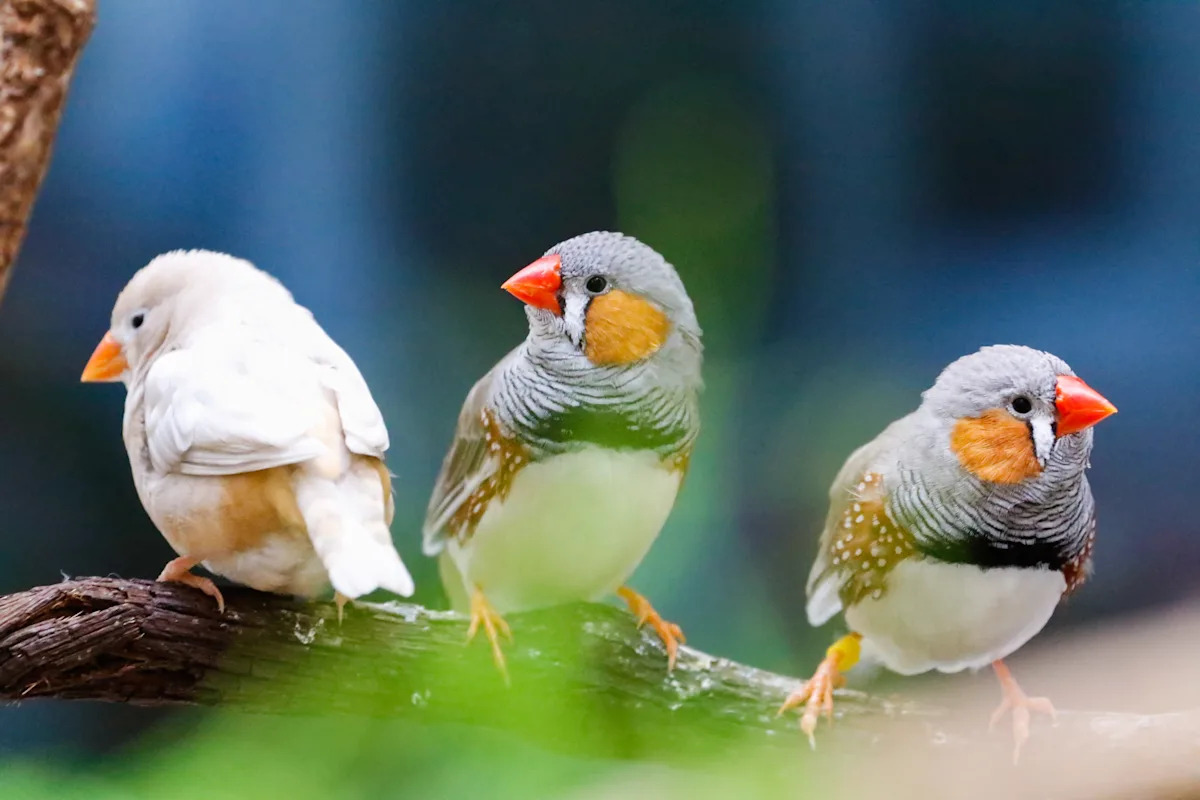
In the lab, zebra finches wake up hours before the artificial sunrise. They move around in the dark but they don’t start singing until light levels reach a sufficient level. Male zebra finches sang hundreds of different songs but only if the lights were on. In the dark, they remained silent.
In one experiment, the artificial sunrise was delayed by three hours. The finches woke up at the ordinary time but remained silent. Once the lights finally came on, they sang more intensely than normal, as if the extra time built up their emancipation, resulting in more pronounced singing.
“Their motivation to sing increases while singing is being suppressed by darkness,” the authors wrote, “subsequently producing intensive singing as a rebound from the suppression.”
In a second experiment, light came up gradually over the course of two hours instead of all at once, mimicking the actual dawn sunrise. When the gradual sunrise was delayed, birds started singing earlier and under dimmer light. Moreover, if given a button that turned the lights on for 10 seconds, they pushed it repeatedly, but only if the sunrise was delayed.
This relationship between light, darkness, and singing is also consistent with observations of birds going silent during a total solar eclipse and then bursting into a renewed dawn chorus once totality had passed.
The social role of birdsong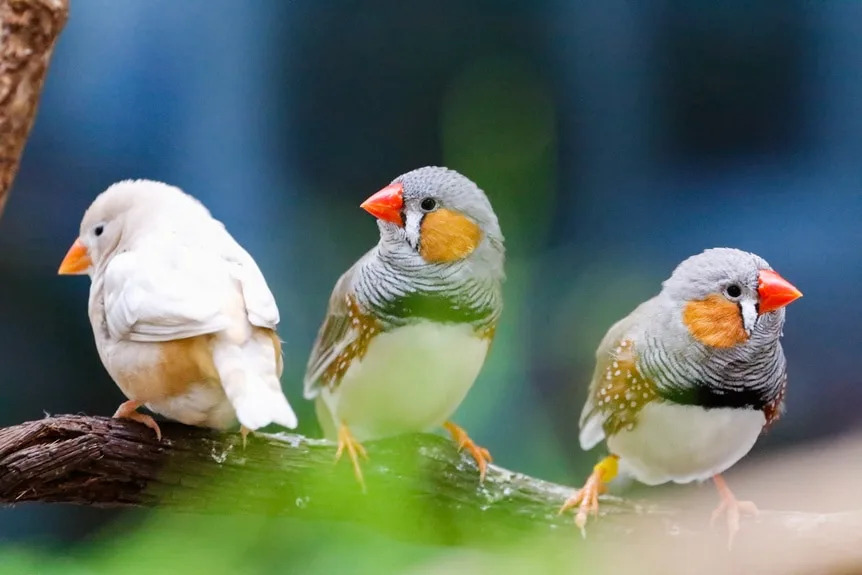
GettyImages 888299698
Only male zebra finches sing. They learn from a tutor, usually their male parent, for a period of months. Then they practice the song they’ve learned and create their own iteration, which they continue to sing throughout their lifetime.
By contrast, females don’t sing, but they do call to their mates. They also respond to the song of their offspring, helping young males learn the sorts of songs mates might enjoy.
Daily singing is a form of practice, allowing males to maintain and optimize their performance over time, increasing their likelihood of attracting a mate. Scientists hypothesize that intense morning singing sessions help them warm up their vocals after the nighttime rest period, so they can better attract mates later in the day. And the new study reveals that they sing because they want to, they’re just waiting for the stage lights to come up.
In the end, it doesn’t really matter why birds sing, we’re just glad they do.
For more on animal communication, catch Dolittle, streaming now on SYFY.