
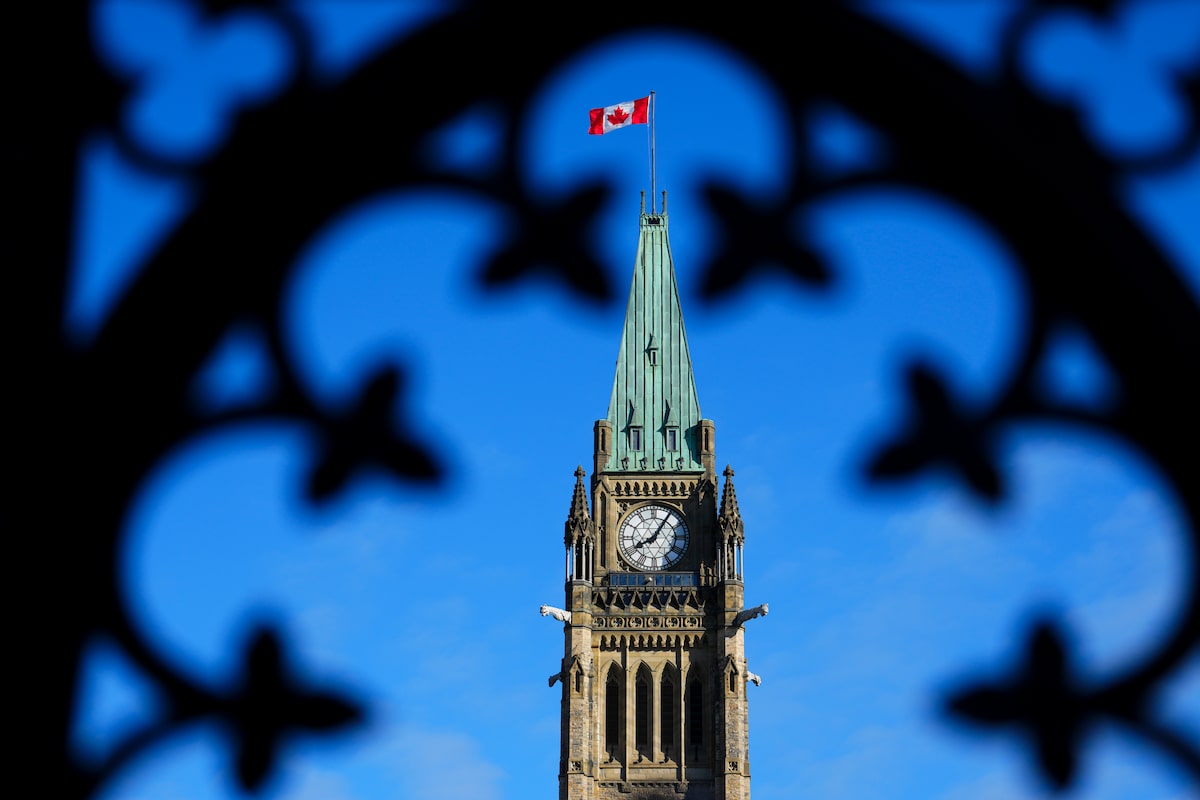
The Canadian flag at the Peace Tower in Ottawa. Advocates want a senate committee to make changes to a bill so children adopted from abroad don’t lose citizenship rights.Sean Kilpatrick/The Canadian Press
Parents who adopt children from abroad say Ottawa’s “Lost Canadians” bill gives their kids fewer rights to pass on citizenship than those adopted from within Canada, as lawyers and politicians warn that the distinction could prompt a legal challenge.
A senate committee, which is to scrutinize the bill next week, is being urged to make changes so that all children adopted by Canadian families have the same citizenship rights.
The Editorial Board: There can’t be two types of Canadian citizen
Opinion: The Conservatives are right: Canada should end birthright citizenship
Bill C-3, which has already been through the House of Commons, makes changes to citizenship law so that Canadians who were born outside the country can pass on their citizenship to future generations born abroad.
The bill reinstates rights of Lost Canadians after an Ontario court ruled it is unconstitutional to deny citizenship to children born overseas to Canadians also born outside the country.
But Bill C-3 requires a Canadian parent born abroad to demonstrate substantial ties to Canada, and to have spent 1,095 days (the equivalent of three years) in the country, before they can pass on citizenship to a child born outside Canada.
In addition, children adopted from overseas, who want to pass on their citizenship to children outside Canada, would have to show they have substantial ties to this country first, which their Canadian parents say is unfair.
Lawyers have submitted evidence to the Senate social affairs committee saying the differing treatment of foreign-born and Canadian-born adoptees could breach the Hague Convention on Intercountry Adoption, which Canada has signed. It says a child adopted from abroad should enjoy the same rights as children adopted from within Canada.
They also warn that the two-tier set of rights in the bill may also breach the Charter of Rights and Freedoms as it discriminates against children adopted from abroad on the basis of their national origin.
Ottawa public servants Maria Mottillo and Stephen Day adopted their daughter Clara from China when she was two years old. Now 16, she would have to fulfil the substantial connection test to pass on her citizenship if she had a child abroad, while her older brother Marco, the couple’s biological son, would not.
“How they became your children shouldn’t be a factor,” said Ms. Mottillo. “I just feel it doesn’t matter how they became our children, whether biological or adopted internationally. They should have the same rights.”
“It is important to us that our children have the same privileges and rights, and no additional administrative burdens, to pass on their Canadian citizenship should they choose to have children outside of Canada in the future.”
Provinces and territories impose stringent rules on adoption from abroad including ensuring prospective parents reside in Canada and agree to return here with their newly adopted children to raise them.
When the bill was in a Commons committee earlier this year, Liberal MP Nathaniel Erskine-Smith attempted to amend it so that children adopted from abroad would have the same citizenship rights as other Canadian children.
But Conservative and Bloc Québécois MPs voted against it, so his change did not get through.
“Citizens who are adopted internationally by Canadian resident parents will grow up knowing only Canada as their home. They should be treated the same as citizens who are born here. It’s as simple as that,” Mr. Erskine-Smith said in a text message.
He predicted that if the changes are not made in the Senate, they will be made after litigation through the courts. “But it shouldn’t have to come to that,” he added.
Two lawyers specializing in citizenship have submitted a briefing paper to the Senate committee, which will consider Bill C-3 next week. They argue that the bill should exempt children adopted from abroad from the substantial-connection test.
The paper’s co-author Toronto lawyer Sujit Choudhry, who filed the successful constitutional challenge to the Citizenship Act on behalf of Lost Canadian clients, said it is “deeply unfair to the families of these children to treat them differently than children adopted domestically.”
“It also violates Canada’s international treaty obligations and the Charter,” he said in an e-mail.
Its other author, immigration lawyer Maureen Silcoff suggested that unless Immigration, Refugees and Citizenship Canada addresses the issue it could face a legal challenge.
“IRCC is fully aware of the issue. Adoptive parents and MPs have been advocating on their behalf for years. We do not understand their reluctance to address this issue at this moment, when C-3 is before Parliament. Amending C-3 would avoid unnecessary litigation.”
Don Chapman, a leading advocate for Lost Canadians, who is giving evidence to the Senate committee next week, said “I don’t want to leave any child behind.”
But he expressed concern that amending the bill in the Senate may lead to it being held up when it returns to the Commons.
He fears that if the Conservatives or Bloc object to a Senate amendment and slow down the progress of the bill, this could mean that Lost Canadians could see further delays to the restoration of their citizenship rights.
IRCC did not immediately respond to requests for comment.