
Updated November 16, 2025 02:15PM
The Gravel Earth Series announced its 2026 calendar this week, and immediately ruffled feathers.
The series, which is about to embark on its fourth season, shook up dates, revamped its point table, and, crucially, replaced one of the established marquee events with its own extremely similar event. The changes, especially that swap on the race calendar, have left race organizers and riders puzzled.
Missing was The Rift, replaced by a race called Cuckoo Gravel, By The Traka. For those uninitiated in international gravel racing, The Rift is a well established event in this relatively young discipline, while Cuckoo Gravel is a first-year event.
“If the Traka is the crown jewel of the GES, the Rift was second,” Joe Laverick, a gravel racer and columnist on Substack, wrote the day after the announcement. “First raced in 2019, the Icelandic event has earned a reputation as one of Europe’s gravel monuments. It has featured in the GES since the beginning and is one of the most anticipated stops on the calendar.”
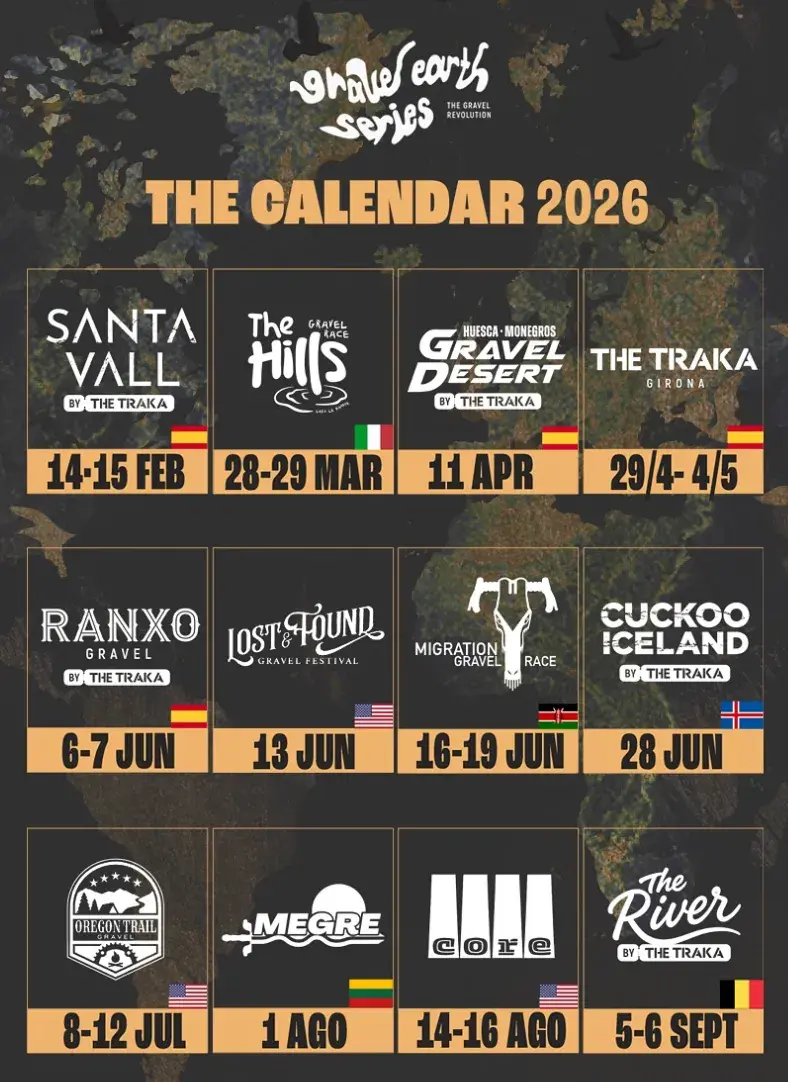 The 2026 Gravel Earth series had a very conspicuous change.
Laverick then elaborated on why the swap seemed dubious from the minute the announcement was made.
“As if losing The Rift wasn’t enough, the creation of Cuckoo Gravel — a Klassmark event in Iceland — has left a sour taste in a lot of mouths,” he said.
“It’s scheduled just two weeks before The Rift and, from what’s been shared, appears to take place in a similar region and on a similar course. That doesn’t sit right, and for a series built on collaboration, it’s tone-deaf.
“There’s no hiding the fact that Cuckoo Gravel steps on The Rift’s toes. With competitors inevitably torn between obligations, Klassmark’s new race will actively hurt the progress that made The Rift a global classic.”
A mutually beneficial collaboration
The Rift Gravel Race is Iceland’s premier gravel event and, along with the Traka, was a part of the first major gravel wave in Europe in 2019. That momentum quickly propelled the 200-kilometer gravel race through the stunning landscape of Iceland into the highest echelon of global gravel races, with the event selling out months in advance as both Americans and Europeans saw the race as an exotic gravel getaway.
When Klassmark, the promoters of the Traka, announced their Gravel Earth Series in 2023, there was no surprise that The Rift was part of the series. In fact, it immediately gave the Gravel Earth Series credibility as a series beyond the Spanish-based organizers. What’s more, their mission aligned well with the Traka’s eco-conscious perspective that has been a major point of emphasis for both events since they began in 2019.
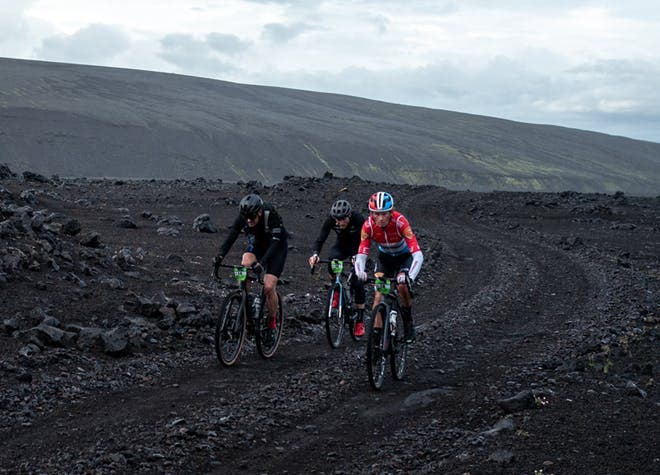 Riders take on The Rift in Iceland. (Photo: The Rift)
For The Rift, the partnership was beneficial as well, with the Gravel Earth Series’ foothold in the European gravel community.
“With the Gravel Earth Series, we thought it was something we should participate in, both because of the environmental factor, and also, we needed support,” Dana Rún Hákonardóttir said. Hákonardóttir works for Lauf and is a part of The Rift’s organization. “It’s an expensive race; it’s expensive to come to Iceland. People have to buy tickets, accommodations, and most people have to rent a car because it’s out of the city.
“We looked at this collaboration as a support system for us, and it definitely brought in registration from Europe to be part of the series.”
A rift forms
Heading into 2025, The Rift had signed back on for another year of the Gravel Earth Series after two successful years. The idea that the race wouldn’t be back in 2026 seemed far-fetched. In fact, the race doubled down on its commitment to the series by buying the media package that was an additional fee for on-the-ground coverage and a robust social media production.
Ultimately, that was when things started trending in the wrong direction.
“Throughout the year, we didn’t feel we were getting what we were paying for,” Hákonardóttir said. ”Obviously, they were sharing the materials throughout the weekend, but that didn’t help us get registrations beforehand. Being on their map is a great value, but throughout the year, they didn’t share anything.”
When things moved to the off-season and next year became the topic of discussion, Klassmark wanted to elevate the collaboration even further with their new “By the Traka” designation. That proved to be a big shift in the future of both organizations.
“When they introduced ‘By the Traka,’ they wanted to take over our event, either just let them have it, or we were supposed to pay them to organize it,” Hákonardóttir said “We wanted to keep The Rift independent and just focus on delivering this one-of-a-kind experience.”
 The Traka and parent company Klassmark are becoming a larger player in gravel, opening more events across Europe. (Photo: Sixt Visuals)
And with that, the collaboration between the Gravel Earth Series and The Rift was over. At first, it seemed amicable, but then, when the news of the Gravel Earth Series’ new Icelandic venture made its way to The Rift organizers, it seemed much more hostile. The new race had the “By the Traka” designation underwriting it, meaning they had a high level of control over the event, and it would serve as an opportunity to earn extra points.
All events listed as “By the Traka” have more points available to win compared to the Gravel Earth Series events without that designation.
“It seemed to be fine when we were leaving and they were very professional replying to that, but then, like 10 days later, we found out there was a new event coming,” Hákonardóttir said.
“Gerard sent one of our colleagues an email, ‘just to let you know, we’re organizing a new gravel event in Iceland’ with another guy here in Iceland that we’ve known. All of them were at The Rift this summer, and we kind of felt a little bit played by them.
“It was a little bit disappointing after being in a collaboration with them for three years to hear they’ve been planning this all along.”
The new Icelandic event was in the works for years, says Klassmark
All told, the swap of Icelandic races on the Gravel Earth Series is one of several changes to the revamped schedule. In total, the series has fewer races, fewer countries, and more direct Traka influence than ever before.
All of this comes down to the drive and ambition of Klassmark. Klassmark is a small six-person organization, led most prominently by Gerard Freixes, the CEO and co-founder of the Traka, Klassmark, and the Gravel Earth Series.
“As you’ve noticed, we’re moving toward a more compact series, focusing on events truly aligned with the spirit of gravel and the values we share,” Freixes told Velo in a statement when asked about the changes. “It’s become increasingly difficult for smaller events to meet the membership requirements, so our goal now is to concentrate on fewer but stronger races where the best riders come together, ensuring a fairer and more competitive environment.”
We reached out to Klassmark for a comment on the calendar changes and the split with The Rift after our interview with the organizers of The Rift. In the statement to Velo, Klassmark made it clear that while the Icelandic race was developed before The Rift had left the Gravel Earth Series, it had been planned well in advance of the recent developments.
“Regarding The Rift, the situation was simple,” he said. “They chose not to be part of the series next year, just like Gravel Worlds. Meanwhile, we had a local Icelandic organizer who had approached us three years ago with a project for a gravel race there.
“Back then, we couldn’t include it because The Rift and Lauf were already involved with the series, and we wanted to keep things legitimate and fair. This year, with The Rift stepping out, it felt like the right moment to give this new event a chance. It’s a small, passionate project, nothing on the scale of The Rift, but it’s being built organically and with the same values we’ve always believed in.
“We deeply respect The Rift and everything they’ve achieved. For us, this isn’t about competition — it’s about contributing in our own way to the evolution of gravel. The sport is still small and niche, and rather than fueling unnecessary debates, we believe the focus should be on collaboration and growth.”
‘Make it make sense’
Ultimately, The Rift isn’t alone in leaving the Gravel Earth Series behind. Gravel Worlds, a prominent race in the United States, has left the series. Similarly, the Grasshopper Adventure Series in Northern California pulled one of its events from the series.
Lost and Found Gravel and the Oregon Trail Gravel Grinder are both returning, bringing some American prestige to the series, but losing two of the most established events from the series is significant, nonetheless.
While it might seem like water under the bridge for Klassmark, the perceived overstepping from the organization has undoubtedly burned some bridges.
“It’s so strange to me because we want to make it very clear that we celebrate all gravel races, and we are definitely not the only gravel race in Iceland,” Hákonardóttir said. “There are plenty of gravel races here in Iceland, and I think it’s great to have more races, but do you have to keep it at the same location as we are? They could have done it on the East Coast or somewhere else, but it’s literally a 20-minute drive from where we start. Also, it could have been some kind of collaboration. It could be back-to-back weekends.
“I think the most important thing for us as event organizers is to think about the people who will actually want to come. I mean, there are many organizations like Life Time and the Gravel Earth Series, but in the beginning, these people started because they wanted to make an event.
“I think it’s great if people can make their living out of it, but just make it make sense. Don’t just do it for the money.”