
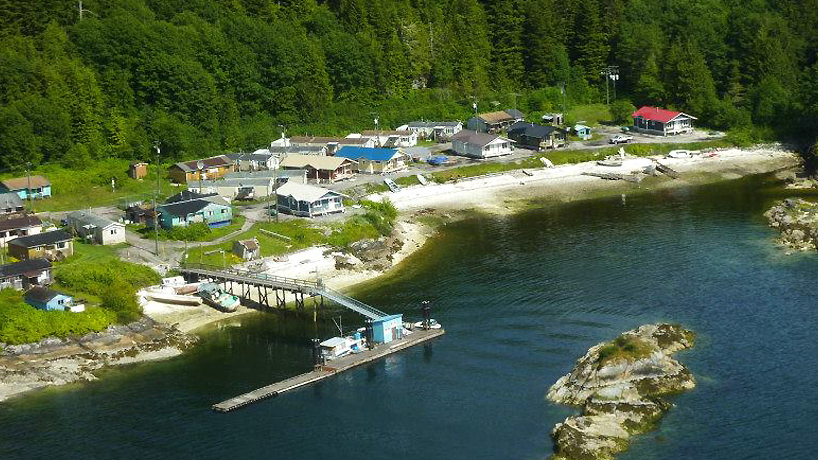
The Village of Gwa’yas’dums on Gilford Island, north of Vancouver Island, will receive more than $3.2 million from the federal government to help guard against coastal flooding and shoreline erosion linked to climate change.
Announced by the federal government earlier this month, the funding will go toward replacing decades-old shoreline protection infrastructure that has reached the end of its lifespan.
The project will include armouring the shoreline with riprap, which is rock or other natural materials used to prevent erosion, and constructing a bio-engineered slope.
Officials say the improvements will protect critical infrastructure and essential services in the remote coastal village, which is home to members of the Ḵwiḵwa̱sut’inux̱w Ha̱xwa’mis First Nation.
“We are profoundly proud to stand in partnership with the government on this vital initiative,” said Hereditary Chief Rick Johnson in a statement. “This project is a tangible result of what can be accomplished when we walk together, side-by-side, in a spirit of respect and collaboration.”
Gwa’yas’dums First Nation is facing increased risks of storm surges and rising sea levels. Federal officials say the investment will help the community adapt to those threats while supporting reconciliation and long-term sustainability.
The $3.2-million investment comes through the Disaster Mitigation and Adaptation Fund, which has committed more than $3.8 billion since 2018 for infrastructure projects across Canada.
The government estimates that every dollar spent on adaptation can return as much as $13 to $15 in economic and social benefits.
“Investing in infrastructure to protect Canadians against current and future environment disasters is our government’s promise in action,” said Stephanie McLean, Canada’s Secretary of State for Seniors and MP for Esquimalt-Saanich-Sooke. “We are working together with partners to build resiliency in our communities to address the increasing impacts of climate change across the country.”
The project is subject to environmental assessment and consultation with Indigenous groups, in accordance with federal requirements.