
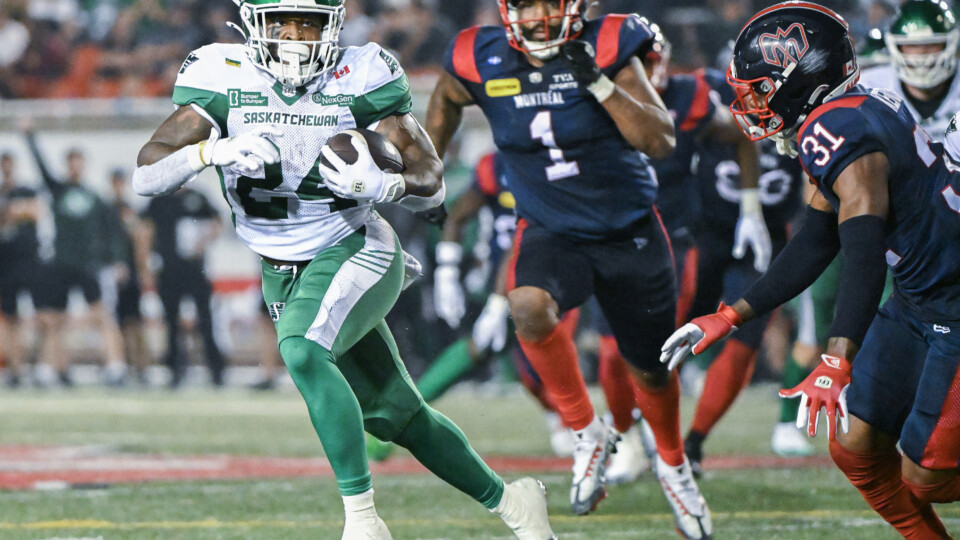
I watched two enthralling championship football games this weekend. One was the Canadian version of North American football, the other the global game of football North America calls soccer. Rarely have two finals revealed such different futures.
It would be easy to label one as belonging to a league aging out and the other to a league in inheritance, or one struggling to stay relevant and one fighting to be. But there is more to it than that for Canada.
The Canadian Football League has long tried to hold a shrinking loyal base while courting a generation that may never have watched a full game. It’s like the CBC if it were a sport with a private-sector business model. Sunday’s 112th Grey Cup carried all the ceremony of tradition but tremors of transition. The league is wrestling with what it means to be “the Canadian game” in an entertainment world ruled by streaming, speed, and viral moments. Hence, the choice of Machine Gun Kelly for the halftime show, though many viewers might have preferred Kelly Clarkson. (And am I the only one who wondered how the Prime Minister’s Office talked former bank governor Mark Carney into standing beside a Coinbase executive for the ceremonial coin toss?)

Still, a CFL game is never over until it’s over. We call them barnburners long after barns stopped burning. Apart from last year’s blowout, four of the last five Grey Cups were decided in the final three minutes or overtime. This year, Montreal trailed Saskatchewan by eight with just over three minutes left, a body length from the goal line. A touchdown and two-point conversion would have tied it. Instead, the quarterback fumbled, a typical gut-turning moment that keeps fans coming back. It was Saskatchewan’s first Grey Cup in a dozen years, a reward for the league’s most ingrained fan base and Canada’s closest thing to the Green Bay Packers (watermelon heads instead of cheese heads).
But it’s not good enough, it seems. Stewart Johnston, the new CFL commissioner, has corralled owners to approve rule changes for next season and beyond. The field will shrink from 110 to 100 yards. End zones will drop from 20 to 15. Goalposts will move to the back, and a punt or missed field goal through the end zone will no longer yield the rouge. The CFL is literally redrawing its lines.
Yet fans wonder whether the league can modernize without mutilating what makes it distinct. (The league’s Most Outstanding Player, BC Lions quarterback Nathan Rourke, called the changes “garbage.”) The wide field, the three downs, the 12 players, and the generous offensive motion are quirks that give the CFL a kind of kinetic chaos the NFL can’t mimic. The rule changes don’t breach these tenets, but they feel like a thin-edge test of national identity in how much of “our game” can change before it stops being ours. Innovation isn’t always about doing new things, but about knowing what to keep.
Continue reading