
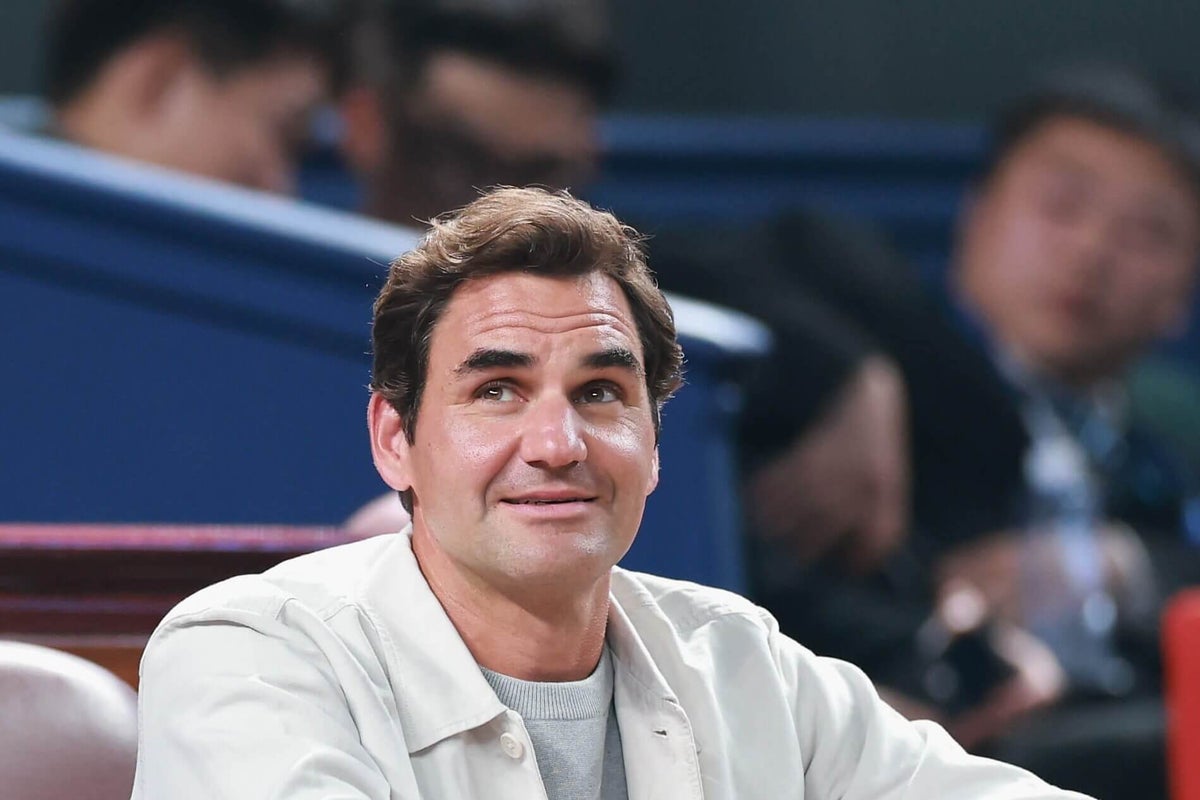
Just as he did standing across the net for so many years of his tennis career, Roger Federer saw it coming.
Last week, at the headquarters of Swiss Tennis in Biel, Switzerland, with about 50 junior players from his country, the 20-time Grand Slam champion, first man of the Big Three and one of the greatest players of all time was waiting for the call from the International Tennis Hall of Fame.
Kim Clijsters and John McEnroe, the organization’s honorary and official president, dialed in for one of the least surprising sports announcements in the history of sports announcements. In August next year, Federer will become the first of the legends of the era of tennis that he helped define to enter the exclusive club based in Newport, R.I.
But then, the names and images of other giants of the sport started popping up from around the world. Stefan Edberg, Boris Becker, Chris Evert, Martina Navratilova, Rod Laver, Roy Emerson, Tracy Austin, Pam Shriver, Michael Chang, Stan Smith, and on and on. It was 3 a.m. in Australia, but there was Pat Rafter, ready to chime in, all of them bringing their congratulations and a few memories.
There were 33 Hall of Famers in all. Even Federer was not expecting that.
“I thought that maybe they were just going to go like, ‘congrats,’ and then wave into the camera, but every person literally spoke on the call,” Federer said during in an interview following the call and a pizza party with the junior players.
“It was really meaningful to have your heroes speak to you on a moment like this.”
Sports halls of fame are largely an American institution. They don’t exist so much in the rest of the world and in tennis, players don’t talk so much about theirs. Federer said that for a long time he wasn’t sure how to think about it, since he hadn’t grown up thinking about baseball’s in Cooperstown, N.Y., the NFL’s in Canton, Ohio, or basketball’s in Springfield, Mass.
Then he ran into Pete Sampras, the player whose Wimbledon torch he carried and whose Grand Slam title record he broke, after the American’s induction ceremony in 2007. Sampras, not known for his public displays of emotion or his connections with the greater tennis world, said it overwhelmed him. That left Federer thinking it was pretty serious.
Rosie Casals, who was central to the fight for equal prize money in women’s tennis in the 1960s and 1970 alongside Billie Jean King, delivered her own warning on last week’s call.
“I know you are a crier, you better bring plenty of Kleenex,” she said.
Players are required to be three years removed from playing a significant role in the sport to enter its Hall of Fame, which has in recent months been more notorious for rejecting a proposed $10 million endowment from billionaire financier Bill Ackman, who received a wild card into the doubles event at its annual tournament alongside Jack Sock despite having never played a professional match.
In the coming years, the Hall will welcome the rest of the giants of the last quarter century with one of these calls, such as Serena Williams, Rafael Nadal, Andy Murray and — only they know when — the still-active Novak Djokovic and Venus Williams.
“I do believe the tennis Hall of Fame should be much bigger,” Federer said. “The next years are going to be absolutely stacked hopefully with absolute legends.”
Their calls may not be quite like Federer’s, the archetype of elegance and ease whose tennis aesthetics meant his supreme control of serving, defense, fitness and so much more went overshadowed. Even the best players ever get gooey recalling the 44-year-old’s exploits.
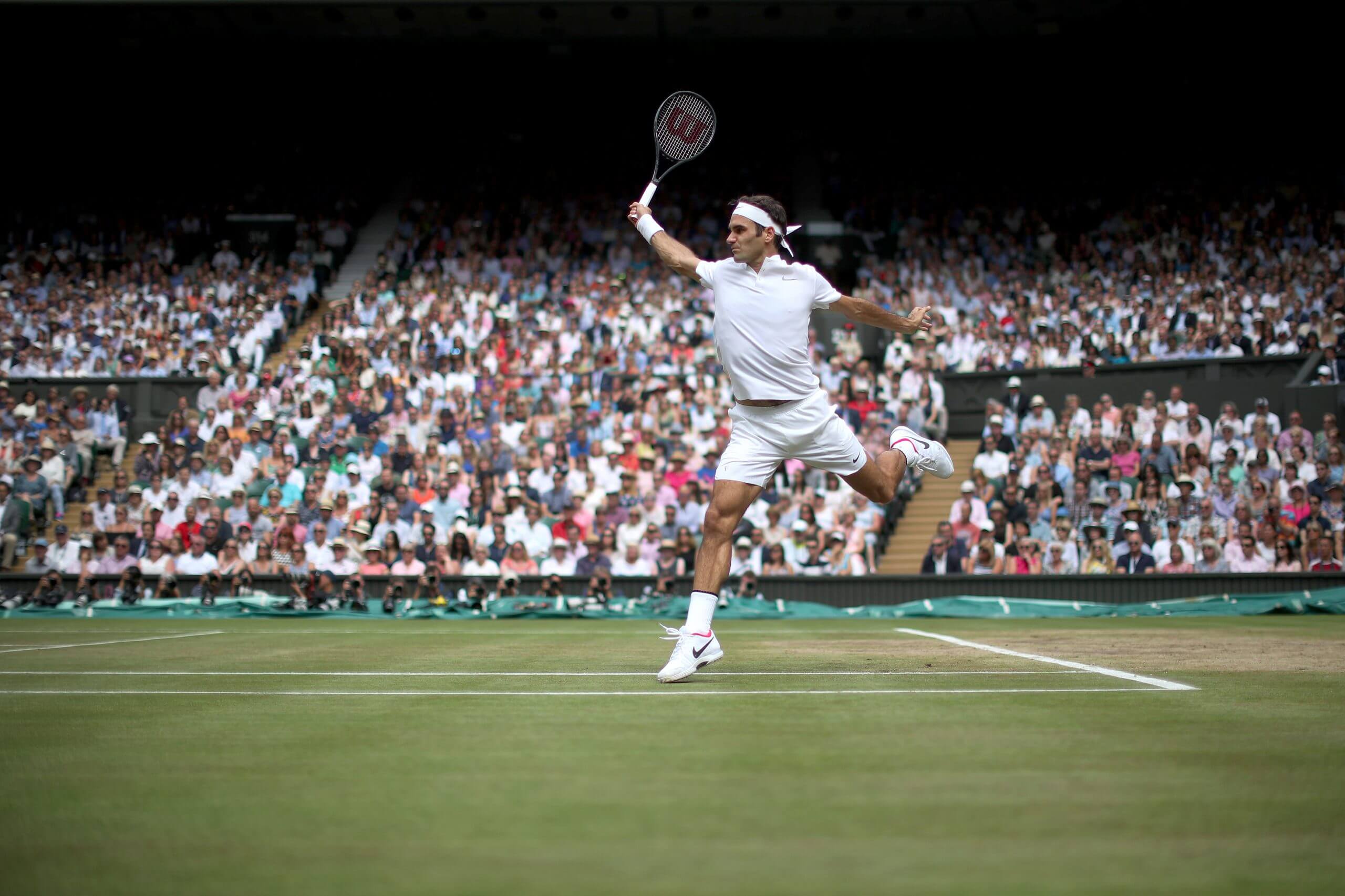
Roger Federer became synonymous with Wimbledon during his career, winning the singles title eight times. (Tim Clayton / Corbis via Getty Images)
Clijsters spoke about rushing out with her friends to see him play at a junior tournament when they were 15 and heard he was on the court. Edberg recalled the Swiss’ ability to switch from relaxed to intense in an instant. Many remembered the movement and the grace; Billie Jean King recalled the “guts, such focus, such intensity” of his 2017 win over Rafael Nadal.
Gigi Fernandez said she and her sister would always be grateful for seeing him after his farewell match. He kissed each of them twice.
“She still hasn’t washed her cheek,” Fernandez said.
“Say hi to your sister,” Federer told her. “Tell her to wash her face.”
Federer said that the headquarters of Swiss Tennis, where the street outside is named for him, was the only place to be. He moved to the federation’s training center as a young teenager, desperately homesick. He stuck it out and the experience changed his life.
It launched him into the early years of his career, when the sport was casting about for a rightful heir to the stars of the 1990s, Pete Sampras and Andre Agassi. At first, it was anything but obvious that Federer might fill the looming void.
“I wasn’t exactly in that place like we’ve seen with Jannik [Sinner] and Carlos [Alcaraz] now,” he said.
“I was trying to put my hand up. But you know [Andy] Roddick, [Marat] Safin, [Juan Carlos] Ferrero, [Lleyton] Hewitt, they all won Slams before me. So we had a really cool wave, new generation guys mixed, sprinkle Andre in there and others, still doing great things. When I did win Wimbledon and the Australian Open, I became world No. 1, and in those years of 2003, 4 and 5, I started to carry the sport a little bit.”
A little bit.
Federer recalled his own moments with the people who welcomed him into their club. He said King came to see him ahead of the 2008 U.S. Open, at the end of a Grand Slam season in which he had yet to win one.
“I had just lost a little early at the Olympics in Beijing and she came to my hotel room and gave me like a pep talk,” he said.
There were the beers with Rafter, who won their first match in 1999 at the French Open. Lleyton Hewitt had told Rafter to watch out. Rafter lost the first set before coming back.
“You were a little bit soft back then,” he said.
Martina Hingis, a fellow Swiss, gave herself a pat on the back for their win in a team competition. “I always cherish our Hopman Cup trophy and teaching you how to win a tournament,” she said. Chang called in from his car to credit his respect for players up and down the circuit; Esther Vergeer, the Dutch wheelchair tennis champion, thanked him for welcoming the sport into the wider tennis community.
And yes, there was some more goo. Evert’s boys, thrilled with a photo. Navratilova, keeping it simple: “I’m so glad you were born.” Virginia Wade, comparing him to a concert pianist, playing his instrument so gently. The Bryan brothers, Bob and Mike, recalling Federer’s calm ahead of finals while they would pace the locker room, anxious.
Federer, aware of the weight of his history with the sport, could lean into the absurdity of it all as he did during his career.
“This is the best video call I’ve ever had,” he said.