
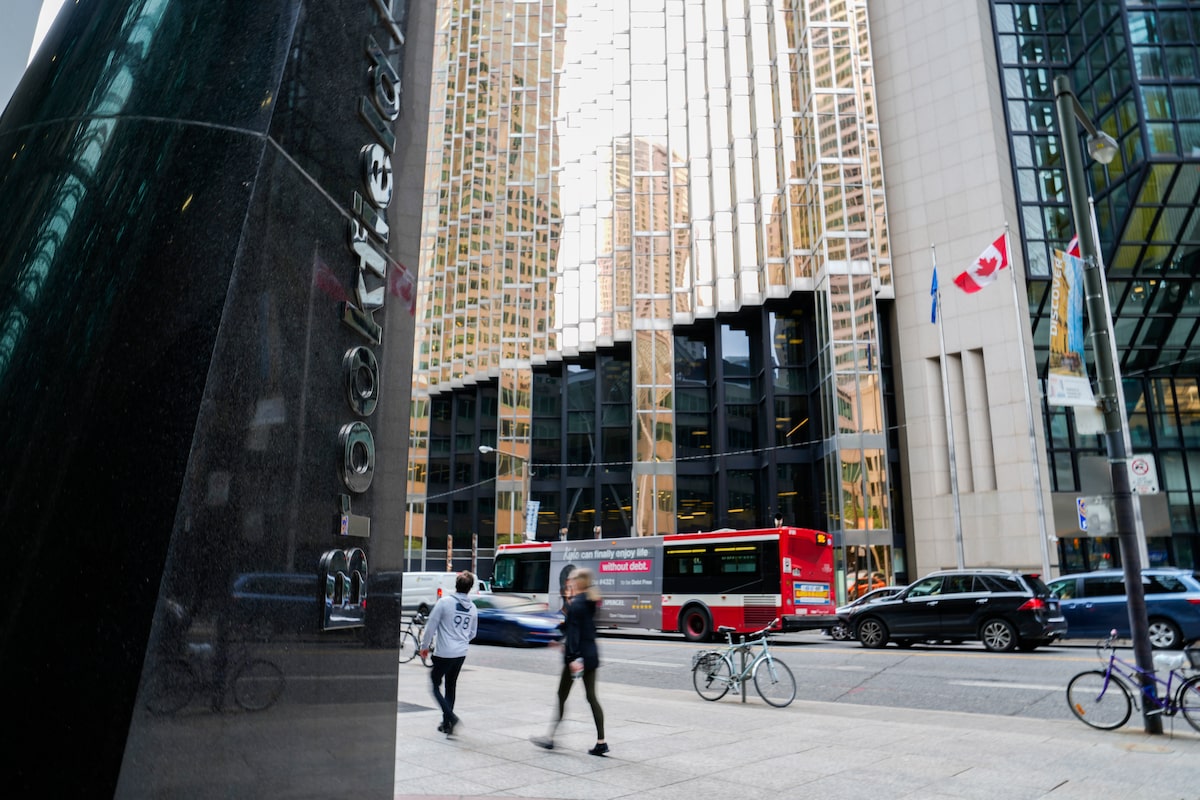
Brookfield Asset Management Ltd. BAM-T is aiming to raise US$10-billion for a new artificial intelligence infrastructure fund that has attracted Nvidia Corp. NVDA-Q and Kuwait’s sovereign wealth fund as anchor investors.
The Brookfield Artificial Intelligence Infrastructure fund has already secured US$5-billion of commitments from its own capital and industry partners, including the Kuwait Investment Authority (KIA) and Nvidia, the world’s most valuable company.
The fund will be the cornerstone of an AI infrastructure strategy that is aiming to acquire as much as US$100-billion of AI infrastructure assets. To reach that target, Brookfield would bring in more capital from co-investors and use “prudent” debt, investing in land, energy, data centres and computing power, the company announced Wednesday.
Brookfield launches its first private equity fund tailored to individual investors in Canada
In recent months, Brookfield told investors it ultimately has plans to invest US$200-billion in “AI factories” in North America, Europe and Britain. Chief executive officer Bruce Flatt has said that is likely “just the beginning,” and that AI infrastructure could be Brookfield’s biggest business within a decade.
Brookfield already manages more than US$1-trillion of assets, including more than US$100-billion invested in renewable energy and digital infrastructure.
The first deal under the new strategy was announced in October, when Brookfield agreed to invest up to US$5-billion to deploy fuel cells built by Silicon Valley-based Bloom Energy Corp. that could help run power-hungry data centres.
“AI is creating one of the largest infrastructure buildouts in history, comparable to the formation of the modern power grid and global telecom networks, but unfolding at a far greater pace and significantly larger scale,” Sikander Rashid, Brookfield’s head of AI infrastructure, said in a statement.
Brookfield’s factories will mostly be built on an Nvidia design blueprint, using the company’s chips to provide an AI cloud service called Radiant that Nvidia CEO Jenson Huang said in a statement will be “fast to deploy and designed to scale with the world’s growing intelligence needs.”
Brookfield has also previously signed deals with governments in France and Sweden to invest in AI infrastructure in those countries, with combined commitments of as much as US$30-billion.
And the asset manager recently created a partnership with California-based Figure AI Inc. to help train and develop humanoid robots that could work in homes and commercial settings.
Mr. Flatt has framed the development of AI as a trend that will “change every single business in the world,” and said Brookfield is in a race to be at its forefront.
Rapid advances in AI models have attracted hundreds of billions of dollars of investment in recent years, sending company valuations soaring. A recent shift toward using more debt to finance the construction of those facilities, at a moment when even the most advanced AI models are only earning modest revenue, has raised concerns that a data-centre bubble could be forming.
But Brookfield has said it insists on signing long-term contracts with steady counterparties, and that data-centre supply is still struggling to keep up with demand.