
Good morning. Canadian researchers would very much like some of your toenail clippings – all in the name of science, of course. More on that below, along with China’s massive lending to high-income countries and last night’s Giller Prize winner. But first:
Today’s headlinesOpen this photo in gallery:
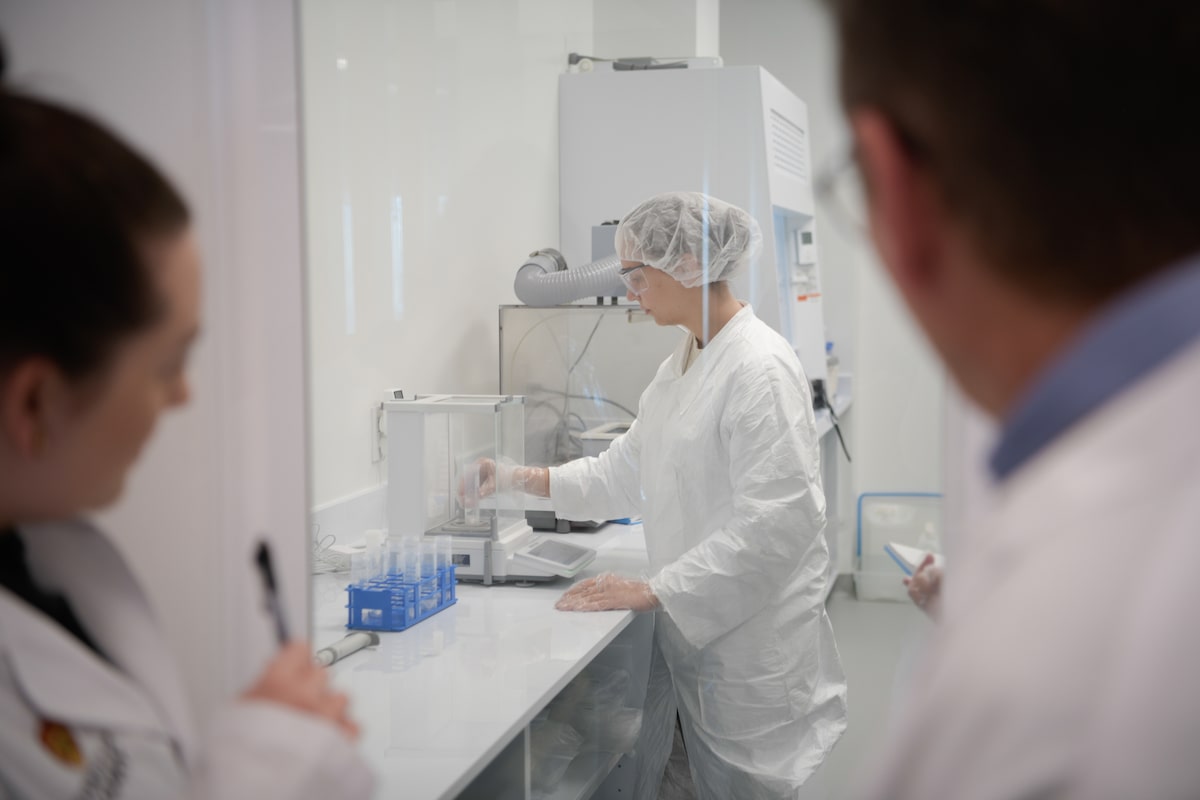
Peeking in on the University of Calgary’s Metal Free Clean Laboratory.Sarah B Groot/The Globe and Mail
ScienceBest foot forward
Your toenails could hold the secret to a leading cause of lung cancer – and Calgary researchers really want a cut of that action.
Across Canada, more than 10 million people live in houses with dangerously high levels of radon, an odourless gas that’s released when uranium breaks down in rocks and soil. Radon sneaks into our homes through cracks in the foundation or cavities in the wall, and when we breathe it in, the gas quickly transforms into solid radioactive lead that settles in our lungs.
That’s why radon is the main cause of lung cancer in people who’ve never smoked, killing more than 3,000 Canadians each year. But it’s been nearly impossible for scientists to measure decades-long exposure to radon – at least, as The Globe’s Alanna Smith discovered, until now.
Why toenails?
Our bodies can store the lead from radon in slow-shedding tissue like nails and hair. The trouble for environmental cancer researchers, though, is that our fingers come into direct contact with all sorts of signal-muffling noise, including food, dyes, cleaning products and household chemicals. Happily, our feet tend to be tucked away from those contaminants. And since basically everyone still has their toenails – which cannot be said of their hair – University of Calgary scientists suspected some decent data might lurk in the clippings.
They weren’t wrong: A small 2024 pilot study showed that toenails can provide a 15-year archive of a person’s exposure to radioactive lead. “This is, theoretically, going to be magic,” lead researcher Aaron Goodarzi said. Their attention now turns to a much larger validation trial, funded by the Canadian Cancer Society and expected to wrap up in 2028. To get there, the researchers need samples from 10,000 participants willing to donate their nail clippings to a good cause.
These could be your toenail clippings!Sarah B Groot/The Globe and Mail
Intrigued – and fungal-infection-free? You can still sign on to the study, after which you’ll receive a radon detector for your home, baggies to collect four months’ worth of clippings, and a return envelope. Each person’s trove of toenails will make its way to a $4-million University of Calgary lab, built exactly for this kind of cutting-edge research.
The tipping point
So how do scientists actually distinguish the radon from the nail? It starts in what co-principal investigator Michael Wieser calls “Magneto’s prison,” a metal-free room (plastic shelves, special paint) that prevents toenails from being tainted by other lead. The clippings are carefully cleaned with organic solvents, then mixed into a cocktail of nitric acid and hydrogen peroxide before being nuked by a fancy microwave.
“What comes out is a super-small vial of yellow goo, which a technician in a plastic lab coat places into a drive-through window,” Smith told me. “People in a different room, on the other side of the window, then take the goo and put it a mass spectrometer.” This instrument determines the specific composition of the lead, allowing researchers to measure an individual’s long-term exposure to radon decay.
And that discovery could transform cancer prevention in Canada. Today, two out of every five people who develop lung cancer don’t meet current screening criteria, either because they’ve never smoked or because they gave up the habit too long ago. As a result, most lung cancer cases in non-smokers are caught at Stage 3 or 4, where the survival rate tops out at 16 per cent, rather than at Stage 1, where it’s higher than 70 per cent.
Goodarzi and his team hope their data will lead to more patients being included in early cancer screening and detection. “That’s the magic this promises,” he told Smith. “If we can diagnose it soon enough, we just cut it out and you go on with your life.” For her part, Smith has become equally bullish on the research. “I’m truly obsessed with it,” she said. “I’m grabbing every friend and family member by the shirt and yelling, ‘Do you know what your toenails can do?’”
Sometimes, science hides out in the most unpromising of places – and then marches ahead at a rapid clip.
The Shot‘We’re like an octopus, a good octopus.’Open this photo in gallery:
Syria’s Minister for Social Affairs and Labour, Hind Kabawat, is a Canadian citizen.Hasan Belal/The Globe and Mail
Nearly one year after the fall of Bashar al-Assad’s regime, Syrians with close Canadian ties are playing an outsized role in the postwar government. The Globe’s Mark MacKinnon reports from Damascus on their plans to nudge the country in a more inclusive direction.
The WrapWhat else we’re following
At home: Cheaper prices at the gas pump and grocery store helped bring inflation down to 2.2 per cent last month.
Abroad: Sweeping changes to Britain’s asylum system would ramp up deportations, including of people with refugee status.
Books: Souvankham Thammavongsa won the $100,000 Giller Prize for the best Canadian fiction of the year with Pick a Colour.
Bucks: China has built a global lending portfolio worth more than US$2-trillion, with the United States the single largest recipient.
Called up: Canada’s top general wants a reserve force 400,000 strong to help with natural disasters and military crises. (We’re currently below 30,000 people.)
Tied up: Donald Sutherland’s memoir – which its publisher promises is filled with “raw honesty” – is being challenged in court by the late actor’s estate.