
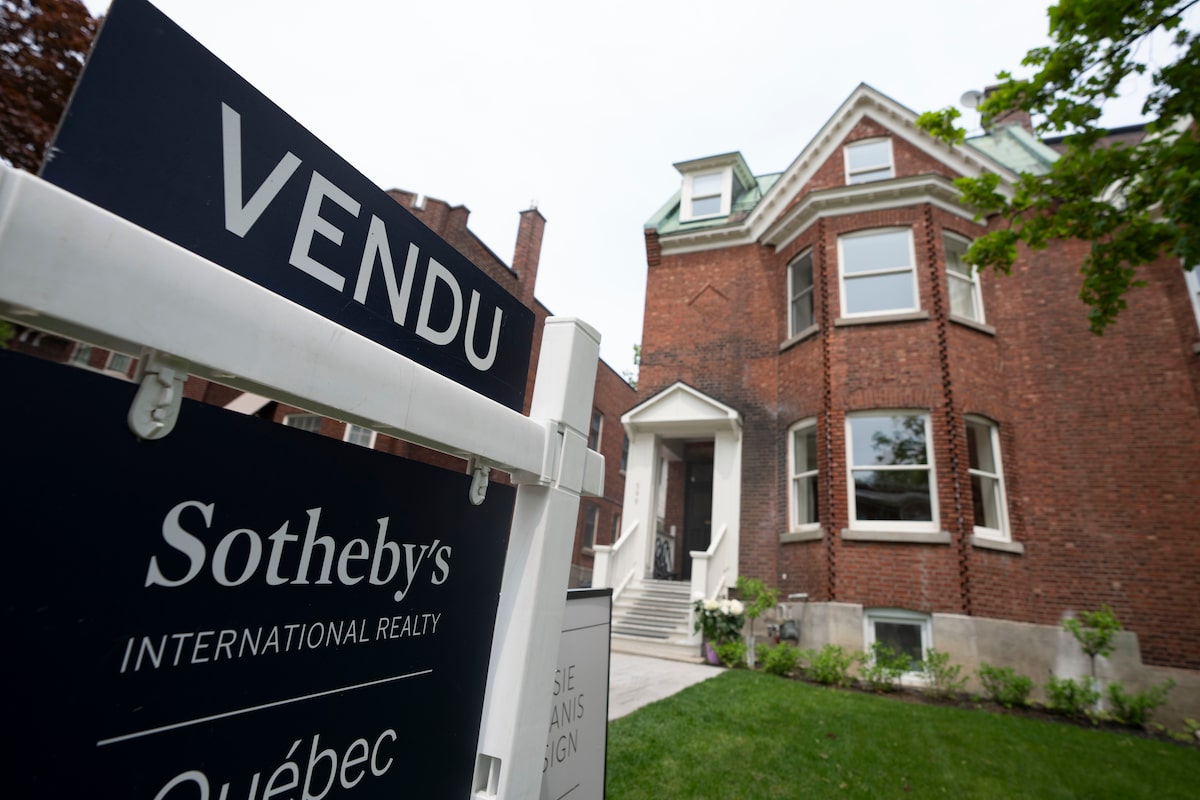
Montreal is the largest city in Canada where real estate prices have increased, growing 7 per cent in October.Christinne Muschi/The Canadian Press
Canadian housing prices have been stagnant for months, but a handful of cities are managing to outperform despite the effects of economic uncertainty.
Home values across most of the country were unchanged on a year-over-year basis for the fourth month in a row in October, according to data from Wahi, a digital real estate platform, and Real Property Solutions, a Canadian property valuation service provider.
Meanwhile, Montreal, Halifax and the Ottawa-Gatineau region have been emerging as markets that are reliably growing – even as weakness in the condo market and in Vancouver and Toronto weigh heavily on national real estate prices.
The Globe and Mail spoke to realtors and Wahi economist Ryan McLaughlin to dig into why these three markets are strengthening.
Opinion: Have homes gotten pricier – or has money lost its value?
Ottawa-Gatineau
Ottawa-Gatineau is the only major census metropolitan area within Ontario to post notable growth. Wahi-RPS data shows home values grew by 4 per cent in October on a year-over-year basis, reaching an average of $725,190.
Jason Pilon, broker of record at Re/Max Pilon Group Hallmark, said the fact the region includes Gatineau, a Quebec city, is one reason for the strong growth.
He estimates prices in the Gatineau side have grown by roughly 6 per cent over the past year, while the Ottawa side has only increased by about 2 or 3 per cent.
That’s largely because housing in Gatineau is cheaper. Affordability has been a major factor driving buyers to Quebec, which has historically been a low-priced property market.
“A lot of buyers are crossing the river and going into Gatineau for more space and lower price points,” said Mr. Pilon.
However, Mr. Pilon attributed Ottawa’s stable employment base in government, consulting and health care as a reason why the Ontario side of the region has also grown this year.
What kind of house does $680,000 get you across Canada?
Montreal
Montreal is the largest city in Canada where real estate prices have increased, and it performed strongly in October with a 7-per-cent growth in prices. Montreal was still outpaced by Quebec City, which has emerged as one of the hottest markets in 2025 and grew by 11 per cent.
A major factor is that Montreal’s market has always lagged behind other urban centres, giving it lots of room for growth, said Marc LeFrançois, a real estate broker with Royal LePage Tendance in Montreal.
However, affordability isn’t the only thing Montreal has going for it. Mr. LeFrançois said the city’s economy has been relatively resilient in the face of trade uncertainty with the U.S.
Quebec’s aluminum and lumber industries are at risk, but those industries are far from Montreal.
On the other hand, Mr. LeFrançois noted that Montreal’s reputation as a renter-friendly city is waning. He said rental prices have inflated by roughly 9 per cent over the last year – more than what should be allowed even between tenancy changes under the province’s rules for landlords.
“A lot of people have said if I’m going to pay so much for renting, I’m going to look at buying property,” said Mr. LeFrançois. That is heating up the city’s real estate market in turn.
Wahi-RPS reported that the average home value in Montreal is just $734,790 – nearly $400,000 cheaper than Toronto, making it much easier for a renter to actually transition into home ownership.
Halifax
The Atlantic region’s largest city saw its real estate market explode after the onset of the COVID-19 pandemic. Prices eventually cooled around 2023, but Wahi’s Mr. McLaughlin said growth has returned this year and it has brought average selling prices to all-time high levels in recent months.
Halifax’s real estate values grew by 4 per cent in October to an average price of $622,500.
Mr. McLaughlin said Halifax is benefitting from high interprovincial migration to Nova Scotia. The province is third behind Alberta and Prince Edward Island in this category.
Halifax also has a relatively low unemployment rate of roughly 6 per cent – lower than the national average and than cities such as Montreal.
All of this has led to a scenario where supply is tight, demand is strong, and houses are consistently selling at elevated prices.