
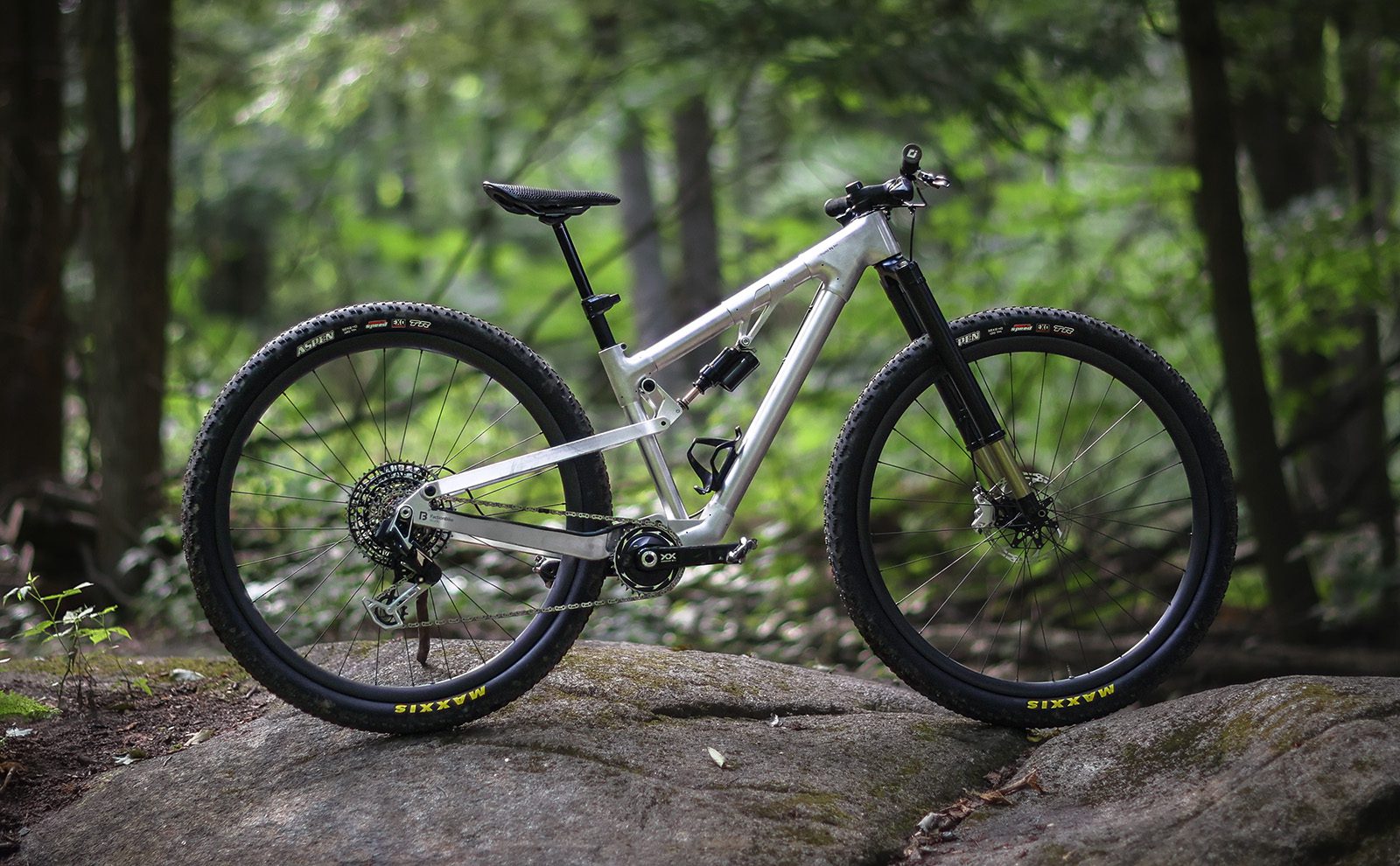
Well, it looks like the wheel size debate is about to be dragged from its grave once again. After the 27.5″, 29″, then 27.5″/29″ debates were resolved through thorough(bred) kicking, someone went and pulled out a giraffe. Now, UCI is giving that giraffe – that is, 32″ wheels – a chance to run. Cycling’s ever wise, and usually rules-obsessed, governing body is stepping back from regulating the new 32″ wheel size, I hesitate to call it a standard, out of existence.
That means we could see 32″ bikes on the start line when the World Cup resumes in 2026. Or earlier.
Monster-wheeled machines have already been spotted during practice sessions at cross country World Cups throughout 2025. A Canadian studio is even at the forefront of developing bikes to suit the super-sized hoops. But no one has yet dared to actually start a race on a 32″ bike.
Meet Big Ben: Faction Studio’s 32-inch wheel prototype
Initial rumours were that the often-reactive UCI would ban the new wheel size before it had a chance to spin up to speed. Now, according to reporting from Mountain Bike Action, it seems that won’t be the case.
Fabrice Tiano, Communications and Media Relations Senior Manager at UCI, told MBA that:
“The mountain bike commission always considered mountain bikes as the laboratory of cycling with very limited rules regarding equipment. That is the reason why 32-inch wheels will not be banned in mountain bikes.”
Game on.
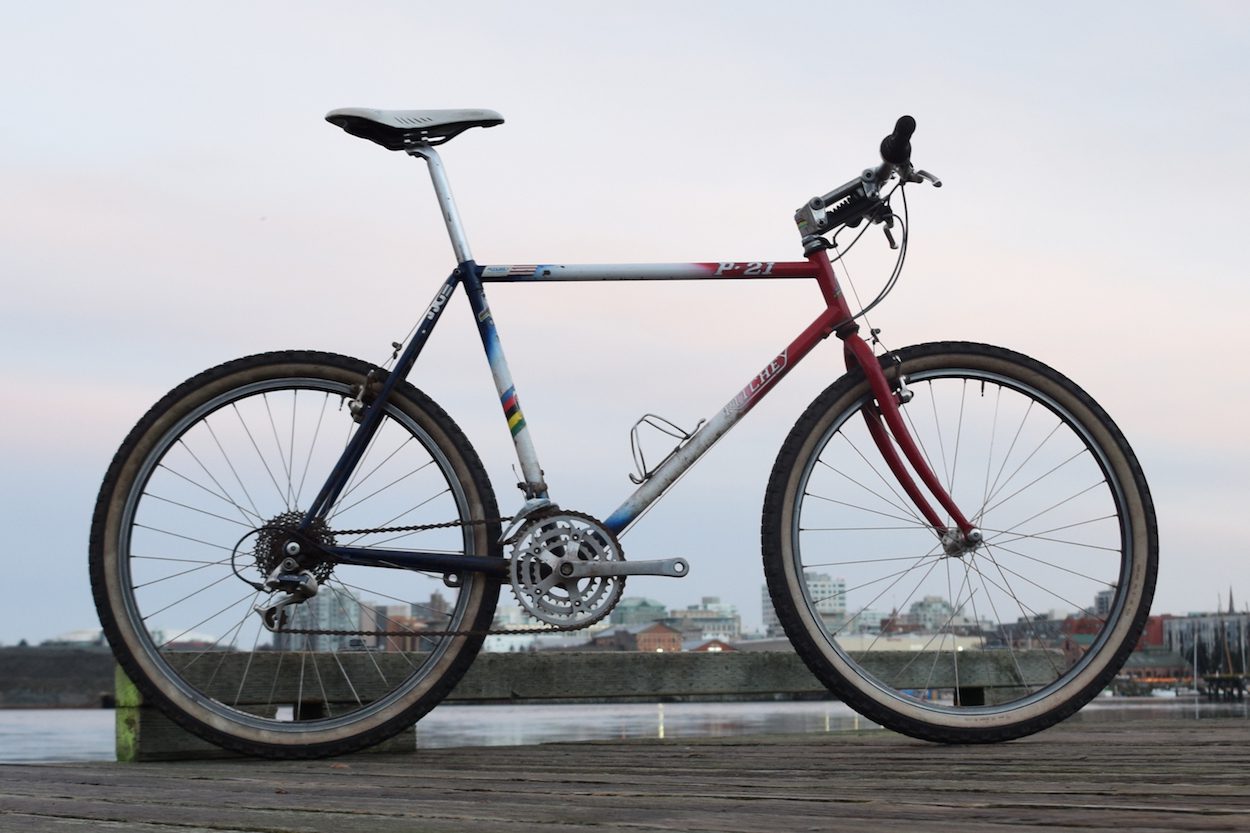 A very 90s race bike. Rigid, except for the stem, triple chainrings, 26″ wheels and all, 100% speed metal, baby.
Why it matters (beyond XC…)
There are two reasons why this matters. One for mountain bikers, the other for everyone else.
Mountain bikers
For mountain bikers, racing tech may seem remote but can herald a change in what consumer bikes will look like down the road. A quarter-century ago, 29″ wheels first ruffled feathers on cross country start lines. Initially, it was viewed as a race-only tech that would never spread. Waves of incredulity crashed out from XC to, eventually, downhill racing. Now almost every mountain bike has 29″ wheels, or at least one.
That doesn’t guarantee that 32 will have the same effect. It’s just as hard to imagine a 32″ downhill bike now as it was to imagine a 29″ downhill bike in 2005.
But the promised benefits of 32″ are quite similar to that 29″ delivered. That is, better roll-over, more momentum in rough terrain, better traction climbing technical stuff and more stability. All things riders tend to like. What will remain to be seen is at what point the costs, less nimble and less fun to corner, outweigh those benefits.
XC rules do not allow for mixed wheel sizes, but any size is allowed. If this makes it to the world of enduro or, less likely, downhill, it could add 29/32 mullets to the buffet of wheel size options available to riders.
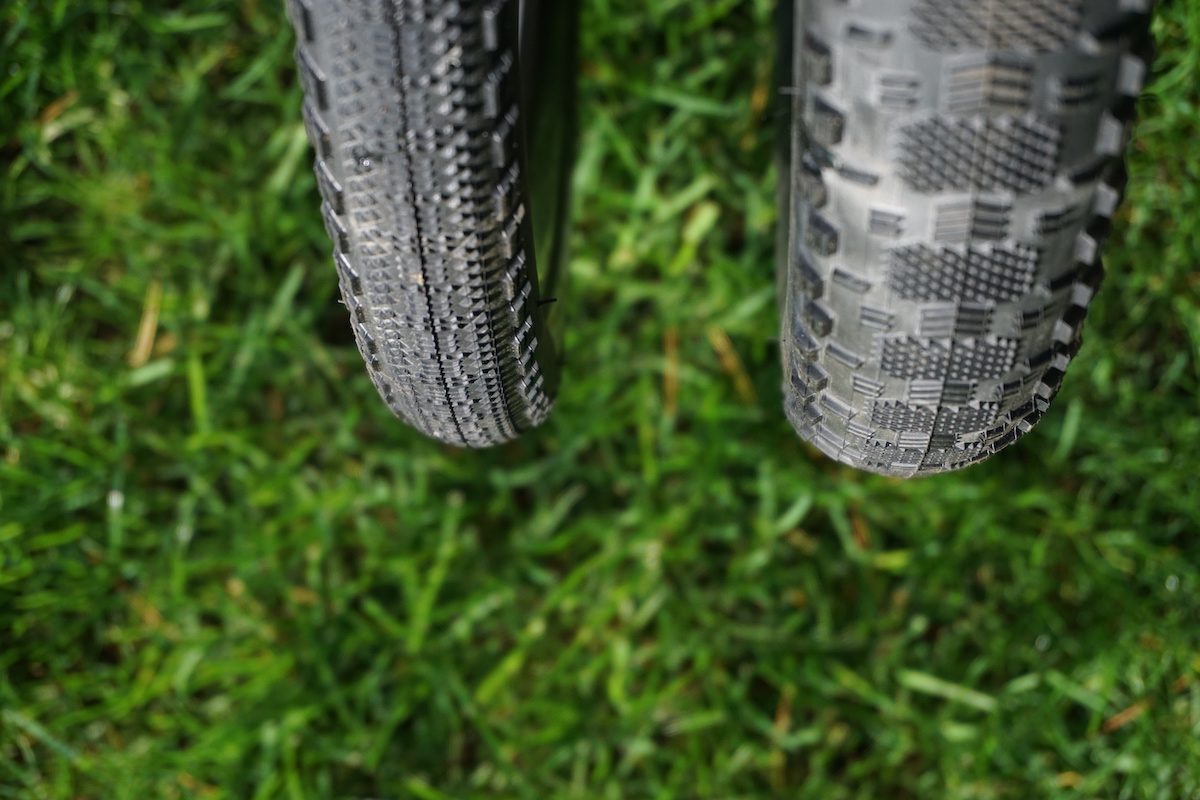 Maxxis’ Reaver gravel tire (in 40mm) and the mountain bike tire, Aspen ST that many pros are racing gravel on
Everyone else
Which brings us to the world outside mountain biking. Tiano’s characterization of mountain biking as a mad scientists laboratory isn’t just siloing it off as cycling’s wild west. It also foreshadows the potential for 32″ to expand beyond mountain biking.
It’s worth noting that UCI also governs gravel as well as road cycling. It’s unlikely the staid world of World Tour racing would accept such a wholesale change in tech (there are still the occasional grumble there about disc brakes, after more than a decade of use). Gravel, though, is a clear next stop for big wheels.
Gravel racers are already leaning heavily on mountain bike tech. Big tires, in the pro ranks, are already pushing 2.2″ or 2.4″ regularly (in 29″). Suspension is widely accepted, if not always used. With gravel tech still very unsettled, it’s a discipline ripe for this kind of tech intervention. And, with sharp, tight corners and tail whips being less of a thing in gravel, the drawbacks that could hold it back in mountain biking are less of a concern.
 Emily Batty raced 27.5″ bikes well into the late 2010’s, including when she earned a 2018 world championships bronze in Lenzerheide. Image: Bartek Wolinski / Red Bull Content Pool
If the shoe fits?
With UCI taking a hands-off approach, the major looming question mark is now bike fit. Can engineers make the big wheels work for shorter riders? After decades of development, some XS and S 29″ bikes (and their riders) still look like they’re wrestling to control an older sibling’s bike. 32″ could make that worse, or just impossible for shorter riders to manage.
If that ends up being the case, 32″ could create a divide in the World Cup ranks. Those that can fit a 32″ bike and those that cannot. This divide persisted for a few years in cross country. Canada’s Emily Batty was still racing 27.5″ bikes when she finished third at 2018 world championships in Lenzerheide. But shorter riders were forced by the relative advantage of 29″ (and near complete unavailability of 27.5″ bikes from sponsors) to find a way to work with bigger wheels. 32″ could be even harder to make work.