
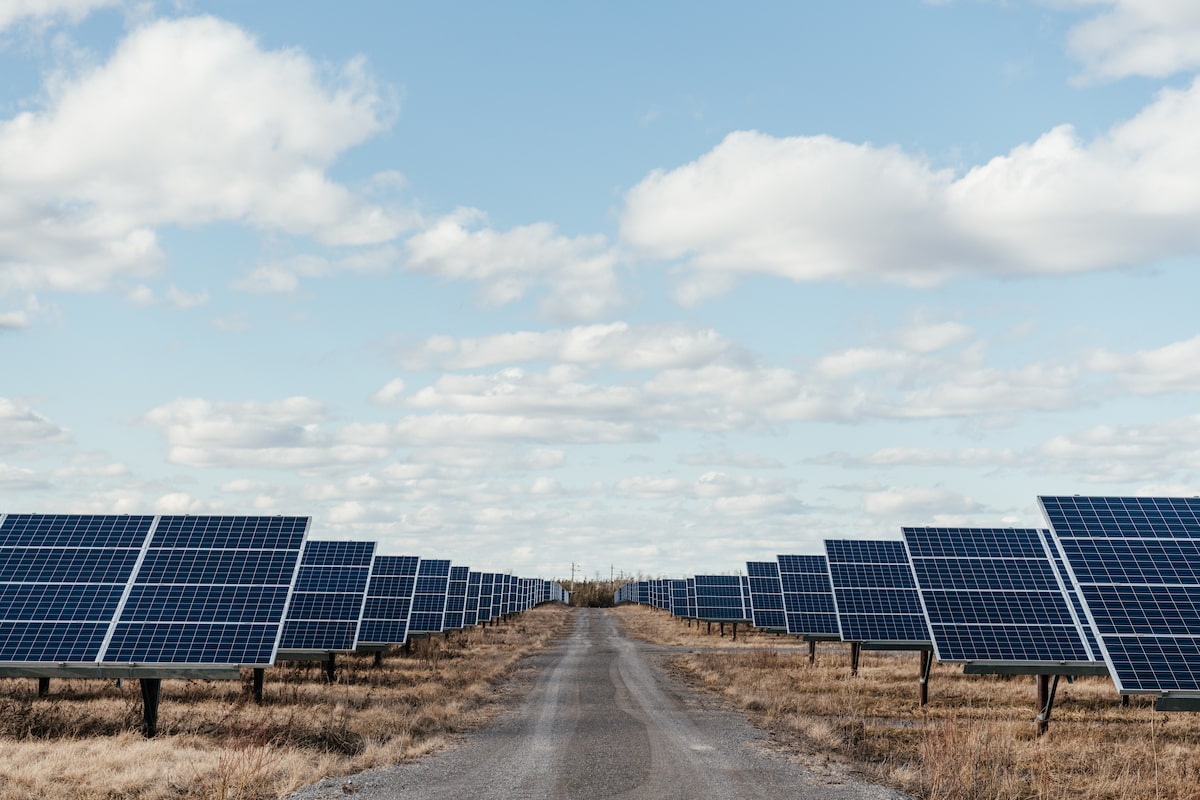
Solar panels in Prince Edward County, Ont., owned and operated by Northland Power.JOHNNY C.Y. LAM/The Globe and Mail
The chair of Northland Power Inc.’s NPI-T board of directors defended the company’s surprise dividend cut in front of institutional investors and analysts Thursday, stressing that the move provides much-needed financial flexibility.
Ian Pearce, a former executive at miners Falconbridge Ltd. and Xstrata Plc. and now Northland’s board chair, spoke at the company’s investor day Thursday, telling the crowd that the 40-per-cent dividend cut “was made with careful consideration of all shareholders’ interests.”
“The revised dividend level reflects the realities of the industry cycle and supports a more sustainable financial framework,” he said. “Moving toward a self-funded growth model is intended to reduce reliance on external capital.”
Northland Power shares plummet on shock dividend cut, frustrating yield investors
Historically, Northland would sell new shares in order to fundraise, but the company’s stock has tumbled since 2022, along with much of the renewable-energy sector.
With Northland’s stock now far below its pandemic high, it is much harder to sell new shares to finance growth because investors are timid to buy them. Cutting the dividend allows Northland to divert its cash flow and finance projects internally.
It is rare for board directors to speak at an investor day, which are usually run by management. However, Northland’s investors have revolted against the cut, and its shares are down 30 per cent since the dividend was slashed last week.
By speaking out, Mr. Pearce is absorbing some of the ire that has been directed at the executive team, while also showing that the decision was not taken lightly and that it was made in alignment with the board of directors.
Chief executive officer Christine Healy, who started at Northland earlier this year, also addressed the cut at the investor day, reiterating her message from last week.
“This was not an easy decision,” she told investors and analysts. “We evaluated a full range of alternatives including debt financing, asset recycling, equity issuance and an enhanced DRIP [dividend reinvestment plan].”
But if the dividend wasn’t cut, the company’s payout ratio would average around 90 per cent over the next five years. “Against that backdrop, and with large construction projects still under way, we saw that it was prudent to maintain a strong balance sheet and preserve flexibility until the projects are complete,” she said.
Northland has been hampered lately by delays at its Hai Long offshore wind project in Taiwan, which is pushing expected revenues out into the future, leaving a near-term shortfall. The dividend cut, meanwhile, is expected to save about $125-million a year.
“Ultimately, this is the right decision for Northland,” she said.
Before the cut, Northland’s shares had healthy returns this year. However, the company debated the best use of its cash flow over the near future – paying it out to shareholders or using it to finance new projects. Some investors hoped the company would stay the course through the project completions without touching the dividend.
Some investors also thought management had signalled that this was their preferred route, according to RBC Dominion Securities analyst Nelson Ng.
“When dividend sustainability concerns were raised in Q1/25, many clients got the impression from management that the dividend was sustainable, sacrosanct, and will not change,” he wrote in a note to clients last week.
The new CEO, however, ultimately decided to go a different route, and investor frustration was expressed in Northland’s tumbling share price.
Northland’s executives believe they had no choice but to cut the dividend. While one of the company’s developments, the Oneida battery storage project in Ontario, has started delivering some revenue, two offshore wind developments – Baltic Power in Poland and Hai Long – are still sucking up capital.
So far, Northland Power has spent $12-billion on them, and another $5-billion in gross capital expenditures are expected.
Looking forward, Northland told investors Thursday that it will focus on its core markets of Europe – particularly Poland and Spain – and Canada for future projects.
Despite its reputation as a renewable-energy company, Northland is bullish on natural gas in Canada.
“Natural gas remains a key part of the energy mix for decades to come,” Ms. Healy told the investor day crowd.
The fuel, she added, is an excellent complement to energy systems that rely on renewables and are therefore subject to severe weather. Natural gas plants, meanwhile, can be fired up quickly to fill power-supply shortfalls.