
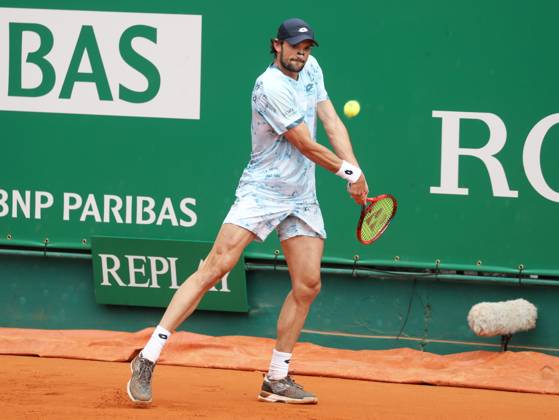
Fairytales in tennis don’t happen often. The sport is too unforgiving and too crowded with talent for dreams to come true on schedule, which makes Valentin Vacherot’s 2025 season all the more remarkable.
Yes, there was the magical Shanghai run that captured headlines and changed his life in a single week. But there’s far more to this story than one transcendent tournament. This is a tale of grinding through obscurity, weathering crushing disappointment, and somehow finding the strength to keep believing when every logical signal said to quit.
Let’s break down how a 28-year-old man from Monaco went from the brink of irrelevance to the Top 30 in the world.
The Long Road
Valentin Vacherot was 23 years old when he finally cracked the Top 500. Think about that for a moment. Twenty-three. Some tennis prodigies have already won Grand Slams by that age. Vacherot was just trying to break into a tier where he could reasonably call himself a professional. Rather than turning pro early, he finished his time at Texas A&M University and earned a degree.
He’d spent what are typically considered breakthrough years in tennis struggling to even reach the Top 1000. Tennis is hard. Tennis is extraordinarily, soul-crushingly hard. Being among the 500 best players on the planet is a massive achievement, even if it doesn’t sound particularly impressive to casual fans who only follow the Top 20.
But Vacherot kept working. Slowly, painstakingly, he improved. By the end of 2022, he’d climbed inside the Top 300. In 2023, he won 58 matches. Fifty-eight. Yet his ranking barely budged. That tells you everything about how difficult it is to break through to the sport’s highest levels. It’s not just about winning anymore. You have to dominate, because the points you’re collecting week to week are minuscule compared to what top players defend.
The breakthrough finally started in 2024. Vacherot won three Challenger titles, each one a validation of years spent in anonymity. Those victories pushed him inside the Top 200, then closer to the Top 100. By year’s end, he stood on the precipice of something he’d chased his entire adult life: a place among the world’s elite. Everything was finally coming together.
The Collapse
Except it wasn’t.
2025 was supposed to be Vacherot’s crowning achievement, the payoff for a decade of sacrifice. Instead, it became a nightmare. Having won three Challengers early in 2024, he faced the brutal reality of tennis’s ranking system: he had to defend all those points in 2025. He couldn’t do it. By early February, he’d fallen back outside the Top 200. Everything he’d worked for was evaporating.
Imagine that moment. You’re 28 years old. You’ve dedicated your entire life to a sport that has given you almost nothing in return. You finally, finally start to see progress, start to believe the dream might be possible. And then it’s ripped away.
His confidence shattered. The next few months were spent trying to rediscover his best tennis, but he was stuck in quicksand. He’d win matches here and there, but nothing stuck. He couldn’t build momentum. By mid-season, he was fighting just to stay in the Top 300, watching his ranking slowly bleed away. The dream was dying.
Shanghai: When Lightning Strikes
Then came Shanghai.
Vacherot arrived at the tournament facing yet another qualifying draw, another opportunity to wonder if this was all worth it. He survived two three-setters just to reach the main draw, scraping through on willpower more than anything else. Then something extraordinary happened.
He erupted. He went nuclear. He became a supernova, incinerating everything in his path. Match after match, opponent after opponent, he played the tennis of his life. It was tennis he’d always believed was inside him but could never consistently produce. Suddenly, impossibly, he found himself in the final.
His opponent? Arthur Rinderknech. His cousin.
In a moment that felt scripted by the tennis gods themselves, Vacherot won. He captured the title, earned the ceremonial statue that would be built in his honor, and collected 1,000 ATP points. To put that in perspective: he had roughly 200 points to his name before the tournament started. In one week, he quintupled his entire year’s work.
The ranking jump was seismic. He didn’t just break into the Top 100. He rocketed to 40th in the world. Twenty-eight years old, a career journeyman, suddenly knocking on the door of the Top 30. Proper history had been made.
Seizing the Moment
But here’s what separates Vacherot’s story from a one-week wonder: he didn’t stop. The season wasn’t over, and he wanted more. Basel brought a quick first-round exit, but Paris offered redemption with a quarterfinal run that cemented his place in the Top 50. By the time the season concluded, Valentin Vacherot was ranked 31st in the world. Thirty-first. A ranking that, just months earlier, seemed as distant as the moon. He did it through hard work and resilience. He refused to quit when every rational part of his brain probably told him to. And yes, he did it with a bit of luck, because fortune always favors the bold. But you have to be ready when luck arrives. Vacherot was ready.
The Challenge Ahead
Now comes the hard part.
Vacherot has already faced this challenge once and failed. He couldn’t defend his 2024 points, and it nearly sent him spiraling out of the Top 300. In 2026, he’ll face the same test, only the stakes are exponentially higher. He’s defending 1,000 points in Shanghai alone. Unless he produces another historic run, which would be asking for lightning to strike twice, those points will vanish.
His entire career might hinge on how he handles this pressure. He knows better than anyone how difficult it is to break through. Now that he has, losing all that momentum would be catastrophic. He’d be starting over yet again, only this time at 29 years old with far fewer chances remaining.
But it’s in his control. That’s the terrifying truth. He’s proven he belongs at this level. He’s shown he can beat top players when his game is firing. The question is whether he can sustain it, whether he can build on Shanghai rather than watch it become a beautiful memory that slowly fades.
For a man who spent a decade refusing to give up, who kept believing when belief seemed foolish, who finally made the impossible possible on the courts of Shanghai, you wouldn’t bet against him. Valentin Vacherot’s fairytale isn’t over yet.
Main Photo Credit: Imago Images Copyright: xPHOTOPQR/NICExMATIN/MAXPPPxDylanxMeiffretx