
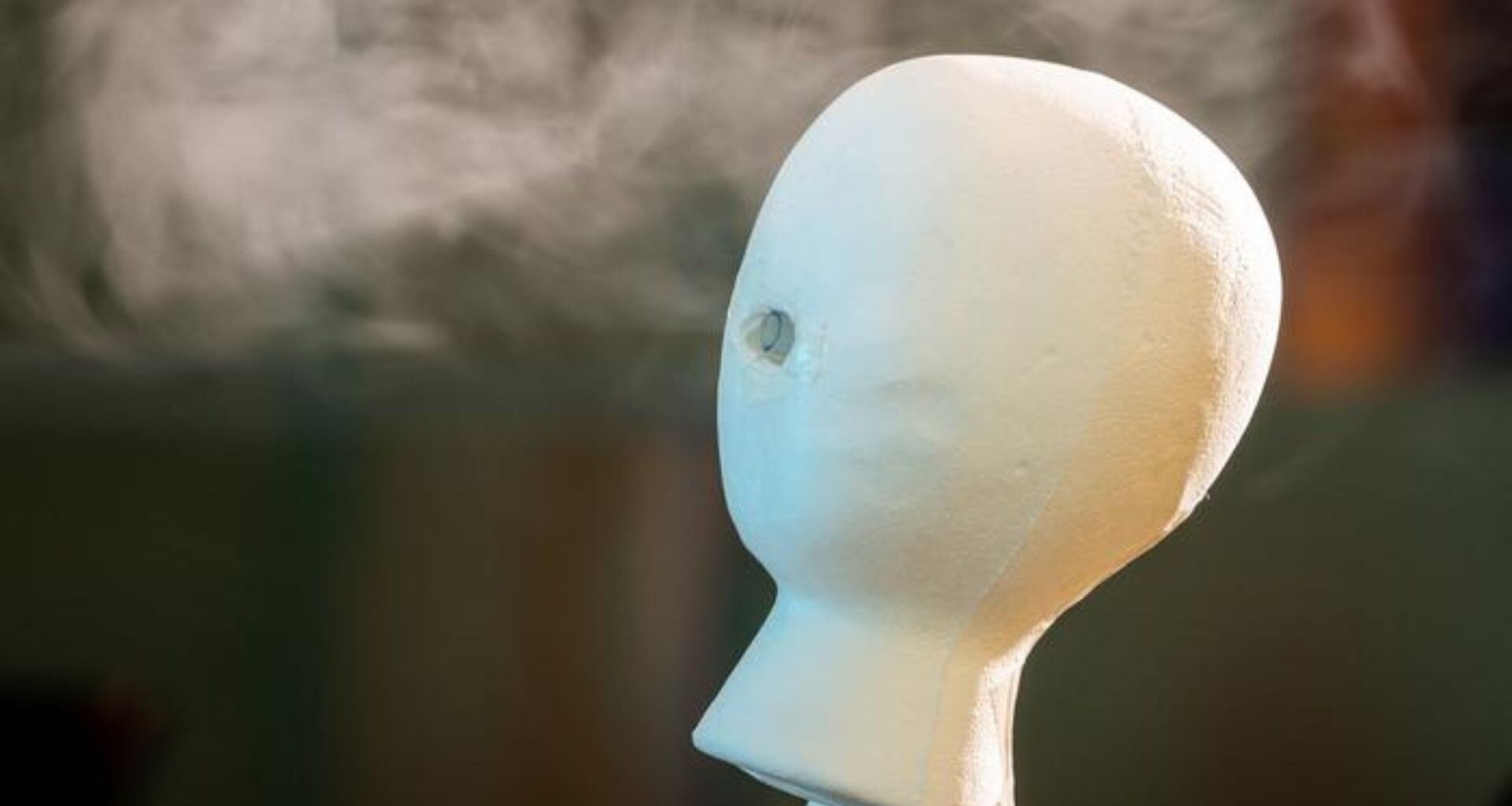
The cold and flu season heightens the risk of airborne disease.
Researchers at UBC Okanagan are testing a new airflow device that removes pathogens before they spread, aiming to offer a stronger defense for enclosed spaces.
The team argues that traditional ventilation upgrades often fall short.
These systems move large volumes of air, but they struggle to control what people inhale during close contact. Dr. Sunny Li, a professor in the School of Engineering and study co-author, points to those limits.
“Ensuring high air quality while indoors is crucial for mitigating the transmission of airborne disease, particularly in shared environments,” he says.
He notes that many Canadians spend most of their time inside. That makes indoor air quality central to daily health.
Personalized ventilation systems try to close this gap by directing clean air at individuals.
Airlines use similar methods to circulate cabin air around passengers, but these systems have trade-offs. They work only when people stay still and use them together. They also cause dry skin and eyes due to constant airflow.
Postdoctoral researcher and first author Dr. Mojtaba Zabihi says inconsistent room layouts and older HVAC systems add another challenge.
“We wanted to develop an innovative system that prevents occupants from inhaling contaminated air while allowing them to use a personalized ventilation system comfortably for extended periods,” he says.
New’ jet-sink’ airflow approach
The UBC team created an induction-removal, or “jet-sink,” concept that pulls exhaled aerosols away before they drift. Conventional personal systems push high-speed air toward the user.
That air can feel harsh and become less efficient when users shift positions. The new design redirects airflow around the body and draws contaminated particles into a small purification zone.
“Our design combines comfort with control,” says Dr. Zabihi. “It creates a targeted airflow that traps and removes exhaled aerosols almost immediately—before they have a chance to spread.”
The researchers tested the device through computer simulations.
They modeled breathing, body heat, and air movement during a 30-minute consultation. The results showed sharp drops in infection risk. Standard room ventilation left users with a 91 per cent chance of infection.
A personal system cut that number to 47.6 per cent. Adding an exhaust element dropped it to 38 per cent. The jet-sink system brought it down to 9.5 per cent.
The team also measured how many particles reached another person.
Under optimal placement, only 10 of 540,000 exhaled particles traveled across the space. Their model showed that the device removed up to 94 per cent of airborne pathogens.
Future testing plans
Study co-author Dr. Joshua Brinkerhoff says current personalized systems cannot adjust when users move.
“It’s a smart, responsive solution for spaces like clinics, classrooms or offices where close contact is unavoidable,” he says.
He adds that airflow engineering, not only filtration, could reshape indoor safety.
The team now plans to test prototypes in larger rooms and clinical settings.
Dr. Zabihi also serves on Canada’s National Model Codes Committee on Indoor Environment. He hopes the research will support stronger ventilation standards nationwide.