
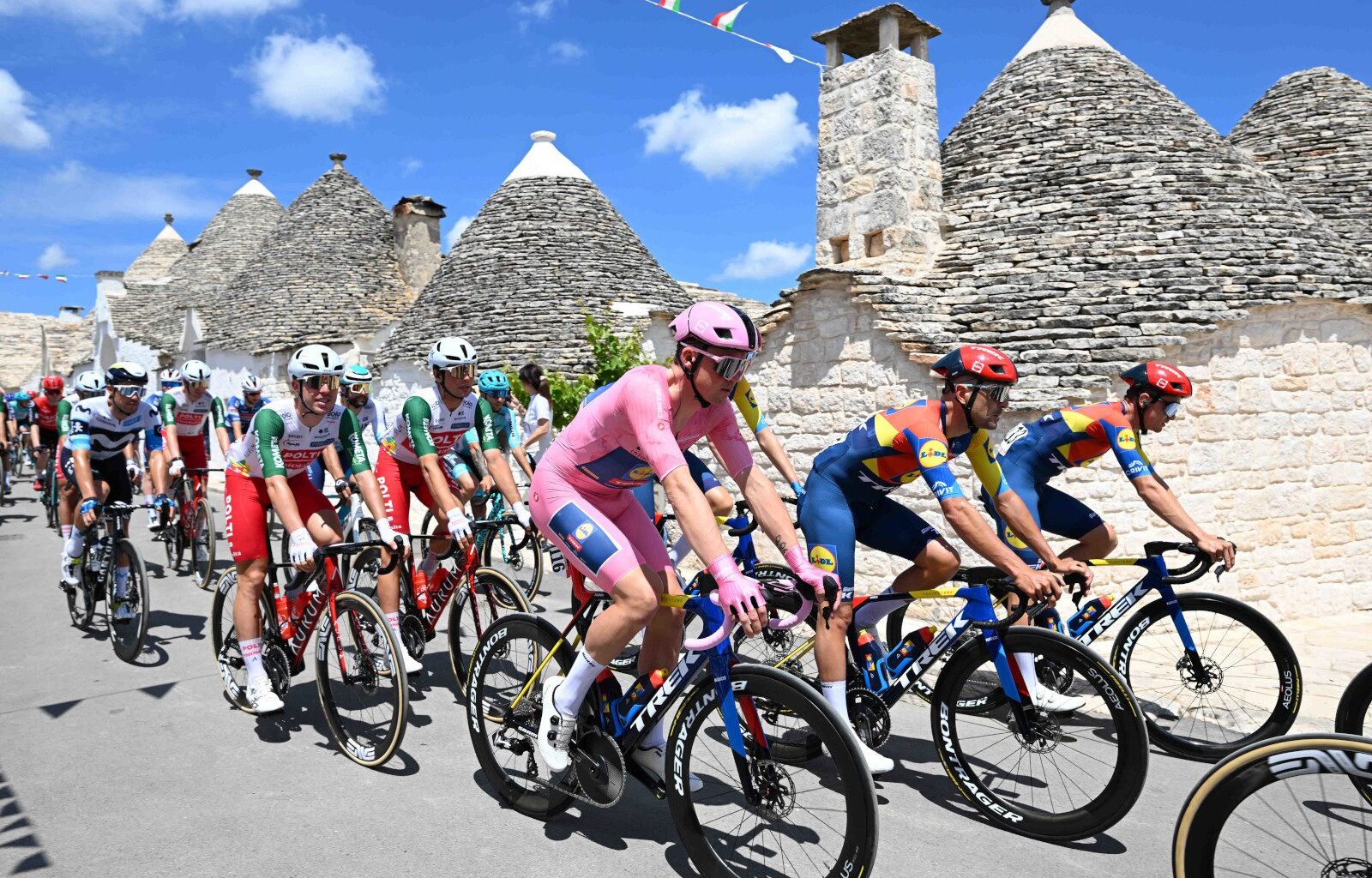
Lidl-Trek boss Luca Guercilena is calling for a new approach to safety in professional cycling: riders should take calculated risks, supported by data, infrastructure, and protective technology—not arbitrary gear limits.
“Limiting rims or other materials won’t solve the problem,” Guercilena said to bici.pro. “If you impose 35-mm rims, engineers will make them just as fast as 90-mm ones. Restrictions are never a long-term solution.”
Riders’ union president: ‘Pro cycling is a dangerous sport’
He also highlighted road safety, noting that protective infrastructure could make a big difference. Costly as it may be, targeted barriers and safer courses would reduce accidents more effectively than arbitrary equipment bans.
On taking risks
Guercilena warned that age and experience in the peloton affect risk-taking. Younger riders, he said, often act boldly, while seasoned professionals know when to hold back. “Eighteen-year-olds take risks that older riders would avoid,” he explained.
For his own team, he encourages controlled risk. “If the choice is being sidelined for three months or finishing second, finish second,” he said. He stressed that calculated risks are appropriate for key moments, like sprint finishes, but unnecessary danger should be avoided.
The manager called for scientific, data-driven analyses of crashes, involving teams, riders’ associations, and experts. Early data suggest the overall number of crashes hasn’t risen, but more riders are affected when accidents occur in tight groups.
What works and what doesn’t: And where is the data?
There’s been lots of talk about gear limits too. Back in October, the UCI was caught off guard when the Belgian Competition Authority temporarily blocked its planned maximum gear restrictions, which were set to debut at the Tour of Guangxi. The suspension, prompted by a challenge from cycling component maker SRAM and joined by nine pro teams, argued the new rule was unfair and unlikely to improve rider safety. The governing body expressed surprise at the intervention, noting the test was intended to analyse the impact of gear ratios on speed and safety, and said it regrets that safety concerns don’t seem to be shared by those opposing the measure.
I didn’t wear a helmet…and felt safer
Former WorldTour pro Michael Barry wrote for Canadian Cycling Magazine that gear restrictions aren’t the solution to crashes in professional cycling. He argued that faster, lighter bikes and evolving technology have made the peloton more fragile, and that safety improvements should focus on course design, protective protocols, and rider testing rather than limiting gears. Barry stressed that teams and governing bodies need a coordinated, evidence-based approach to reduce injuries while keeping racing competitive.
The Lidl-Trek staffer said there are other options that should be explored to protect pro cyclists.
Guercilena also proposed investing in protective technology, including airbags in helmets or jerseys. “Crashes will always happen,” he said. “The goal is to minimize injuries and protect the athletes.”
By combining rider protection, better infrastructure, and evidence-based regulations, Guercilena argues cycling can remain competitive without compromising safety. He says the discussion should be grounded in facts, not opinion, and guided by experts who understand both the sport and its risks.
The peloton may never be risk-free, but 2026 will show whether cycling can race smarter as well as faster.