
Breadcrumb Trail Links
The group Friends of Medicare says common concerns in rural Alberta include trouble finding family doctors, and worries about understaffed health care facilities.
Published Nov 20, 2025 • Last updated 1 day ago • 3 minute read
 The Northern Lights Regional Health Centre in downtown Fort McMurray on April 12, 2025. Photo by Vincent McDermott /Fort McMurray Today/Postmedia NetworkArticle content
A shortage of doctors and specialists in rural Alberta means it is becoming more common for people to travel long distances for their medical needs, says the former president of the Alberta Medical Association (AMA).
Advertisement 2
This advertisement has not loaded yet, but your article continues below.
Article content
Dr. Paul Parks, an emergency physician based in Medicine Hat and former AMA president, said during a Tuesday visit to Fort McMurray that even routine specialists, such as obstetrical care or emergency room staff, are becoming scarce outside Edmonton and Calgary.
Article content
Recommended Videos
Article content
“People understand the super, highly specialized care means you’re going to have to travel. You can’t have those kinds of highly qualified specialists in every small town,” Parks said in an interview. “What’s happening more often is Albertans are driving hundreds of kilometres for even temporary, initial stabilizing care.”
Parks was in Fort McMurray with the advocacy group Friends of Medicare, which is hosting town hall forums across Alberta. Parks said common concerns he has heard across rural Alberta include trouble finding family doctors, and worries about health care facilities that are understaffed and running on limited hours. He said Alberta’s recruiting efforts need to be targeted towards local health care needs.
Advertisement 3
This advertisement has not loaded yet, but your article continues below.
Article content
“The oil and gas industry here in Fort McMurray drives the economy of our province, but you can’t have a booming and healthy economy without a healthy workforce,” said Parks. “How are you going to recruit and grow the industry here if you can’t even promise the employees and their families that they’ll have family doctors?”
Chris Gallaway, executive director of Friends of Medicare, made the same observation about travel times. People in communities like Fort McMurray are often worried about the financial costs of hotels, food, travel and missed wages if they need to travel to Edmonton or Calgary for medical issues.
Both Gallaway and Parks said it is also common for people to turn towards fundraising websites to support medical care.
Advertisement 4
This advertisement has not loaded yet, but your article continues below.
Article content
“The last time I was in Fort McMurray, I heard from some people say they only go down if they feel it’s serious. We know that if you’re delaying or ignoring care, that can have serious outcomes,” Gallaway said in an interview.
“If you have something like cancer, those trips add up. Even having a baby in some parts of rural Alberta is difficult. We hear that constantly, especially up north. We shouldn’t be moving towards a ‘GoFundMe’ model for health care.”
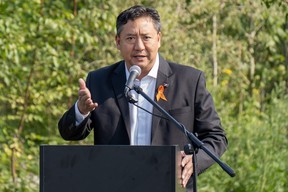 Tany Yao, UCP MLA for Fort McMurray-Wood Buffalo, speaks at the opening of Reflections Lookout on July 15, 2025. Photo by Vincent McDermott /Fort McMurray Today/Postmedia NetworkYao, province dismiss group’s arguments
A statement from Alberta’s ministry of primary and preventative health services accused the organization of being a “blatantly biased advocacy” group spreading “misinformation.” Tany Yao, UCP MLA for Fort McMurray-Wood Buffalo, dismissed Friends of Medicare as “a branch of the NDP” and “a very political organization.”
Advertisement 5
This advertisement has not loaded yet, but your article continues below.
Article content
“I sympathize with those that are in the situation. I’ve been advocating for more rural services my entire career,” said Yao.
“Last year, we put in new framework for compensation for physicians. We’ve hired over 550 additional physicians since then. We continue to recruit more health professionals as well as emphasize rural communities.”
Article content
The province argues Alberta has gained 643 physicians as of Sept. 30 compared to the same period last year, which it says is the largest single-year increase on record. Most growth came from family physicians across Alberta.
Alberta is also introducing programs and training to attract and keep doctors and other health care workers in rural areas. These include a new payment model for family doctors, bursaries for medical residents, expanding undergraduate medical seats and residencies, opportunities for international medical graduates, and more support for nurse practitioners.
“Recruiting physicians to smaller communities has historically been challenging across Canada,” reads a statement from the province. “While the government does not dictate where doctors practice, overall growth, combined with rural-focused initiatives, is helping increase supply in rural and remote communities.”
Get the news and events of Fort McMurray Wood Buffalo in your inbox every Friday morning by signing up for our newsletter.
Article content
Share this article in your social network