
Museums are Canada’s greatest stewards of public history. But in the past decade, increasingly overbearing cultural policies have rewritten their mandates. Once dedicated to simply telling the truth, they now have an agenda to push.
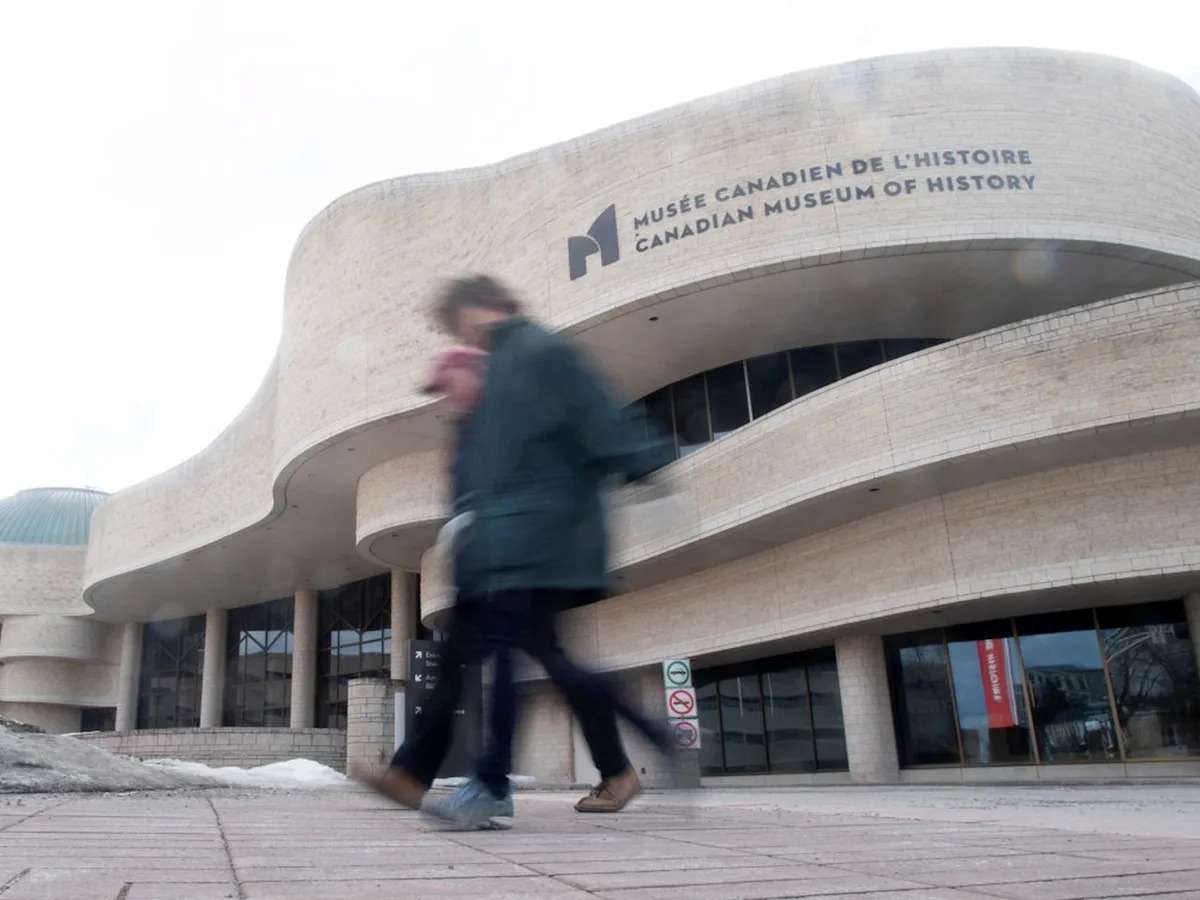
It’s subtle, but a lot of museums are open about it nevertheless. The federal Canadian Museum of History’s diversity, equity and inclusion plan states that it will “allocate resources strategically to bridge gaps” to “ensure better representation of equity-deserving groups.” Calgary’s Glenbow Museum announced its new land acknowledgement in September: “Blackfoot land, your territory.”
The Maritime Museum of the Atlantic believes that it is “part of a shared heritage and must be part of the shared work for change.” Saskatchewan’s Western Development Museum (WDM) has set itself the following goal: “It’s only when all Saskatchewan people find their histories reflected in the exhibits, programs, and activities of the WDM that we will be closer to living in a place where everyone belongs and histories matter.”
The implication? It’s not enough to tell the story of the province; the Canadian state must be decentred, and one must also tell the stories of Lesotho, Andorra and Saskatchewan’s Zoroastrian community, and every other small constituent group that might have found their way to the province in the last 50 years.
The beauty of history is that it has a way of making people feel like they’re part of a bigger story (even if they don’t share a connection to the subject matter), but that should be a side effect of telling the tale of what happened and not the goal. History was my undergraduate major because it was interesting in its own right — it exposed me to new cultures without ever needing to travel; and no matter when the period or where the place, there were always interesting figures to relate to.
The ascendant view is that tales from history must mirror society today. It’s not just about truth-telling — it’s about using their platforms to create feelings of belonging and stoke what DEI directors would call social progress.
This is happening at the prompting of individual museums, whose boards were not immune to being swept up by the social movements of the early 2020s, and at the direction of Ottawa. Most of the country’s museums are provincial, municipal or private endeavours that are not under the authority of the federal government, but many like to follow federal standards if they can, and many also like to receive federal grant money that no doubt is easier to acquire when one is on message.
The feds are currently updating the national museum policy, a process that began in 2022. Consultations took place late that year into 2023, and covered a series of government-chosen themes that included “the role of heritage institutions in society”; “advancing reconciliation” and “embracing equity, diversity and inclusion.” Historic institutions were among those asked, as well as the general public and, interestingly, “advocacy organizations.”
Since I last covered that process, summaries of the consultation results have been made public. And, well, those documents reveal exactly what you’d expect: “stakeholders” told the government that they’d like DEI to be encouraged in museums though “changes to funding, policies, governance structure, human resources, collections/collecting practices, exhibitions, programming.” An anonymous interview participant, whose quote was featured by a consulting firm that was hired to conduct some of these consultations, said that “museums are absolutely implicit in genocide.”
“If you look back on the history of museums in North America and other colonized countries, they are literally a part of the construct of the genocides that are practiced in order to have colonization,” they added.
To what degree that view will be reflected in the final product remains to be seen, but the fact it’s being highlighted in the first place is noteworthy; in the same way, it would be noteworthy for a government consultation for a natural history museum to display the input of a Young Earth theorist in its own final report.
The Canadian Heritage departmental plan for 2025-26 simply pledges to “Continue working on the renewal of the Museum Policy.” In the meantime, we can anticipate where the ball is going to be by looking at where the players are running. And it’s not in a good direction.
Post writers have spent the fall visiting museums across the country to provide a first-person view of this shift in places like the Montreal Museum of Fine Arts, Toronto’s Pioneer Village, the Canadian Museum of Immigration at Pier 21 in Halifax, the Canadian Museum of History in Ottawa and Victoria’s Royal BC Museum.
Over the next week, you’ll be able to read their accounts of change in these pages. Take note, because these experiences don’t just reflect the priorities of individual curators — they reflect the new consensus view of what Canada is among our keystone cultural stewards.
National Post