
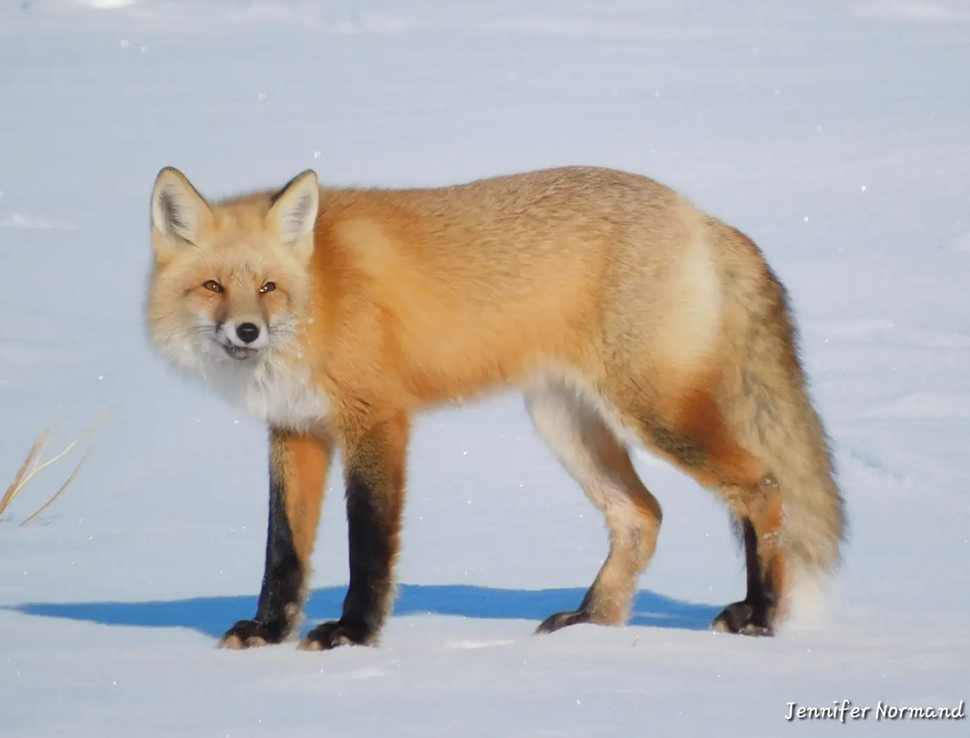
Foxes are rarely seen in the Tall Grass Prairie, but they play an important role in keeping rodent populations in check across the Southeast.
That is the focus of the next Adventures with Nature Norm program, where naturalist Norm Gregoire says foxes are most visible when they are hunting in tall, grassy fields.
Hunting behaviour
“They are out in these tall grassy fields hunting. That is pretty much the only time I really ever see foxes is when they are out hunting and they have that unique characteristic of jumping up, zoning in on their prey and head down first into the grass or even sometimes in the snow if you are in the winter.”
Gregoire says the tall prairie grasses provide ideal cover for rodents, which means those same spaces are also ideal for foxes.
“They are going to be going for mostly things like rodents and those little, small critters. So that is the perfect habitat for them. They go where their prey is essentially.”
Tracks, double imprints and other clues
While foxes may be elusive, Gregoire explains their tracks can sometimes be identified by a behaviour that causes people to mistake them for domestic cats.
“They have quite small paws and they do something, especially in deeper snow, called a double imprint, meaning that they are sort of walking on their own tracks.”
Using the Earth’s magnetic field to hunt
Fox behaviour contains surprising complexities, including an ability that scientists are still studying. Red foxes appear to use the Earth’s magnetic field to improve the precision of their hunting pounce.
“Scientists believe that red foxes have a type of protein in their eyes that lets them sort of use the Earth’s magnetic field to their advantage. That allows them to zone in precisely, to the millimeter of where their prey is, making their pounce when they jump up and then go head down into the grass or snow really, really accurate.”
This means that when foxes jump to catch prey hidden beneath grass or snow, they are aligning their head with the magnetic field to gauge distance and direction, making their attack extremely precise.
Family structure and litter size
Fox family structure also stands out in the Southeast.
“Fox are one of the few mammals in our area that are actually monogamous. So they will stay with their partners for multiple seasons.”
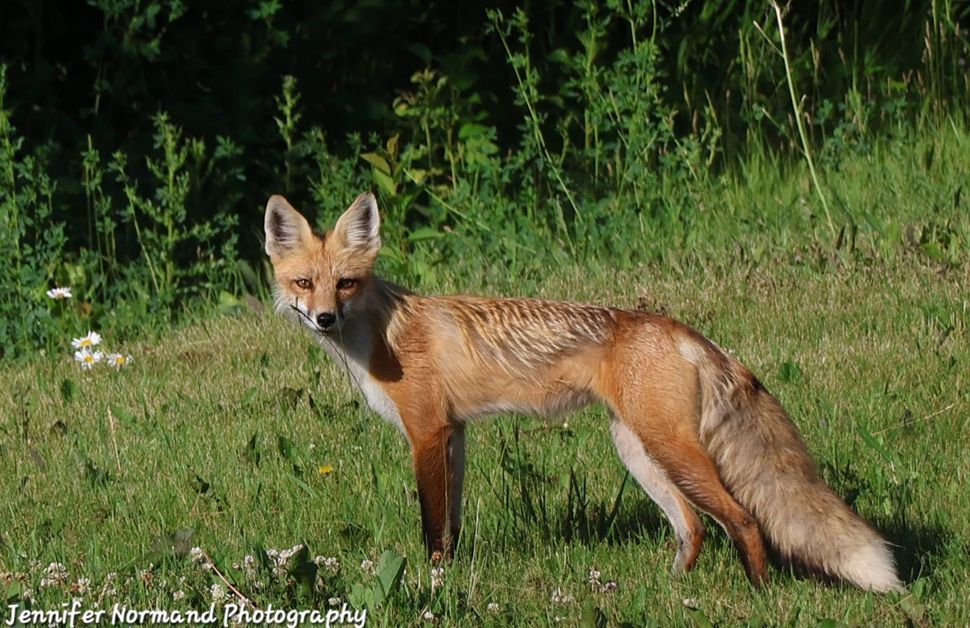 New Bothwell photographer Jennifer Normand noticed a red fox with her kits during this past summer. Although the kits were too fast to be photographed, their mom offered to pose a few times for some stunning photos. (Photo Credit: Jennifer Normand Photography)
Litter sizes vary widely across North America.
“We can have an average of anywhere from 5 to 10 kits and even some records being over 25 kits in one litter.”
Gregoire says foxes are essential predators in the tall grass prairie.
“They are for sure big pest rodent controllers.”
Observing foxes takes patience
For those hoping to see a fox, he says patience and time outdoors are key.
“With wildlife viewing in general, the more time that you spend out there observing nature, the more of a chance you get to see them.”
He encourages people to slow down and pay attention to the smaller details of the tall grass prairie.
“It is a matter of really taking your time and really noticing the small things that are in our area.”
Event details for Saturday
The next Adventures with Nature Norm program takes place Saturday, November 22 at the Weston Family Tallgrass Prairie Interpretive Centre. The event runs from 10am to 12pm and begins with an interpretive hike on the life cycle of foxes, followed by an indoor presentation.
-With files from Carly Koop.