
“Fish are friends, not food,” animated sharks famously declare in 2003’s “Finding Nemo.” But are they pedicurists, too?
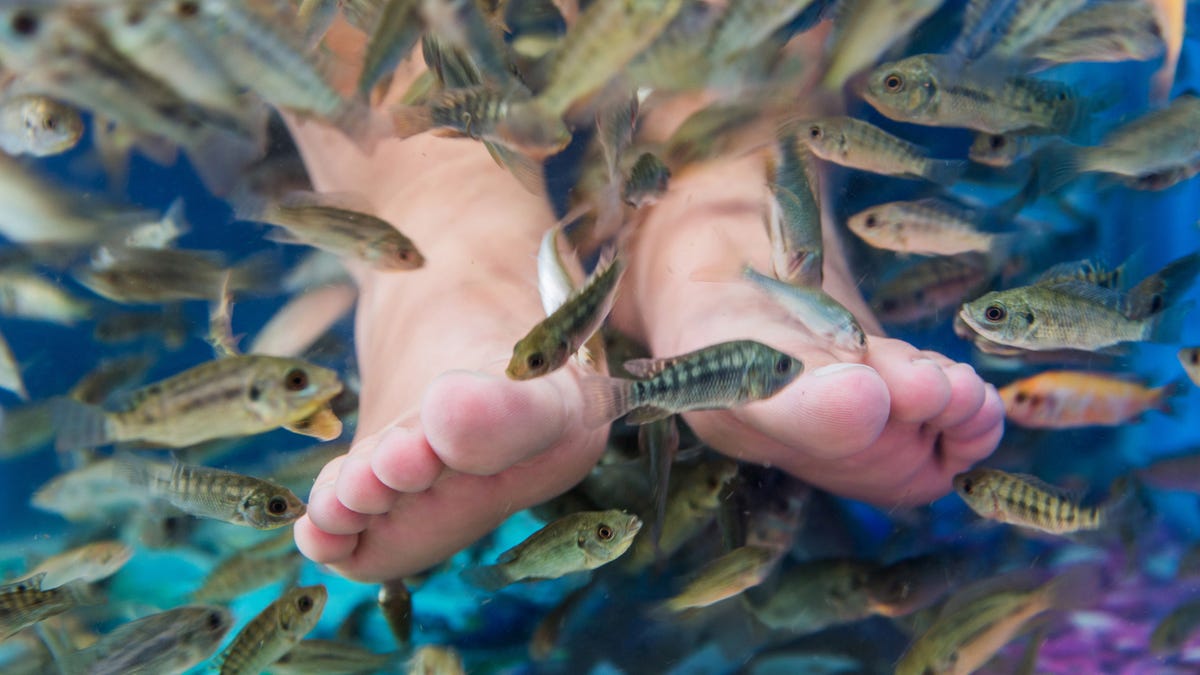
On TikTok, videos have gone viral of people getting so-called “fish pedicures,” often while traveling outside of the U.S. In the videos, people stick their bare feet into tanks of fish, which swarm their toes. The fish then eat away at dead skin cells and calluses, leaving their feet supposedly silky and smooth.
Originating in Turkey, the practice has become popular for tourists traveling abroad − and though the videos of their shocked reactions can be entertaining, dermatologists encourage travelers not to participate. If not done in a sanitary fashion, these fish pedicures can be seriously dangerous. In the U.S., they’ve even come under legal scrutiny and are not permitted in multiple states, including California.
Plus, there are safer, simpler ways of taking care of your feet that don’t involve fish.
“I don’t know why people would do that instead of just exfoliating,” says Dr. Anthony Rossi, a dermatologist and surgeon who hosts the podcast “Give Good Face: Clean Clinical Science.” “If you’re on vacation and you see something and it looks interesting, it doesn’t mean you should do it.”
Why viral ‘fish pedicures’ are dangerous
Removing dead skin cells from feet isn’t a bad idea. Doing so allows fresh, newer skin underneath to shine through.
When people get a fish pedicure, the fish essentially nibble away at this dead layer − basically exfoliating like a scrub would.
The problem is that, often, it’s hard to tell if the fish tanks are sanitary. You don’t know what kind of bacteria the fish could be carrying. This can prove especially dangerous if you get a fish pedicure while unknowingly having a cut or opening in your skin. The water these fish swim in can be contaminated, too.
“You can get mycobacterium, which is like a nasty infection,” Rossi says. “Vibrio is a nasty infection, and there have been cases of these infectious outbreaks linked to these fish spas.”
Oftentimes too, the same fish are used over and over again for different people’s pedicures. So, you’re not just getting germs and bacteria from them, but also from other people’s feet the fish have feasted on.
“These fish, they can harbor bacteria, and they can’t be disinfected,” dermatologist Dr. Brooke Jeffy says. “So, if it’s exposed to some kind of infection or germ in one person, it’s feasible that they could spread something. The fish themselves can also harbor certain bacteria, which can be really pathogenic for humans as well.”
Not to mention the possible ethical concerns. Some fish pedicure providers have been accused of intentionally starving fish so they’re hungry enough to eat dead foot skin.
Don’t get a ‘fish pedicure.’ Do this instead.
What’s important to note, Jeffy says, is the same benefits of a fish pedicure can also be achieved through tried-and-true exfoliation techniques.
“Better choices would of course be using typical chemical exfoliants,” she says. Physical exfoliators and just good old fashioned moisturizer, she adds, also do the trick.