
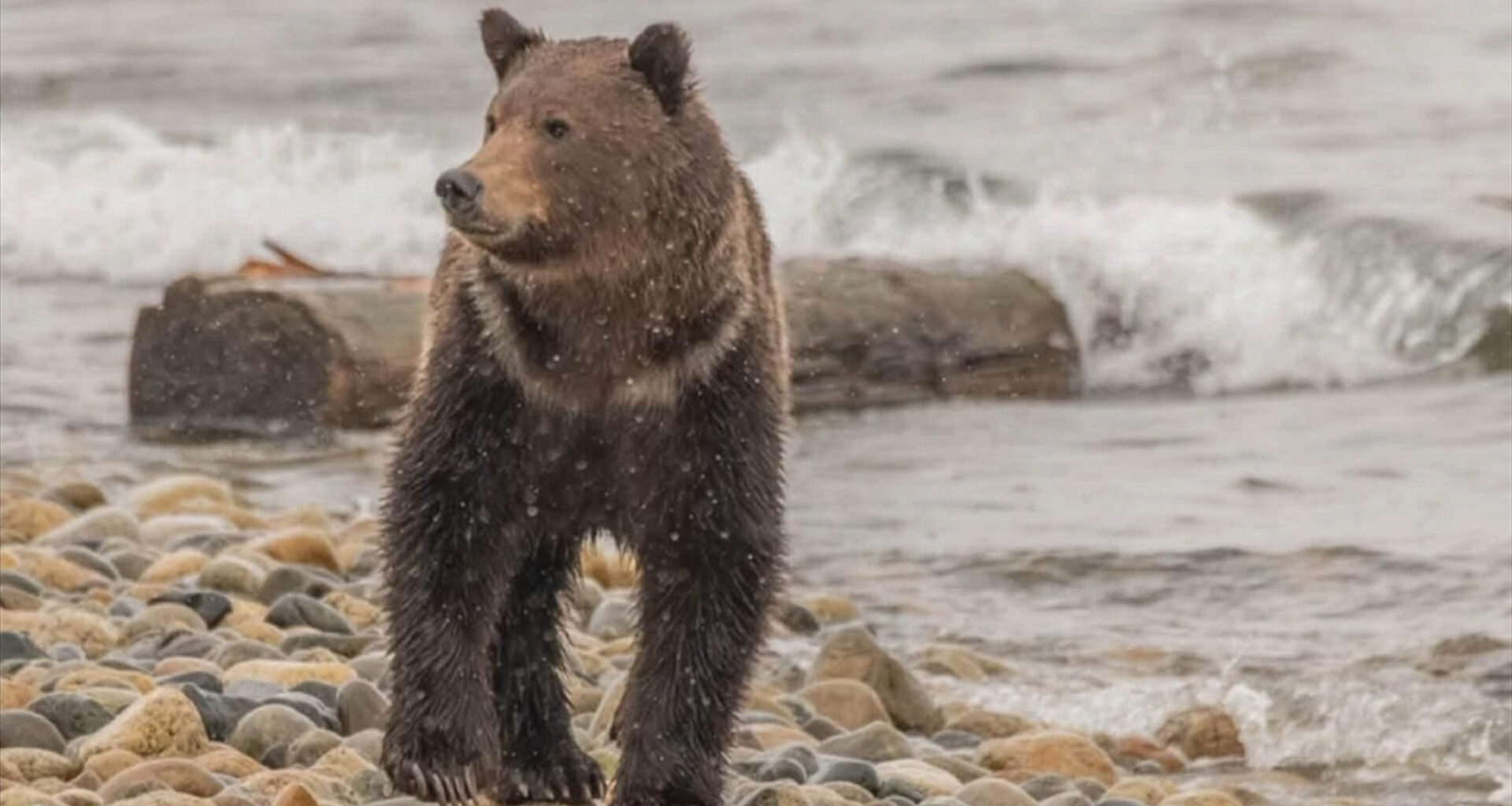
The B.C. Wildlife Federation says the province’s 2017 ban on grizzly bear hunting was “a shortsighted move,” made without scientific justification, renewing debate over wildlife management.
A surge in grizzly bear encounters, including this week’s attack on a group of Bella Coola schoolchildren and teachers, is renewing warnings that human-wildlife conflict in B.C. is hitting dangerous new territory.
Watch below:
“The data shows that before the hunt was stopped, there were typically around 300 to 500 calls per year,” Jesse Zeman, executive director of the BCWF told CHEK News.
RELATED: Ban on grizzly bear trophy hunt in B.C. gets mixed reaction
“And now, from what I understand around the data is we’re up around a 1,000 calls per year.”
Zeman explained in some municipalities, education is needed for people to manage their garbage and to manage attractants, and municipal governments have to enforce their bylaws with fines.
“A lot of times it’ll be one person in a neighbourhood who flaunts the rules, who creates problems for everybody else … but we think that this behaviour – that’s a learned behaviour that gets passed on. Those bears that are not afraid of people, from our perspective, a lot of times would have been harvested by hunters because they are more visible and they’re not as afraid of people.”
According to the BCWF, grizzlies are the animal most likely to attack humans in B.C., which is home to 15,000 of Canada’s 26,000 grizzly bears.
Zeman explained when hunting pressure is removed, the number of problem grizzlies increases. A lack of hunting pressure was cited by the Japanese Environment Ministry when the army was called in to protect residents of Akita Prefecture after 12 people were killed in bear attacks in just seven months.
The BCWF added Alberta now says that everything is on the table when it comes to reducing human-grizzly conflict, including lifting its own ban on grizzly hunting.
“It’s very polarizing. I think what what everyone wants is we want to make sure that there’s a future for grizzly bears and grizzly bear conservation in British Columbia. And at the same time, we want people to be able to feel comfortable and safe going outside, going hiking, camping, that sort of thing. We want people to value wildlife,” added Zeman.
The executive director Grizzly Bear Foundation, a charity dedicated to the welfare of grizzly bears, is disappointed by the BCWF’s timing on bringing this up.
“This is not the time for that conversation and it’s incendiary the way they’re approaching it and insensitive,” Nicholas Scapillati said.
Scapillati says grizzly bear attacks are very rare, something the BCWF agreed with.
He says human-bear conflict calls can fluctuate, adding there can be a variety of reasons why the B.C. Conservation Officer Service (BCCOS) would be seeing an increase in encounter calls.
“More people are exploring nature, we’re developing more of nature so we are going to have more encounters. There’s also the climate crisis, you know we really have to take into account to we are seeing decreased food sources, not only salmon but berries in the alpine and lower areas,” Scapillati said.
“We are also seeing conservation officers introduced the RAPP line so we’re seeing more data because there’s an opportunity for people to report more. So you really need to examine all of those factors when you look at are they getting more calls.”
He added more calls to BCCOS doesn’t necessarily mean more conflicts between humans and bears.
Scapillati says the call could be someone reporting a bear eating from a bird feeder.
“It’s a spectrum right, and so that’s a big part of coexistence,” he said.
“I think we have to look at that and realize what we are talking about when we talk about conflicts on the rise and how different that is from an attack.”
During a press conference on Friday, the province said it is not looking at lifting the ban on grizzly bear hunts at this time.
On social media, the BCCOS says additional conservation officers arrived in Bella Coola Saturday to investigate the grizzly bear attack.
“Based on investigative efforts to date, including witness accounts, two additional grizzly bears were seen in the area during the attack,” the post reads.
“Trapping efforts to capture and assess all three bears are ongoing. The investigation includes the collection of any forensic evidence that can be used to identify bears involved.”
The BCCOS is continuing to direct residents to avoid the 4 Mile area, stay indoors and not search for the bears themselves.
“We can appreciate people want to be involved but this is a fluid and dangerous situation,” said Insp. Kevin Van Damme in a statement.
“For the safety of residents and our officers, please avoid the area and allow them space to do their work.”
The BCCOS says it continues to remain in close contact with the Nuxalk Nation, with its Restorative Justice and First Nations Relations Inspector travelling to the community to provide additional support as needed.
Anyone with information, or to report bear sightings in Bella Coola, should contact the Report All Poachers and Polluters (RAPP) line at 1-877-952-7277.