
(Credits: Far Out / Showtime Documentary Films)
Sun 23 November 2025 13:12, UK
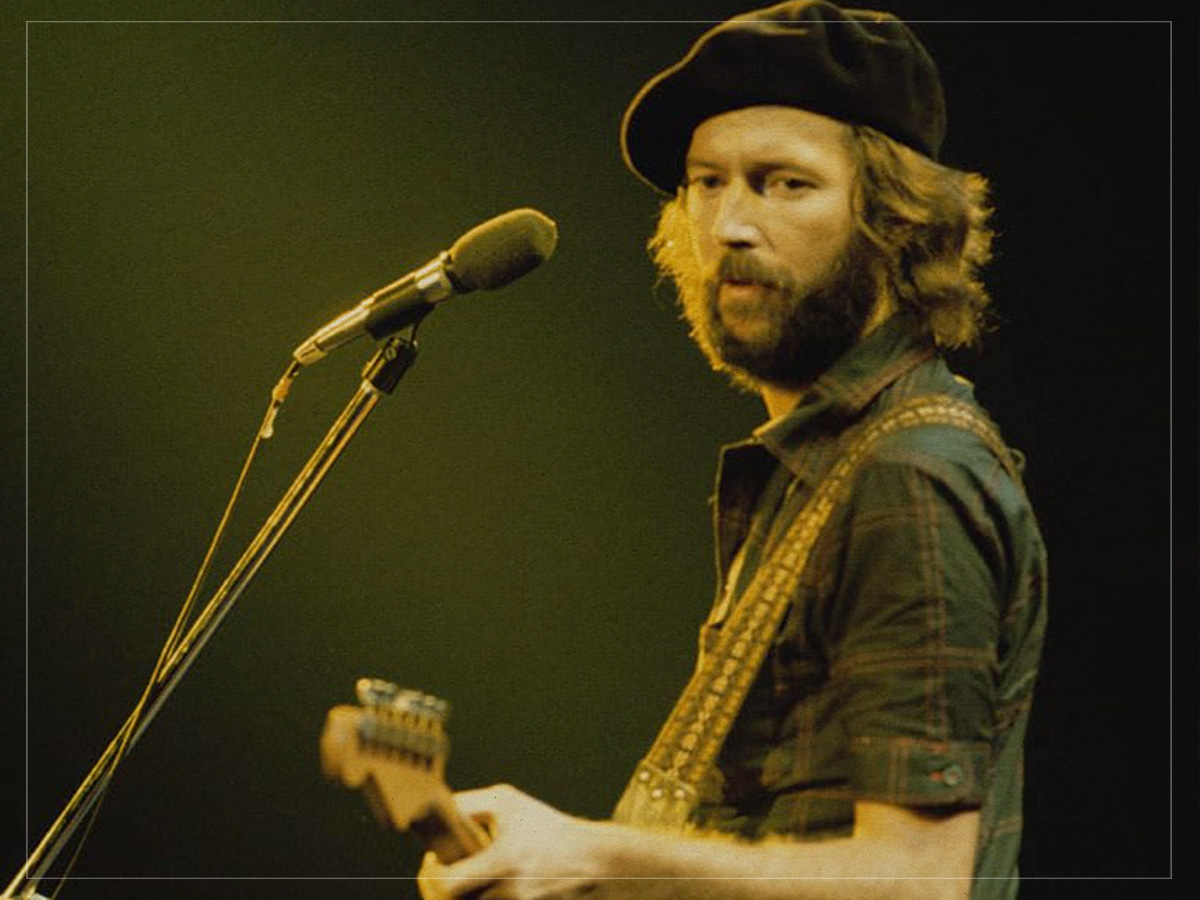
Take a second to bypass the uncomfortable nature of his social outlook and, for just a moment, focus solely on the immense career of Eric Clapton.
Whether just looking at his solo career or his time with impeccable bands like the Yardbirds, Blind Faith and, of course, Cream, it is hard to argue with Clapton’s impact on rock music. Routinely cited as one of the greatest guitarists the British blues scene ever saw, he was once hailed as a six-string deity by a London graffiti artist and, for some, that proclamation remains.
Considering the moment he burst onto the music scene, in the 1960s, and the many, many musicians he saw and worked with, it is hard to imagine him ever being really stumped by the performance of another. When you were at the first-ever Jimi Hendrix show in London, it’s hard to imagine another player coming close. When Ginger Baker was your drummer in Cream, is it even possible for another percussionist to come close to taking your breath away? Apparently so.
The versatile artist Phil Collins began his remarkable career as a child actor in the 1960s but broke out as the drummer of Genesis in the early 1970s. He joined the band alongside guitarist Steve Hackett to support frontman and creative lead Peter Gabriel. However, Collins would later become the band’s lead singer and co-songwriter following Gabriel’s exit in 1975.
Throughout their early releases, Genesis became a cornerstone of the prog-rock movement alongside virtuosic bands like Led Zeppelin, Pink Floyd and Yes. Avant-garde fixations of the psychedelic era inspired such acts to embrace complexity and obscurity. Initially, Collins embraced this aesthetic but gradually led the band in a more pop-conscious direction as the 1980s approached.
In 1980, Collins kicked off his popular solo catalogue with Face Value, which topped the UK Albums Chart for three weeks and hit number seven on the US Billboard 200. The album was conceived as an overflow of sorts, allowing Collins to exercise his passion for soul music and record any music that wasn’t accepted by or suited to Genesis.
Face Value was best known for its lead single, ‘In The Air Tonight’, a moody study of anxiety. “I wrote the lyrics spontaneously,” Collins said of the song in a 2016 interview with Rolling Stone. “I’m not quite sure what the song is about, but there’s a lot of anger, a lot of despair and a lot of frustration.”
“I was just fooling around,” he told Dave Thompson for Turn It On Again: Peter Gabriel, Phil Collins, and Genesis. “I got these chords that I liked, so I turned the mic on and started singing. The lyrics you hear are what I wrote spontaneously. That frightens me a bit, but I’m quite proud of the fact that I sang 99.9 per cent of those lyrics spontaneously.”
Despite the ultimate popularity of ‘In The Air Tonight’, thanks to Collins’ revolutionary drum fill, Genesis allegedly passed up the opportunity to record the track. Speaking to Melody Maker in 1981, Collins claimed that he had played a demo to his bandmates Mike Rutherford and Tony Banks, who dismissed it for being “too simple”. However, Tony Banks has since denied that Collins ever showed the band the song before recording it.
Whatever the weather, the song endures as a feat of drumming innovation on Collins’ part. In a 2016 conversation with Digital Trends, Collins remembered some of his friends’ reactions when he performed ‘In the Air Tonight’ in an early studio session.
“When we had Eric Clapton and some of his guys come up to the studio, we played ‘In the Air Tonight’ for them. When the drums came in, everybody said, ‘FUCKING HELL! What the fuck is that?’ Nobody had ever heard anything like that. Frankly, drums were never that loud. But it was my album, and it worked.”
“We were playing with psychological things,” Collins concluded. “The audience is there going along with you, and then suddenly you knock them on the head with this thing: Bvoom-bvoom!”
Listen to Phil Collins’ immortal classic ‘In the Air Tonight’ below.
Related Topics