
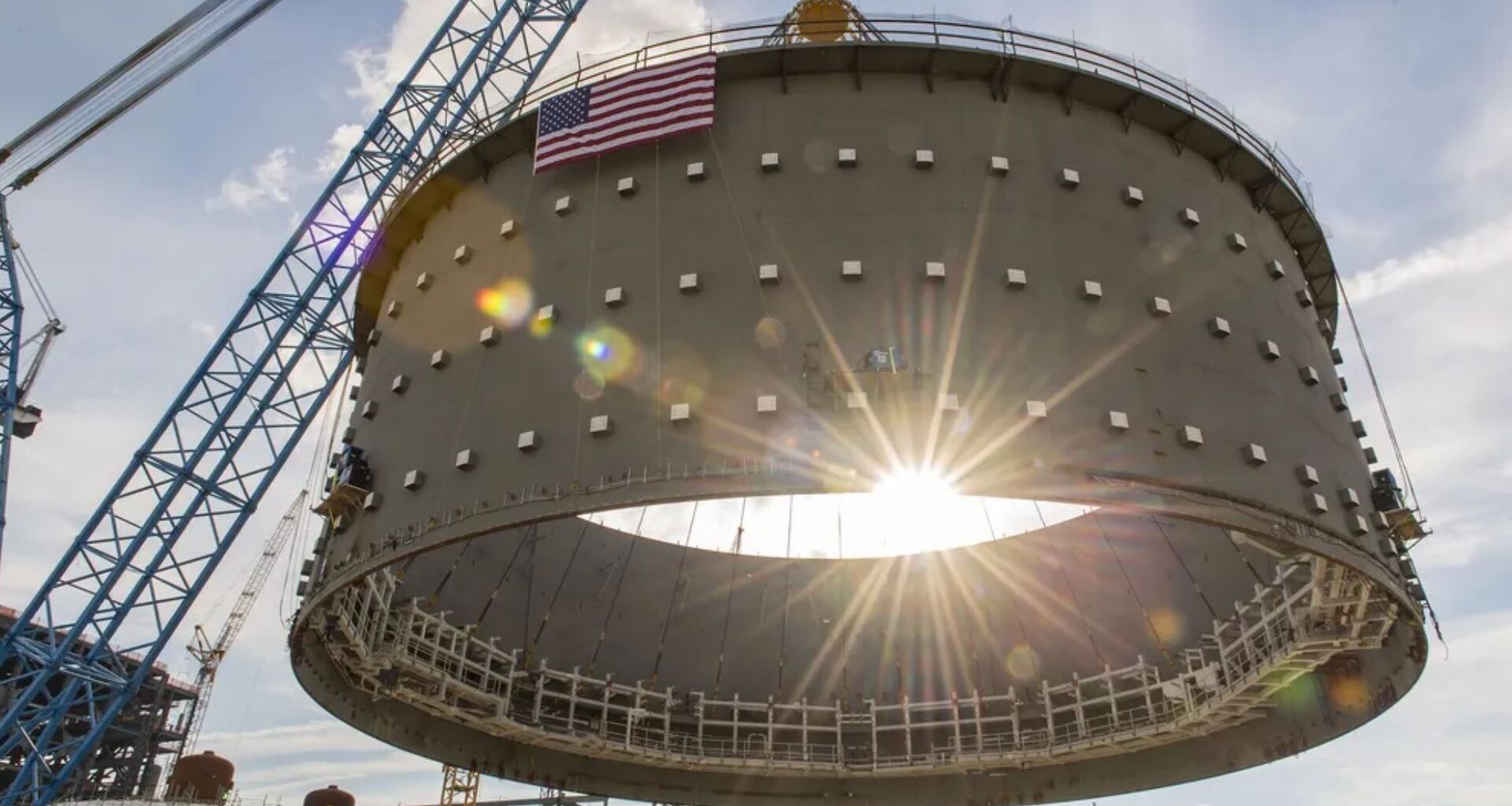
Westinghouse has officially partnered with Google Cloud to deploy a custom artificial intelligence platform designed to optimize and accelerate the complex construction processes of nuclear reactors.
The collaboration, which utilizes specialized AI models from both companies, aims to address the logistical hurdles that have historically slowed nuclear development.
Early pilots of this new platform are already demonstrating significant time and cost savings, signaling a potential shift in how large-scale energy infrastructure is built.
Ten reactors by 2030
This technological integration supports a major strategic initiative that Westinghouse shared publicly with the White House earlier this year. The company plans to have 10 of its state-of-the-art AP1000 nuclear reactors under construction by 2030.
“Nuclear is notable for offering clean, reliable power at an immense scale from a small footprint,” said Westinghouse in a press release.
Once completed, these reactors are expected to provide enough combined power to electrify approximately 7.5 million households, a figure roughly equivalent to every home in the five largest US cities plus several data centers.
To meet immense energy demand
This expansion is critical as the United States energy grid faces mounting pressure. Projections indicate the country will require 400 gigawatts of new power by 2040 to meet demand—a 32% increase from current usage—driven largely by the rapid growth of artificial intelligence and other energy-intensive sources.
The partnership is rooted in the concept of “energy for AI and AI for energy,” according to Dr. Lou Martinez Sancho, Westinghouse’s CTO and Executive Vice President of R&D and Innovation.
While nuclear energy offers clean, reliable power from a small footprint, conventional construction timelines have struggled to keep pace with urgent demand.
AI-driven optimization of construction
Construction costs historically account for 60% of a reactor’s total price tag, often due to dependencies on manual documentation and spreadsheets that lead to cascading delays across thousands of interdependent tasks.
To solve this, the new system moves away from paper-based management by leveraging Westinghouse’s extensive proprietary data.
The company impressed Google engineers with its existing AI readiness, having already established “Hive,” an infrastructure designed for nuclear regulatory frameworks, and “Bertha,” a generative AI assistant capable of accessing 75 years of nuclear documentation.
The new platform combines these historical records with Google’s prediction tools and Westinghouse’s WNEXUS, a 3D digital twin of its reactors.
This integration allows the system to predict potential bottlenecks, optimize the sequence of construction tasks, adjust staffing levels dynamically, and account for external factors such as supply chain constraints.
Future applications and viability
Westinghouse CEO Dan Sumner has stated that AI-driven decision-making is essential to making nuclear power a viable investment for utilities.
The companies view this platform as a “technology brick” with applications that extend well beyond the initial construction phase.
The same optimization tools are currently being applied to streamline licensing processes and enhance operational safety.
“By finding the fastest path through maintenance and refueling tasks, the AI helps minimize reactor downtime,” concluded the press release.