
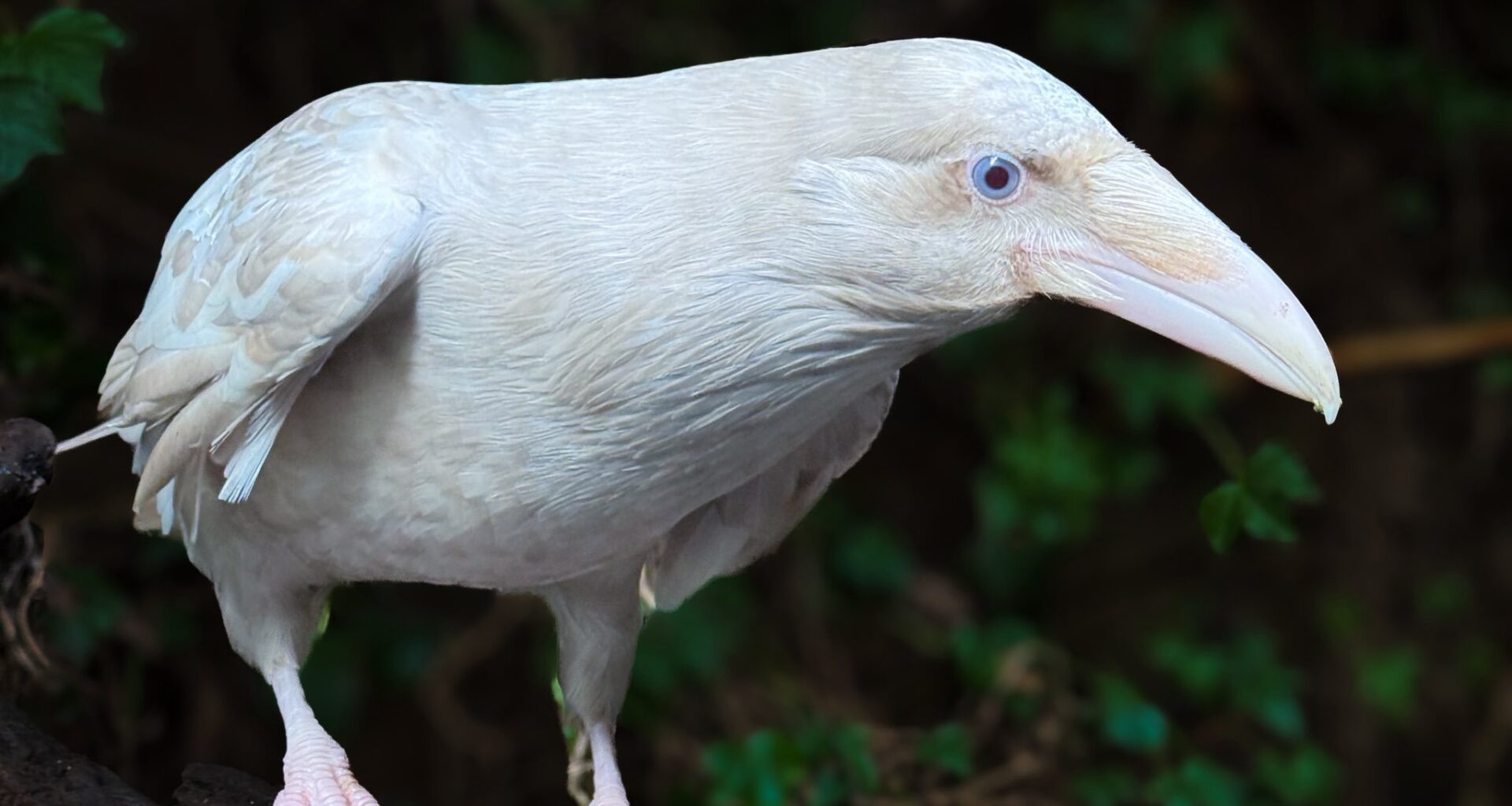
Staff at a wildlife recovery facility on Vancouver Island are mourning the death of Blizzard, a rare leucistic raven who was in their care for several years.
“With heavy hearts, we say goodbye to Blizzard,” wrote the North Island Wildlife Recovery Centre (NIWRC) on social media Monday.
The centre says the blue-eyed bird was not just a resident, but a symbol of resilience, beauty and connection. “His presence touched the hearts of staff, volunteers, and visitors from near and far,” it said in the tribute post.
The grounds will feel much quieter without Blizzard, whose voice was “one of the most recognizable sounds” on the property, according to the NIWRC.
Joanna Smith, department lead for animal care, says the bird’s death was unexpected. He had called the NIWRC home for about four years, and it’s believed he was roughly one year old when he was brought into the facility’s care.
“It’s been a whirlwind. Death is something that we do deal with. We let our guards down for residents,” Smith said during an interview Monday afternoon.
“…his absence leaves a silence we all feel deeply,” reads the post, adding that the announcement about “beloved” Blizzard comes with “profound sadness.”
Story continues below
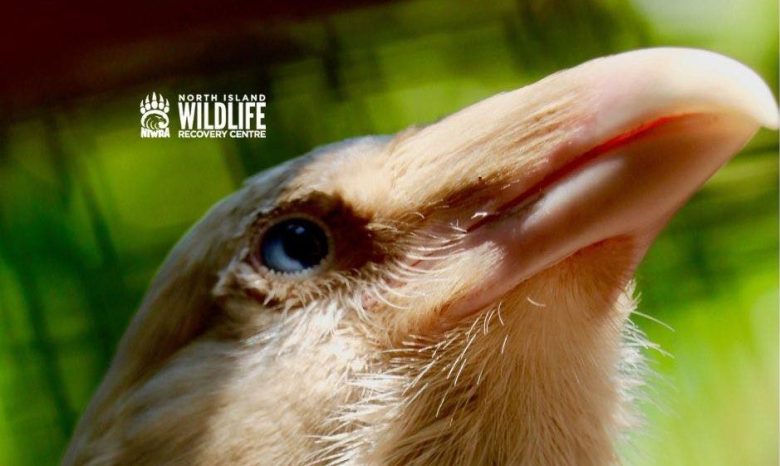 Blizzard is pictured. (NIWRC/Facebook)
A bird has a roughly one in 30,000 chance of being born with leucism – a condition that results from a loss of pigmentation due to an absence of cells that produce melanin, according to the U.S. Fish and Wildlife Service.
“This makes the White Raven a true oddity of the sky and worthy of the pomp and circumstance shown to them,” the service says on its website.
The condition is sometimes confused with albinism, “a genetic mutation where the animal is born without the enzyme essential to produce melanin,” it explains.
“While animals with albinism usually have pink or reddish eyes, our local snowy luminary sports ocean blue peepers…”
Smith says leucistic ravens don’t do well in the wild, and summer and winter “can be hard on them.” Blizzard had an enclosure protected from the elements.
She said it was “devastating” to find the bird deceased early Monday.
According to Smithsonian’s National Zoo and Conservation Biology Institute, ravens in the wild can live from anywhere between 10 and 15 years, but in human captivity it’s possible for them to live much longer — up to 40 or 50 years.
The NIWRC says the loss of Blizzard comes shortly after the passing of Elsa, the centre’s resident snowy owl of 13 years. She died earlier this month, and speaking with CHEK News, staff believed the cause was symptoms of old age.
“We do regular check-ups on all the residents here, and there’s no sign of illness or decline,” said Keisha Long, an animal care technician, when asked about Elsa last week.
“Afterwards, we did an exam, and there were no signs of dehydration or starvation; we couldn’t find anything.”
READ PREVIOUS: ‘She would look right back at you’: Staff say goodbye to Elsa the resident snowy owl of 13 years
The NIWRC on Monday says necropsies will be performed on both birds.
“Due to the unusual timing of their deaths, our wildlife veterinarian will be performing necropsies on both Blizzard and Elsa to help determine the cause and ensure the continued health and safety of our other residents,” it added.
“We will continue to share updates as we learn more. Thank you for holding Blizzard, Elsa and all of us in your thoughts during this difficult time.”
The North Island Wildlife Recovery Association, celebrating its 40th year, operates the non-profit rehabilitation facility on eight acres in Errington, northwest of Nanaimo. The team cares for animals with a wide range of needs, including birds, black bears and more.
Memorials are planned for both Blizzard and Elsa, and the pair will be “left to rest on the (NIWRC) grounds,” added Smith in the interview.