
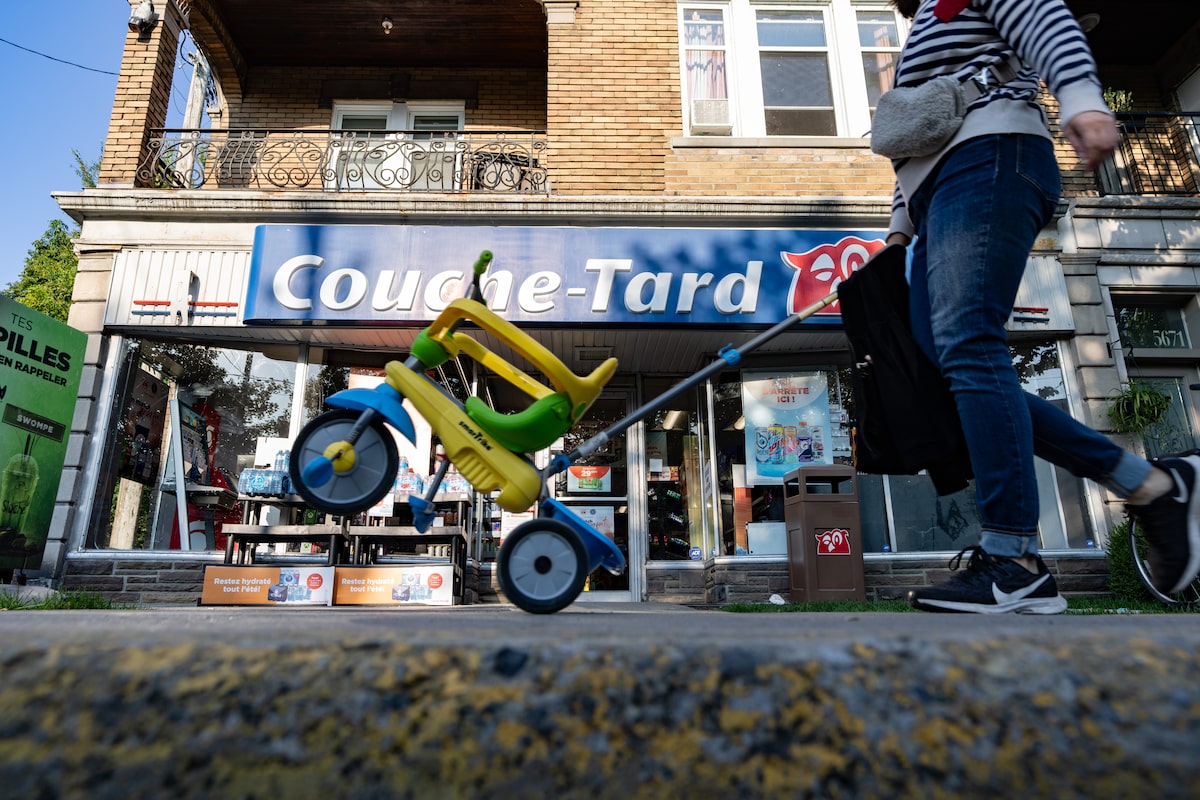
A Couche-Tard convenience store in Montreal in September, 2024. The convenience-store operator says it is now selling one million meal bundles a week at its stores in North America alone.Christinne Muschi/The Canadian Press
Alimentation Couche-Tard Inc. ATD-T is raising its bets that meal-deal promotions will be a major driver of growth for its business in the months ahead as the Canadian convenience-store operator plots its next takeover in an industry still ripe for consolidation.
Laval, Que.-based Couche-Tard, which owns the Circle K chain, said Tuesday that its calorie-bomb combinations, such as a hot dog, bag of chips and fountain soda for US$3, are gaining popularity and that it plans to expand the program. After a launch in the United States in late 2024 and in Canada earlier this year, the company says it is now selling one million meal bundles a week at its stores in North America alone, helping fuel store traffic and profit.
“We think we’ve really found something here that is really resonating with … consumers that are strapped for cash,” Couche-Tard chief executive Alex Miller told analysts on a Tuesday conference call to discuss the company’s latest quarterly earnings. “We’re just getting started.”
Couche-Tard reports second-quarter net earnings at $740.6-million, up from previous year
Couche-Tard pulls bid for Japan’s Seven & i, accusing 7-Eleven owner of failing to engage
One year into his tenure as Couche-Tard CEO, Mr. Miller is now trying to build momentum and restore investor confidence after the company abandoned its effort to take over Seven & i Holdings Co. SVNDY, the Japanese owner of the 7-Eleven chain. A merger between the two giants would have changed the global convenience-store landscape but Couche-Tard withdrew its bid in July, blasting Seven & i for failing to engage in meaningful deal talks.
Mr. Miller said on Tuesday’s call that his team is “very active” in hunting for other merger and acquisition opportunities. He declined to provide any details beyond saying transactions are being considered in the U.S., Canada and Europe.
The U.S. generally remains fertile ground for takeovers. The market there is highly fragmented, with the top 10 convenience chains making up only 19 per cent of the total number of corner-store outlets. The balance consists mostly of independent mom-and-pop shops.
Mr. Miller is also trying to drive revenue from existing operations in a difficult environment for retailers. Promotions on food and gasoline helped the company deliver same-store sales growth across all its geographies for the second consecutive quarter, fuelling a net profit of US$740.6-million or US$0.79 a share for the three-month period ending Oct. 12.
On an adjusted basis, Couche-Tard reported earnings of US$734-million or US$0.78 a share for the quarter, beating the analyst consensus estimate of US$0.75. Revenue came in at US$17.9-billion. It’s only the second time in nine quarters that Couche-Tard delivered an adjusted earnings-per-share growth year-over-year, according to analyst Martin Landry of Stifel Financial Corp.
It’s difficult to know how much Couche-Tard’s dance with Seven and i Holdings affected operations, said Jason Del Vicario of Hillside Wealth Management in Vancouver, which holds a sizable position in Couche-Tard among its $275-million in assets under management. “I’m sure they would tell anybody and everybody that it didn’t distract them, but I don’t see how it couldn’t have … We were happy that they walked away from it.”
During the last quarter, new Ontario regulations allowing the sale of beer in licensed convenience stores boosted traffic to Canadian Circle K outlets, while in Europe, the rollout of meal-deals helped drive sales of sandwiches and other food items there. In the U.S., sales results were sharply different depending on the region – with Texas and Arizona being the most challenged areas, Mr. Miller said.
Couche-Tard plans to provide a more detailed business strategy update in February.