
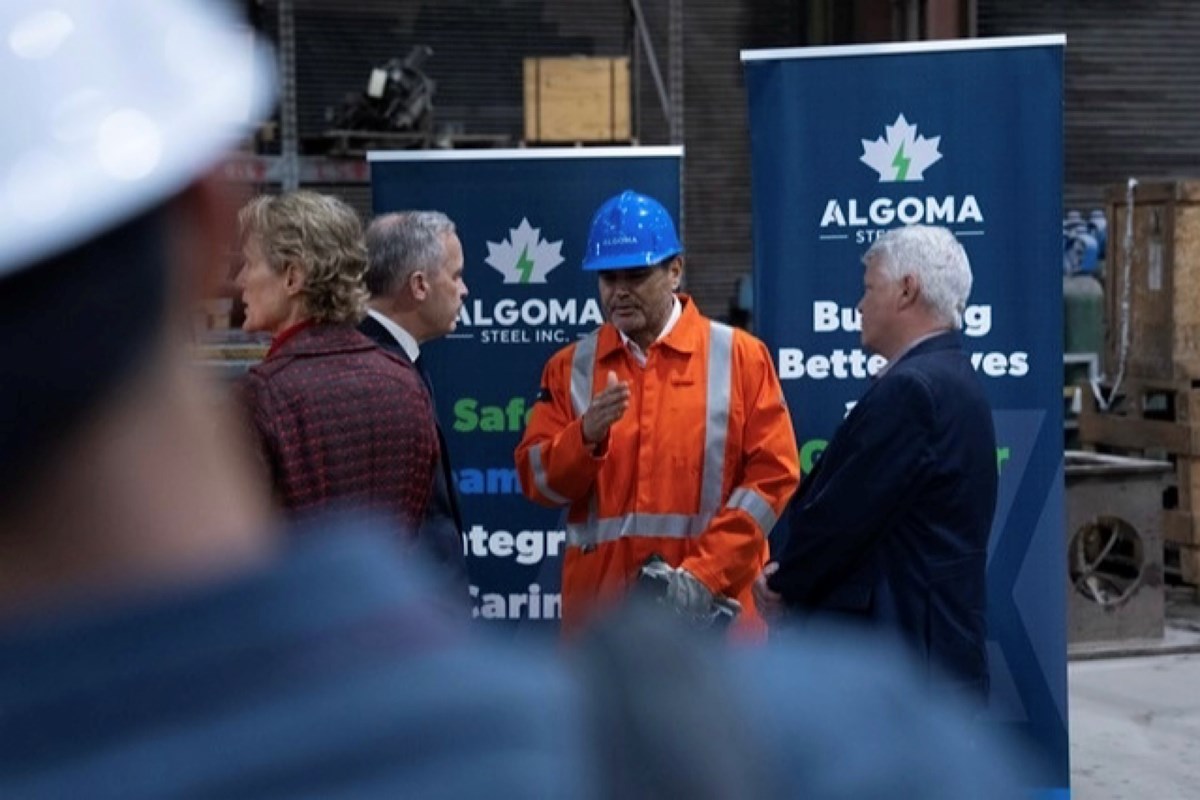
Announcement was made by Prime Minister Mark Carney as part of a package of measures aimed at protecting demectic steel and lumber industries
Canadian border guards will get help from a special compliance team in their fight against illegal dumping of foreign steel, Prime Minister Mark Carney announced today.
“To do so, we will equip the Canada Border Services Agency with a dedicated steel compliance team, enhanced detection of false declarations, and an expanded online reporting tool,” Carney told a news conference in Ottawa.
He didn’t disclose the size of the new steel team, or where its officers will be stationed.
“Steel and lumber are core to Canada’s competitiveness,” Carney said in news release.
“To compete and win in this new global environment, these strategic sectors must be ready to seize new markets at home and around the world.
“Canada’s new government is moving with urgency and determination to transform these industries and empower workers and businesses with the tools they need to bridge to the future – and thrive in it,” the prime minister said.
“Today’s announcement by the prime minister provides further support for workers in the steel and lumber industries,” added Sault Ste. Marie MP Terry Sheehan.
“I am very pleased that the PM has listened to myself, industry, and workers and is taking further action to combat the effects of these terrible U.S. tariffs. We will continue to have the backs of workers and industry in Sault Ste. Marie-Algoma, and across Canada,” Sheehan said.
Here, as described in a news release, are other steel- and lumber-related measures announced by Carney today:
Canada will tighten the tariff rate quota levels for steel products from non-free trade agreement (FTA) partners from 50 per cent to 20 per cent of 2024 levels.
For non-CUSMA partners with which we have an FTA, Canada will reduce tariff rate quota levels for steel products from 100 per cent to 75 per cent of 2024 levels.
Canada will impose a global 25 per cent tariff on targeted imported steel-derivative products such as wind towers, prefabricated buildings, fasteners, and wires.
To move away from relying on imported steel and to give Canadian companies time to adjust their supply chains to use Canadian steel, the temporary remission of Canadian tariffs on imports will end on Jan. 31, 2026, for steel used in Canada for manufacturing, food and beverage packaging, and agricultural production.
These measures will boost the competitiveness of Canadian steel producers by protecting them against trade diversion. They will also unlock over $1 billion in new domestic demand for Canadian steel.
To make it more affordable to transport Canadian steel and lumber across the country, Canada will work with railway companies to cut freight rates for transporting Canadian steel and lumber interprovincially by 50 per cent, beginning in Spring 2026.
To maximize the use of Canadian softwood lumber in housing, Build Canada Homes will prioritize shovel-ready, multi-year projects that can begin within 12 months and that use Canadian wood products.
With a funding allocation of roughly $700 million next year, Build Canada Homes – the new federal home-building agency – alone will create $70 to $140 million of new demand for Canadian wood products – and attract private and provincial capital to multiply its impact.
Canada will implement a Buy Canadian Policy later this year, which requires that all contracts worth over $25 million prioritize Canadian materials – including steel and lumber. This will also apply across federal grants and contributions programs.
Canada will earmark more than $100 million over two years, starting in 2025-2026, in program costs to provide support to eligible employers in all sectors with an active work-sharing agreement and who commit to supporting training for employees working reduced hours. This measure will increase the income replacement for eligible workers, helping up to 26,000 Canadian workers in various sectors, including steel and lumber.
To ensure companies have the financing and credit support they need to maintain and restructure their operations during this period of transformation, Canada will provide an additional $500 million to the Business Development Bank of Canada (BDC) software lumber guarantee program.
To support softwood lumber firms facing liquidity pressures, Canada will earmark $500 million in funding under the large enterprise tariff loan facility.
To make it easier for the forestry sector to access federal support, a single window will be provided for applications – a one-stop shop to help companies navigate support programs.
To examine and report on how the forest industry can maintain its competitiveness over the long term, Canada will launch a Canadian Forest Sector Transformation Task Force. This task force will seek input and recommendations from provinces, territories, and industry on managing the sector’s transformation.