
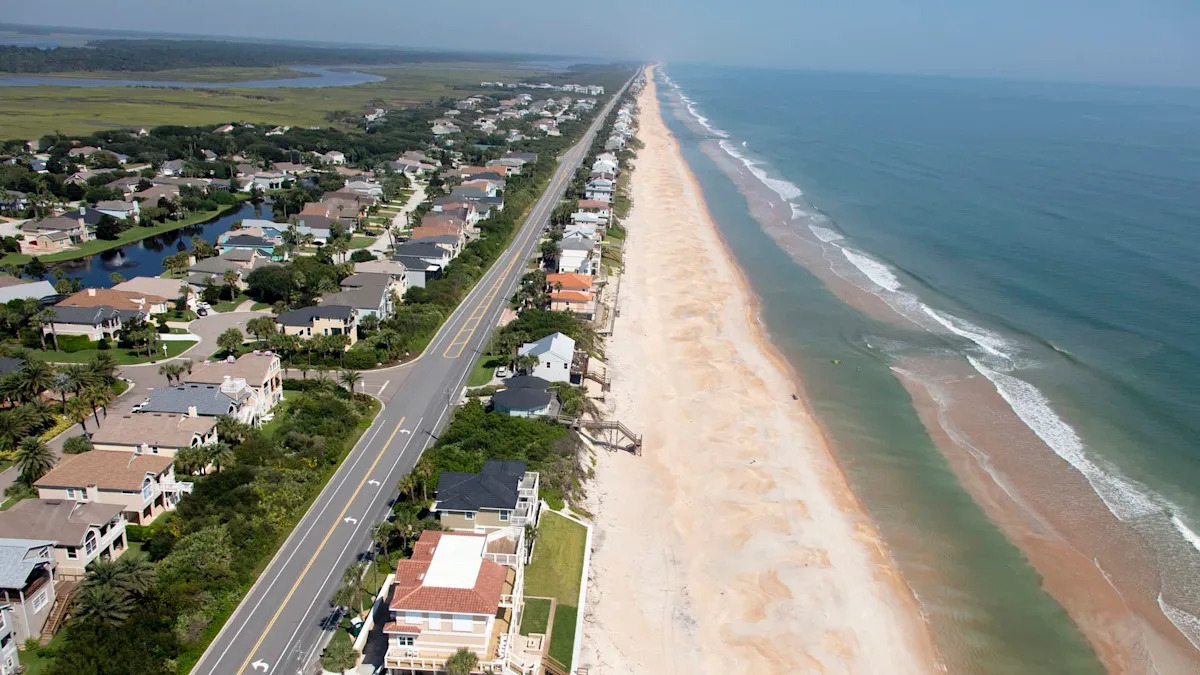
A new international report warned that current temperature targets to reduce global overheating may not prevent catastrophic ice loss that’s threatening coastal communities worldwide, per a recent piece by Durham University.
What’s happening?
Research from Durham University contributed to the State of the Cryosphere Report, which revealed that achieving sea-level management requires limiting warming to 1.8 degrees Fahrenheit or less.
Scientists presented their findings at the COP 30 U.N. Climate Change Conference in Belém, Brazil, in November. The report involved 50 leading researchers from around the world, coordinated by the International Cryosphere Climate Initiative.
Professor Chris Stokes from Durham University’s Department of Geography contributed key research to the report. His work shows that, if countries follow through on their current pledges to reduce pollution, Earth will still warm by over 3.6 degrees above pre-industrial levels — affecting billions of people due to global ice loss and rising seas.
“Warming to [2.7 degrees Fahrenheit] would likely generate several metres of sea level rise over the coming centuries as the Greenland and Antarctic ice sheets melt in response to both warming air and ocean temperatures,” Stokes’ research states, making adaptation difficult and far more expensive.
The study suggested that the target for global temperature rise should instead be closer to 1.8 degrees Celsius to avoid major losses and prevent further acceleration of sea-level rise.
Why is ice loss concerning?
Melting ice sheets directly threaten billions of people around the world. Rising seas will cause extensive loss and damage to coastal and island populations, forcing widespread displacement.
Communities face higher tides during extreme weather events, making storms more destructive and flooding more severe.
The economic burden also grows heavier as global temperatures rise, making adaptive measures much more difficult and expensive. Coastal cities will need massive infrastructure investments to protect against rising waters, diverting resources from other community needs.
Ice loss also disrupts food systems as changing conditions affect fish populations and agricultural regions. Temperature shifts enable the increased spread of disease as warming expands the range of carrying insects into previously unaffected areas.
What’s being done about ice loss and rising temperatures?
According to the article, Stokes’ work was cited in a new Climate Analytics study recommending a rapid phase-out of fossil fuels and scaling up carbon dioxide removal, driven by innovations in renewable energy and electrification.
Meanwhile, communities worldwide are working to increase their resilience with improved early warning systems to help communities prepare for extreme weather. Organizations are working to protect coastal ecosystems that can serve as a natural buffer against rising seas.
You can take action by learning more about the critical environmental issues we face and supporting policies that help to reduce pollution.

��
Get TCD’s free newsletters for easy tips to save more, waste less, and make smarter choices — and earn up to $5,000 toward clean upgrades in TCD’s exclusive Rewards Club.