
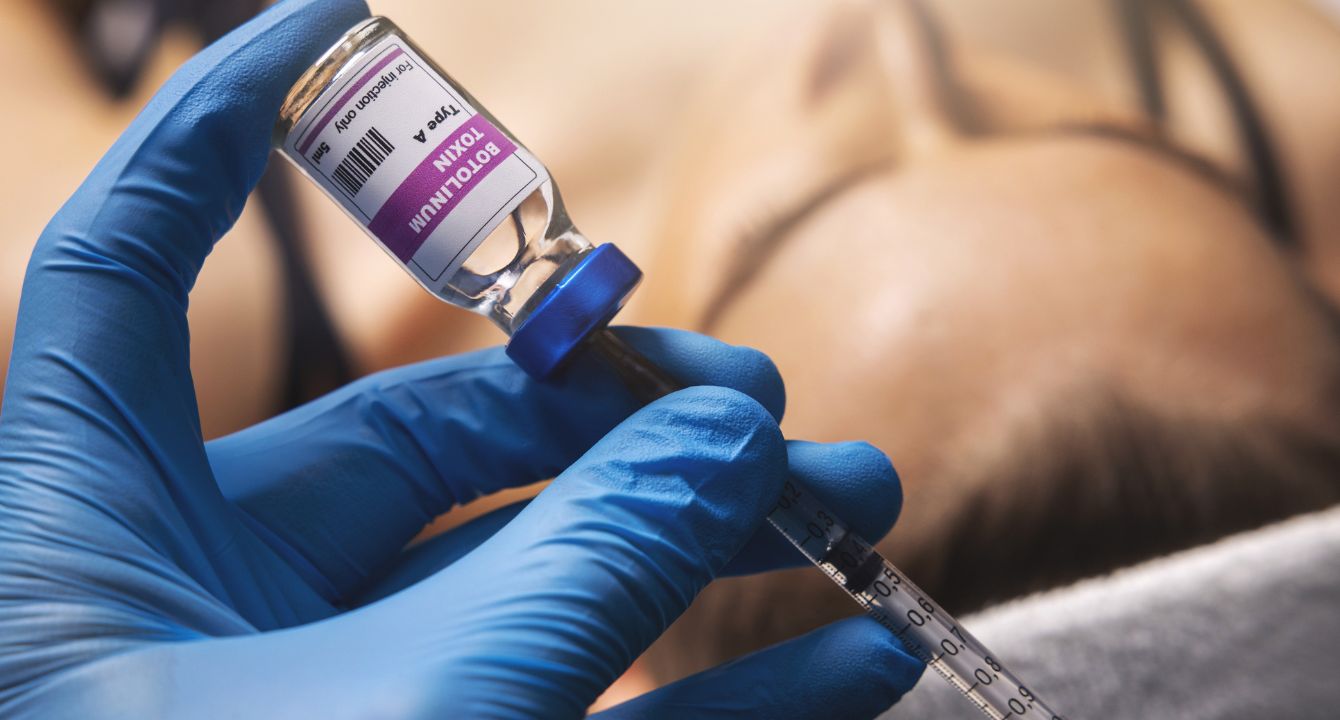
Much of the conversation about Botox centres on whether it looks good or bad, or if getting it can be considered a “feminist” choice. “Preventative Botox injections could be aging you,” Vogue magazine warned in January 2025. The New York Post weighed in with an article claiming Botox is making gen Z look “robotic,” while NBC focused on the Love Island Effect, a backlash against unnatural looking cosmetic injections. “We should stop judging women who get Botox,” says Oprah Daily. “You do you.”
Less attention has been given to the fact that research indicates that one in six patients who are injected with Botox – or Botulinum toxin, a neurotoxin – experiences adverse effects from the procedure. These negative outcomes exist on a spectrum and can include bruising, autoimmune issues, chronic fatigue, facial paralysis, a disrupted menstrual cycle and/or cardiac arrest.
With no national training requirements in Canada or the United States stipulating consistent, evidence-based education regarding what practitioners and patients should know about Botox, it’s possible that patients are not truly providing informed consent to an elective procedure that can result in permanent disability. Women are increasingly turning to social media to circulate stories of medical injury following what they were told was a safe, simple procedure.
Botox paralyzes muscles at the injection site, stopping them from contracting when it blocks acetylcholine, a neurotransmitter that causes muscle movement for the entire body. When Botox was first approved for cosmetic use in 2002, it was thought that the neurotoxin did not cross into the brain and stayed within the peripheral nervous system at the site of injection. But following numerous documented severe reactions and fatalities and subsequent legal action, research in the 2000s disproved this, revealing that Botulinum toxin can spread into the patient’s bloodstream and can even be transported along nerve axons into the central nervous system: the brain and the spinal cord.
Botox contains botulinum toxin A, the world’s most lethal neurotoxin, which can cause significant systemic problems for the human body if it spreads beyond its injection site. A successful Botox procedure also relies on the body generating new nerves to correct for their paralysis after the injection. If new nerves fail to sprout in a timely or consistent form, it can lead to serious adverse outcomes such as muscle atrophy and facial paralysis.
Julie Whittaker, an Ottawa-based real estate agent, received a Botox injection in 2018 from a board-certified physician for TMJ relief. She emphasizes that in her case, adverse outcomes did not arise from counterfeit Botox or the errors of the provider. “Even after using a board-certified physician, things went horribly wrong,” Whittaker says. Her complications arose solely from the “dangers of the drug itself.”
Immediately after the injection, Whittaker experienced a rush of adrenaline that she believed to be anxiety. Later in the day she got a headache; when she woke up the next morning, her entire face was paralyzed. Her eyes couldn’t open; for the next six months she couldn’t smile. However, she says, “the underlying symptoms were far worse. I had intolerance to heat, nerve pain in my face and neck, constant headaches, elevated heart rate and episodes of faintness, tinnitus, vertigo, brain fog, eyelid ptosis, lack of energy [and a] racing heart” among other symptoms. “These sensations came and went for a year. When I would feel better slightly… something as simple as flying on a plane or a certain food triggered relapses.”
It’s now been six years since the initial injection and Whittaker says “my face never fully returned to normal. In fact, my forehead has obvious muscle indentations from the months of lack of movement.”
What Whittaker describes is botulism, a disease that comes from neurotoxins such as Botox. While it’s possible to get botulism from tainted canned goods or infected wounds, it’s also possible to acquire it from pharmaceuticals since it’s caused by the exact neurotoxic protein that Botox contains. Botulism is understood by patient advocates and researchers to be the most severe adverse outcome from Botox, and while its effects can be mitigated by taking an antitoxin within a short window, the condition is progressive and has no cure.
Gretch Elizabeth is a U.S.-based patient advocate for Tox Safety, a coalition of organizations that advocate for greater manufacturer transparency and awareness around the risks associated with Botox. She is the administrator of a Botox side effects support group on Facebook that has more than 42,000 members from more than 100 countries, with the highest numbers of members in the United States, the U.K., Australia, and Canada.
Most of the patients Elizabeth advocates for have developed some form of botulism or botulism-like illness following an injection from a board-certified health-care provider. Elizabeth emphasizes that when Botox does migrate, it often causes disruption of the autonomic nervous system, leading to anxiety, heart palpitations, shortness of breath, and issues with incontinence. More moderate cases of botulism include vision disturbances, the inability to swallow, laboured breathing, and food getting stuck in the esophagus. Severe botulism usually manifests a few hours after the Botox injection and can involve cardiac arrest and even death.
Severe botulism usually manifests a few hours after the Botox injection and can involve cardiac arrest and even death.
“My sister was in the bathroom, and she was flat-ironing her hair,” Elizabeth says. “All of a sudden, she felt a rush come over her where she felt her heart rate start to go really high … she thought she was maybe having a heart attack because of the cardiac symptoms. And then her hearing went out of whack, and she started to have tunnel vision. She felt a cold rush go down one side of her body and this is when she thought she was having a stroke.”
Elizabeth’s sister went to the emergency department and over the next week she experienced intense muscle weakness, slurring of her words, tremors, clawing hands, palpitations, trouble taking deep breaths and nausea. But doctors didn’t draw a connection between her symptoms and her recent Botox injection, which Elizabeth says is typical. Most medical professionals are not aware of the link and don’t know how to assess for botulism. “I can tell you that more people are sent home and not helped than people who are helped.
“She was sick for a long time,” Elizabeth says of her sister. “The first year, she was not functioning at all. She had young children at the time and required a lot of round-the-clock care … She saw many, many doctors and they had no idea why she was so sick. It wasn’t until a couple of years into that journey that she stumbled upon the support group that I’m now helping with.”
It’s impossible to know how rare cases such as Whittaker and Elizabeth’s sister are because data collection for adverse events from Botox is insufficient. “Reporting databases are severely lacking in accurate numbers,” Elizabeth explains.
The Canadian Vigilance Adverse Reaction Online Database, which lists adverse reaction reports submitted to Health Canada by health professionals and patients, reports 5,287 adverse outcomes from Botox, though Health Canada notes that adverse events are underreported. Elizabeth notes that the best systemic reviews estimate that Food and Drug Administration (FDA) numbers for any drug represent one-10 per cent of the total adverse events. In Canada, that could mean as many as 528,700 negative reactions to Botox, “which paints a much different safety profile than what we’re seeing. And of course, this is being reflected everywhere in social media.”
The clinical trials included in the pharmaceutical manufacturer for Botox report that less than one per cent of people react badly to the injections, but Elizabeth suggests “it’s just not a high enough percentage.” She points to a study by British researcher David Zargaran who conducted a meta-analysis in 2022 of 11,000 injection sessions in the U.K., identifying patients who were subsequently experiencing significant side effects. The study, published in the Journal of Plastic, Reconstructive and Aesthetic Surgery, determined that 16 per cent, or one in six people, experienced adverse outcomes from Botox. The rate of adverse outcomes offered by Botox manufacturers, Zargaran notes, “is significantly lower than the rate recorded from our meta-analysis of the international literature,” leading to serious concerns regarding patient consent and safety. Zargaran’s study “offers us a better picture, in my opinion, than some of the data that’s supplied by the manufacturers,” says Elizabeth.
Another aspect of botulism that makes it hard to document is that in most cases, symptoms don’t arise right after the Botox injection. “The patient safety literature states that these side effects can occur days to weeks to even months after the initial treatment,” Elizabeth says. “So, you have to ask yourself: how accurate are these manufacturer studies? How long do they follow people around for?” There is also no readily available diagnostic test for botulism, and diagnosis is usually a process of elimination. For patients who develop an autoimmune condition after getting Botox, the diagnostic process can take even longer.
A major victory for patient safety advocates was the creation of the 52-page 2009 black box warning label for Botox in the U.S. The same year, Health Canada issued a warning, included in the labels on Botox products, that the “toxin in Botox products may spread to distant parts of the body, with potentially fatal consequences.”
But warnings about botulism are on page 49 of the 52-page label, and Elizabeth says that even today “adequate duty-of-care and counsel are not happening. I can tell you that’s not happening. I only know of a small handful of people [who experience adverse events] who’ve received that medication guide, so there’s a huge disconnect there. And another thing we’re seeing is a lot of providers haven’t even read the full 52-page warning themselves either. They’re just taking everyone else’s word for it that this is safe. It’s perpetuating a serious issue in patient safety.”
Despite Health Canada’s warning to the contrary, the preeminent plastic surgery society in Canada, the Canadian Society of Plastic Surgeons (CSPS), claims in its guidelines that an injected neurotoxin such as Botox “does not spread throughout the body.” There is no mention of botulism as a potential risk to patients. Health Canada’s website claims that “complications can arise if Botox Cosmetic is injected incorrectly,” contradicting the black box warning that states “the most important information [patients] should know about Botox” is that the neurotoxin Botox itself “may cause serious side effects that can be life threatening.”
In response to request for comment, CSPS said it “stands by the comment that there is minimal spread of the neurotoxin during the cosmetic treatment of wrinkles” and that “adverse reaction has mainly been associated with non-cosmetic use.” Health Canada stated that its website “contains general information on potential adverse reactions” and that the “most up-to-date safety information for any product authorized for use in Canada can be found in its Product Monograph” database.
These inconsistencies are not shocking to Elizabeth. As it stands, she says, “Patient consent is all over the place.” The forms that patients are signing vary dramatically, with “no standard of care,” no universal consulting, labelling or paperwork that people receive despite the product being the same all over the world.
When I ask Whittaker if she feels like she actually consented to her procedure, she says, “No, I do not. I was not given any pamphlet or details on side effects of Botox at all. I did not even know what black-box warnings were until after I was injured.”
Warnings now fill social media pages. Thousands of videos have been uploaded by women to TikTok and Instagram about their adverse Botox outcomes. Using hashtags like #botoxinjury, #botoxsideeffects, and #botulism, women are increasingly circulating stories of patient injury ranging from “my Botox black eye” to “Botox wrecked my smile” to “Botox almost killed me.”
Elizabeth says that, following outcries on social media and more coverage in mainstream media and on podcasts, she has been happy to see more health-care providers reach out to her to learn about adverse events. But she emphasizes that while stories about counterfeit Botox or provider errors often circulate in the media, the vast majority of women who reach out to her have been harmed by the neurotoxin itself administered by a certified professional.
“The medical community needs to acknowledge the reality of adverse reactions and take them seriously,” Whittaker explains. “I would like to see mandatory education on botulinum toxin for all injectors and physicians, not just about administration, but also the potential systemic effects and consequences.”