

The at-home cycling experience has come a long way. The monotony of rides while staring at a blank wall has thankfully been replaced with a significantly improved, totally immersive riding experience.
Two of the best exercise bike brands are Peloton and Echelon, both of which offer a premium, studio-style cycling experience from the comfort of your living room. With additional off-bike fitness options, they have cultivated distinct ecosystems with key differences in philosophy, hardware, and content delivery.
Best picks for you
Peloton Versus Echelon – the bikes
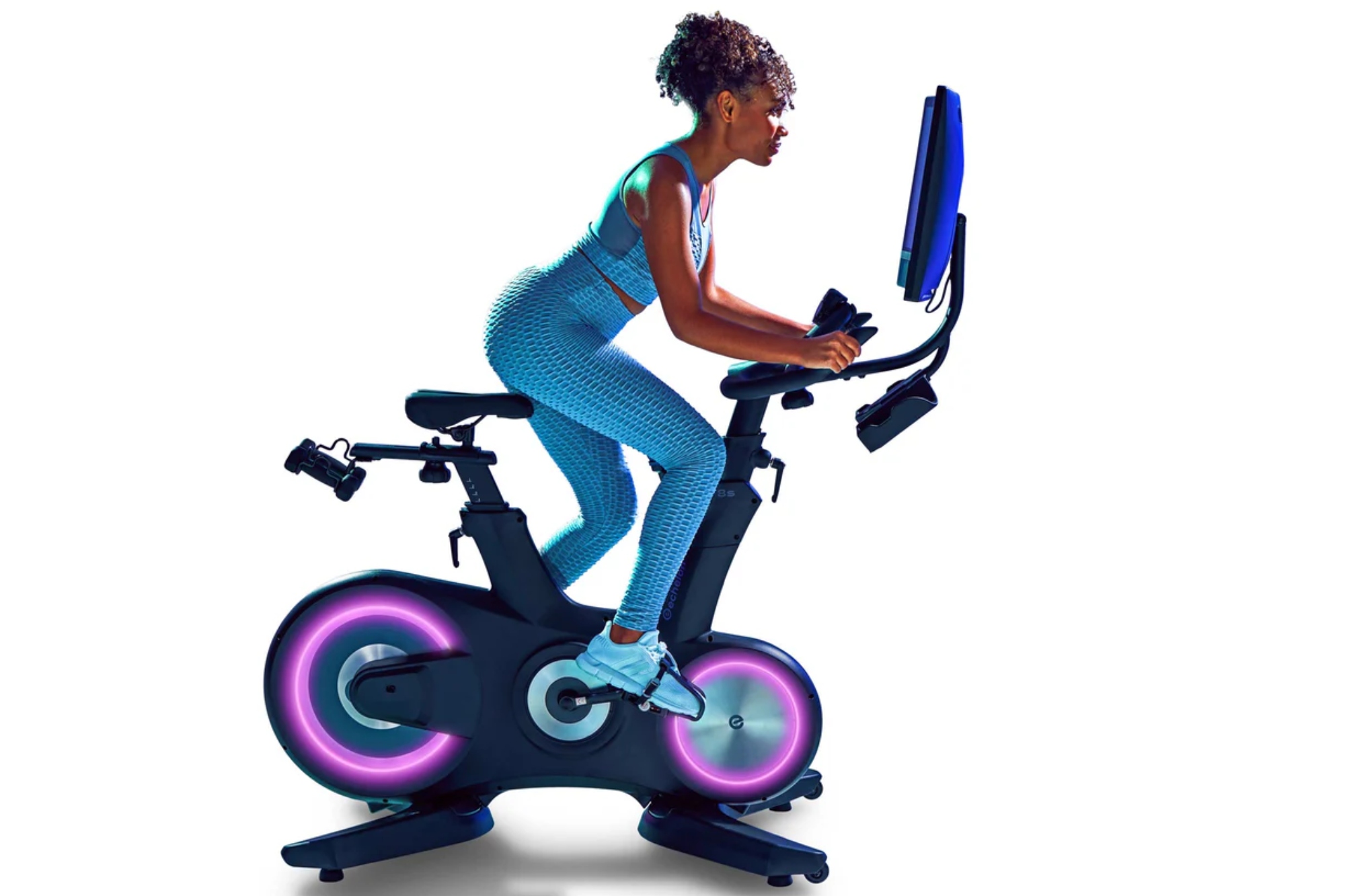
The flagship Echelon Connect EX-8S wins the prettiest exercise bike award from me
(Image credit: Echelon)
Taking the bikes at face value, there is very little to differentiate them aesthetically. That said, the newest Echelon flagship model, the EX8-S, has improved with its LED lights. As a rider, you won’t really benefit from the colour-changing auras, but it looks great for any spectators or Instagram content.
Both brands use a very similar bike construction method and material; it’s in the details of the builds where the differences are made.
(Image credit: Peloton)
Peloton
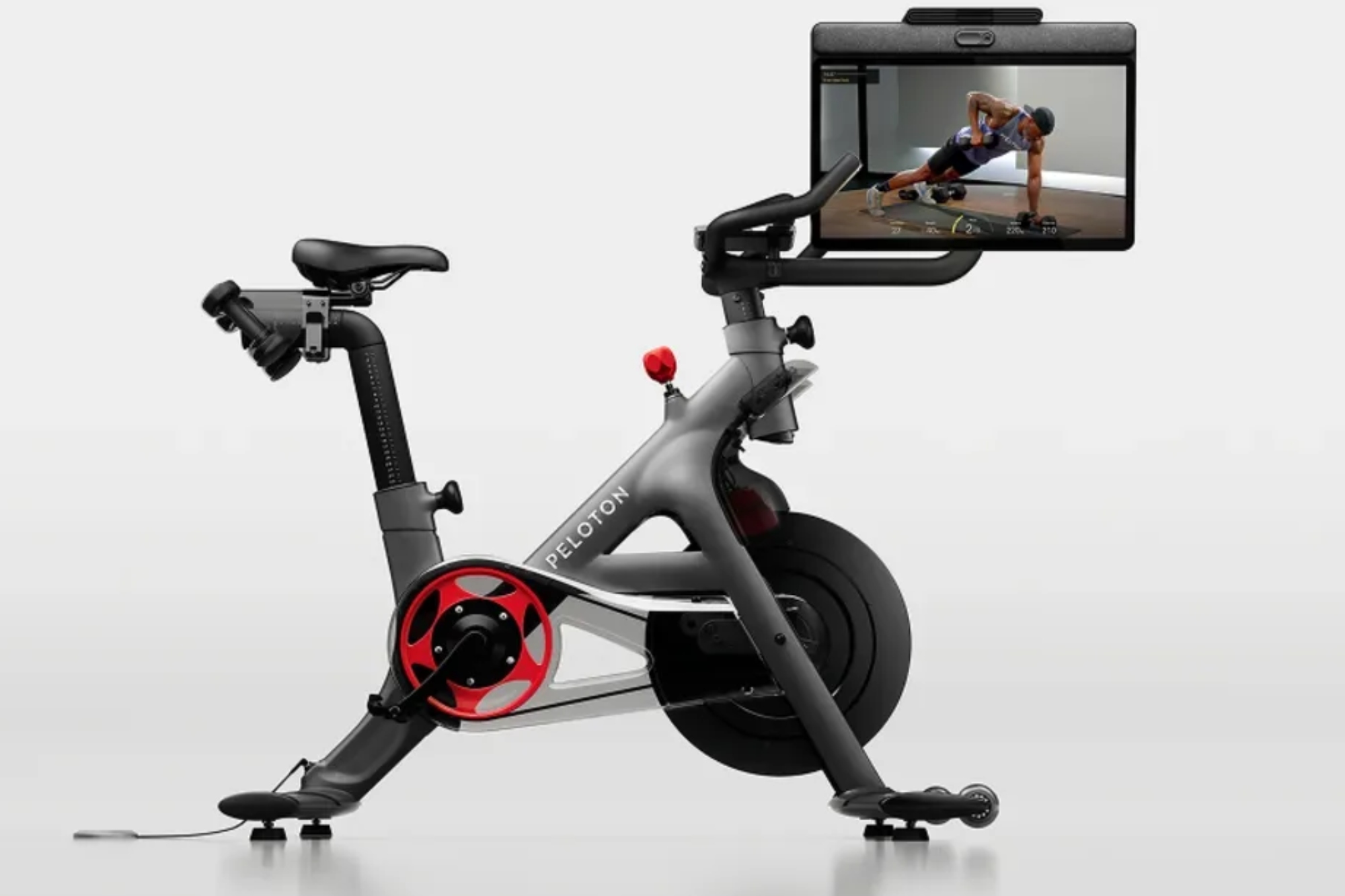
Whilst this is article is intended as a comparison between Peloton and Echelon products, Peloton itself currently offers two relevant bike models: the Original Bike + and the Cross Training Bike +. Both bikes are built from powder-coated steel and feature a magnetic, digitally adjustable resistance system and a Poly V power transmission belt drive.
They are equipped with 170mm cranks paired with Look Delta compatible aluminium pedals, designed to accommodate riders between 150 cm and 196 cm (the Bike + states a slightly shorter maximum height of 195 cm / 6’4″) and both give a maximum rider weight of 135 kg / 297.6 lbs.
Peloton bikes tend to have heavier flywheels and frames than most other exercise bikes (although the brand does not publish the exact weights), providing a stable feel, especially during intense “out-of-the-saddle” efforts. This perceived “heavy-duty” quality is a key selling point for Peloton.
Both models feature a 23.8-inch swivel screen that rotates 360º for off-bike sessions. They also offer auto-resistance that responds to instructor cues, or users can manually adjust resistance as needed.
The two models differ somewhat in sound quality: the Cross Training Bike + uses Sonos-tuned speakers for a more immersive studio experience, whereas the Original Bike + has forward-facing speakers.
The most notable upgrades on the Cross Training Bike + include an onboard fan, to help keep cool when using the bike, a movement-tracking camera for form checks and rep counting, and hands-free controls for volume, pausing classes, or inputting weight changes.
(Image credit: Echelon)
Echelon
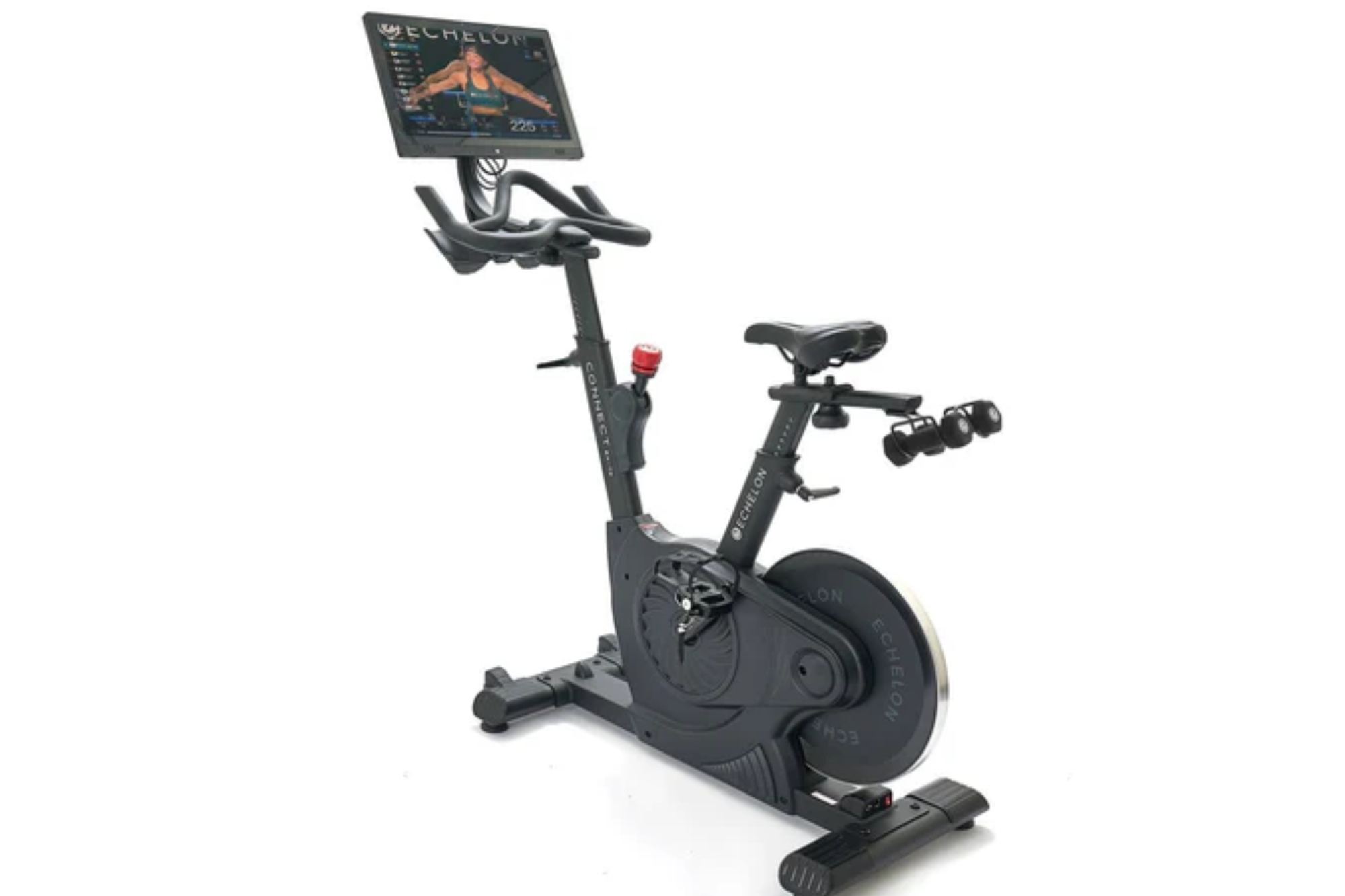
Echelon, offers a broader range of options than Peloton, and where it gets somewhat more confusing is that it also sells specific models depending on whether you’re in the US or the UK.
In the US, there are three upright bike models: the Connect EX-8s, EX-5S, and EX-5 (which are also available in the UK), as well as one recumbent bike. The top-of-the-line EX-8S features a 24-inch curved HD touchscreen and up to 15 LED colour zones that respond to your performance.
In the UK, there are three ranges and five models to choose from. The Connect Sport 2 and Connect EX-5 both offer options with or without a built-in 180° flip rotation screen- 10-inch for the 2S and 21.5-inch for the 5S- while the EX7s comes with a 21.5-inch HD touchscreen as standard. The other models require you to bring your own device.
The Steel bikes accommodate rider heights from 137cm to 207cm (4’5″ to 6’8″) and have a weight limit of 136kg (300 lbs). Similar to Peloton bikes, all Echelon models feature 170mm crank arms but offer the versatility of flat, with toe cages , or SPD clipless pedal compatibility.
All bikes across the ranges feature 32 magnetic resistance levels, which are manually adjusted via a control knob. However, when using a third-party app or Echelon Worlds through its own fitness app, the gamified racing experience will automatically adjust resistance on the EX7S and EX8S.
The main differences between the Echelon bikes, aside from the screens, are the size of the flywheel. Generally, the heavier the flywheel, the greater resistance it can provide. The Connect Sport 2 and 2s have a flywheel weight of 7kg, while all other models feature a 13kg flywheel.
Adjustability and Ergonomics of Peloton and Echelon Bikes
Both brands offer four-way adjustability (seat height, seat depth, handlebar height, handlebar depth). Although its worth reading our feature on whether or not your indoor bike position should be the same as your outdoor bike when making adjustments to the fit settings. Apart from the lowest-priced models, the Echelon bikes all feature dual dumbbell holders at the rear.
Peloton Versus Echelon: Classes, Instructors, and Community
Both Peloton and Echelon offer subscription-based content that forms the core of their connected fitness experiences, turning a static piece of equipment into a lively, interactive studio.
How lively you like your sessions is key here. When I recently reviewed the Echelon EX-5s exercise bike, I found that some of the instructors were a little overbearing for my reserved British persona, so it can take a little while to see which sessions work for you in both platforms.
(Image credit: Echelon)
Content Quality and Instructor Vibe
Peloton is often praised for its production quality, diverse music licensing, and “celebrity” instructors, which have cultivated a fiercely loyal following. This dynamic has been crucial in fostering strong connections and communities within the online platform.
Echelon also offers a large volume of high-quality content but maintains a slightly different tone. The instructors remain highly motivating and skilled, yet the overall personality is seen as less focused on ‘fitness celebrity’ and more on straightforward, effective instruction.
Music integration is central to both platforms, allowing users to search for classes by music genre and, in the case of Peloton, save tracks discovered during classes to external music apps like Spotify or Apple Music.
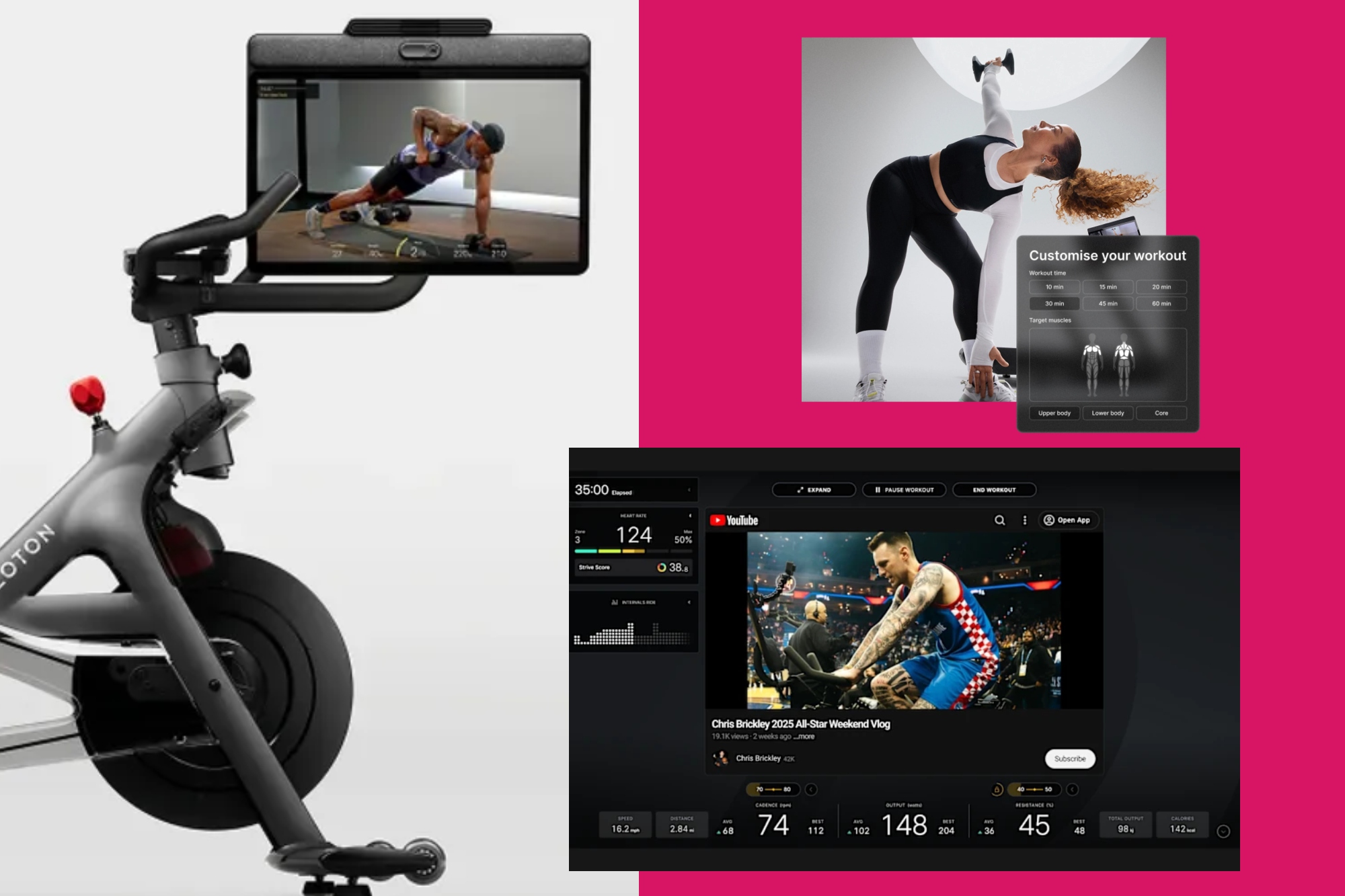
(Image credit: Peloton)
Both Peloton and Echelon offer a wide variety of classes and tastes, with extensive libraries categorised not only by cycling but also by strength, yoga, meditation, bootcamp, and more. These classes can be streamed live or on demand, with reasonably good production quality.
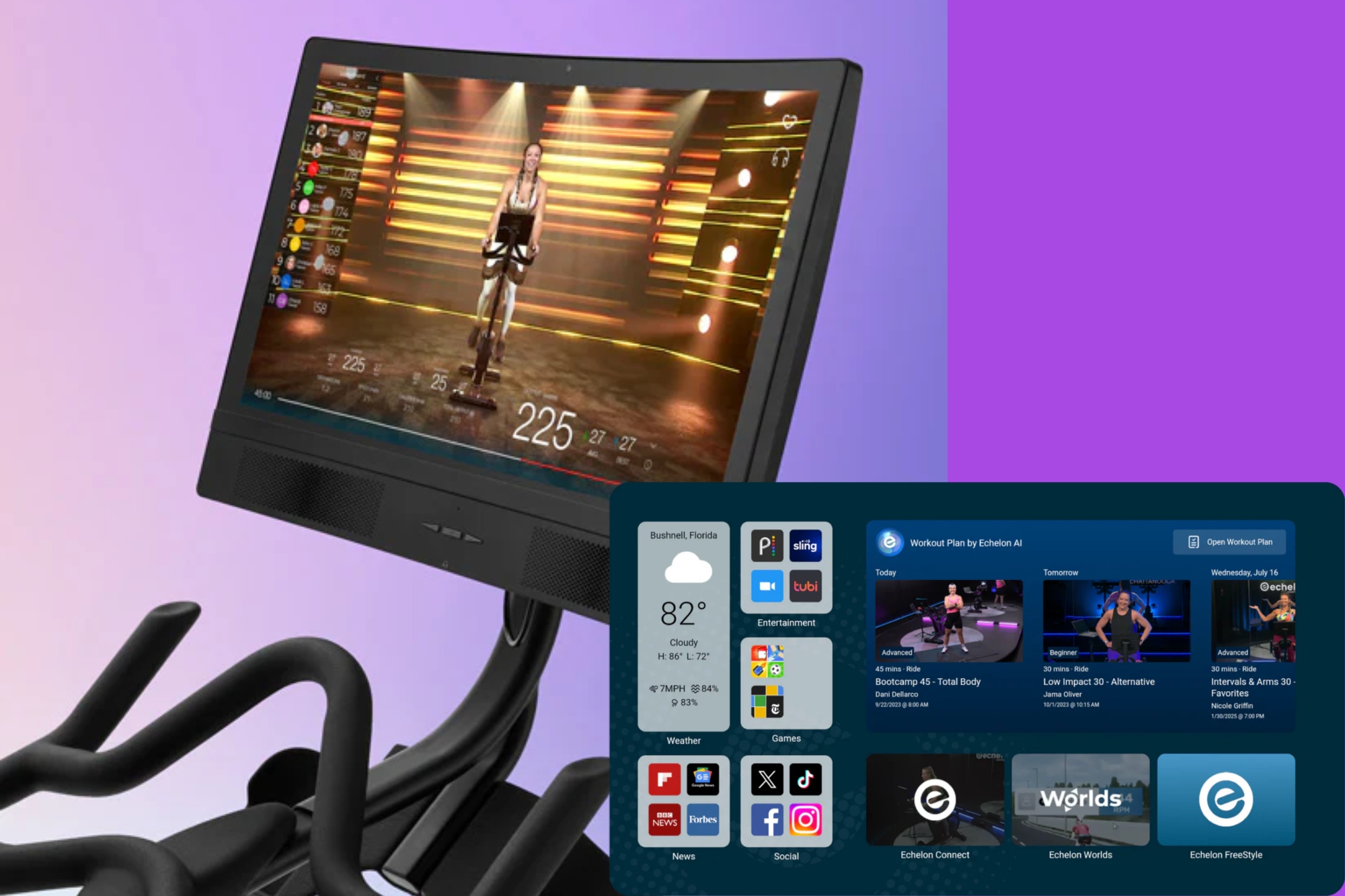
Both also offer ‘non-performance’ entertainment services, the Echelon FitOS platform, and Peloton Entertainment, where riders can access and stream popular entertainment apps like Netflix, Hulu, Disney+, and YouTube directly through the bike’s consoles. This offers alternative riding options for when users want a casual, non-guided ‘TV ride.’
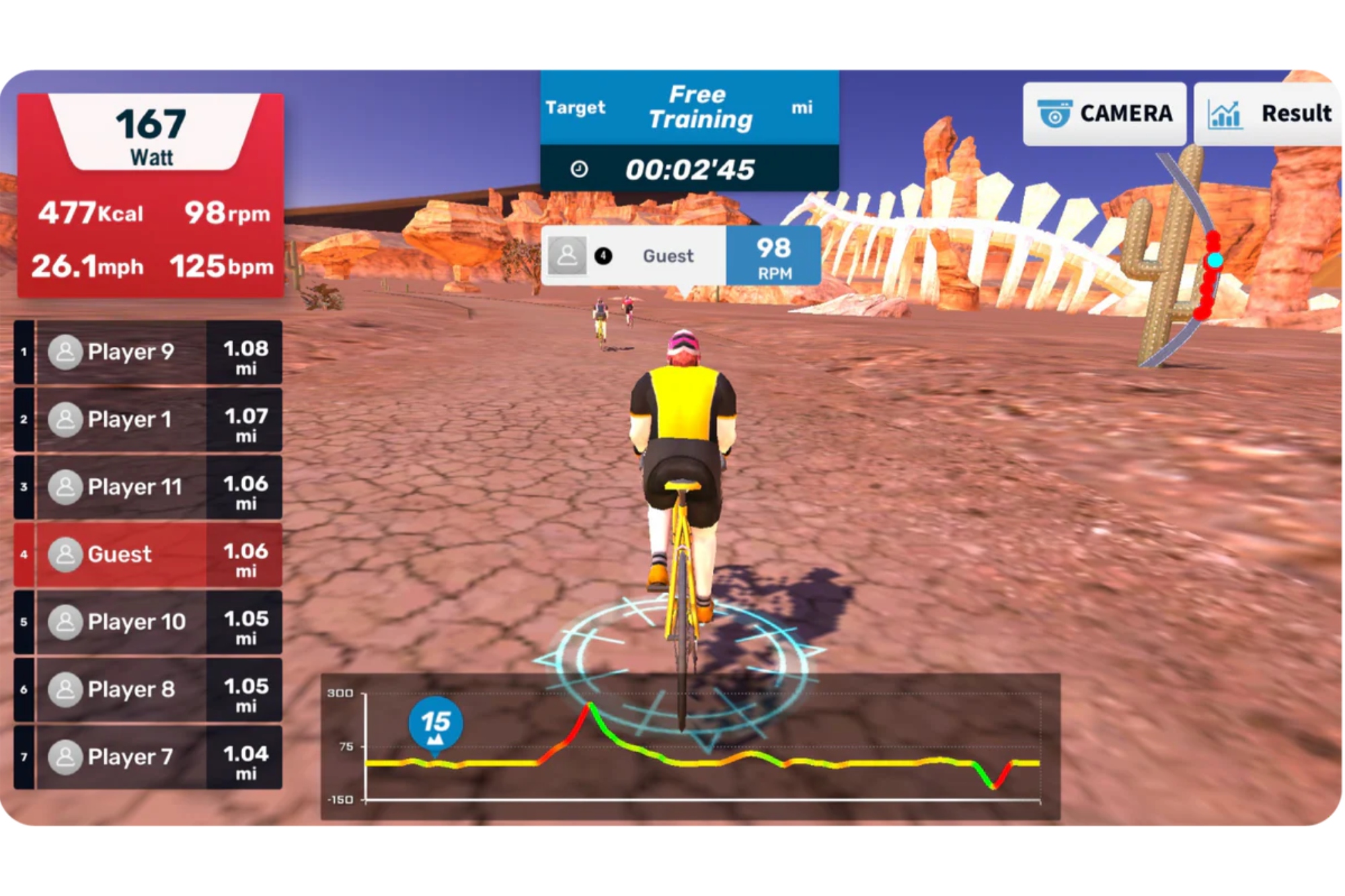
(Image credit: Echelon)
Peloton Versus Echelon: Ecosystem Integration and User Experience
Echelon excels at third-party integration, enabling data synchronisation with popular external apps such as Strava, Fitbit, and Apple Health. This is crucial for users who prefer to track their fitness data within a unified, cross-platform ecosystem.
Its third-party app or, Echelon Worlds integration, also enables the bike to be used as a standalone unit, so it isn’t solely tied to the Echelon fitness platform.

Peloton Lanebreak workout game
(Image credit: Peloton)
Peloton’s ecosystem is more closed, with the brand heavily promoting its own app and community. While it offers features like Apple GymKit integration for seamless Apple Watch syncing, its direct integration with non-Peloton platforms is more limited than Echelon’s.
The experience is designed to keep the user within the “Peloton world,” maximising engagement with their content and community features.
The only VR option is an in-house Peloton Lanebreak game that motivates riders to hit targets for speed, resistance, and cadence by scoring points.
Peloton Versus Echelon: The Financial Equation
Comparing the two brands on price requires looking beyond the initial purchase to the long-term subscription commitment. The total cost of ownership (TCO)equation is Equipment Price + (Monthly Subscription Fee × Months of Ownership), with both brands of exercise bike offering tiered membership.
Peloton
The initial outlay for the bike and other equipment is pricey, though there are options to split the bike cost monthly or even rent one.
Prices for the Peloton Original Bike + start at £1899/ $1145 for a refurbished one, and rise to £2299/ $2695 for the Cross Training Bike +.
All-Access Membership is typically a fixed, premium price of around £45/ $39 per month and is mandatory for full functionality on the bike, although this subscription covers all users in the household, and that’s up to 20 users!
If you go down the rental line, you’ll pay £125/ $125 a month, plus a £200 / $150 one-time joining/ assembly fee. This includes an All-Access Membership, again for an entire household, and one pair of Peloton cycling shoes. You can also cancel this at any time, and the brand will pick up the bike for free.
There is an App-Only Peloton Option for users without the bike, but this limits features and metrics integration, and introduces class limits, but prices do start from £12.99 a month .
Echelon
The outlay for an Echelon bike is considerably less than that of a Peloton, with the price of a BYOD bike significantly cheaper; the entry-level Echelon Connect Sport 2 costs just £599, or £13.89 a month interest-free for 36 months.
The Sport S2 is £799, while the EX-5 costs £ 999/$1249.99 and the EX5-S £ 1299/$1699.99. The UK range-topping EX-7 Smart Connect bike is priced at £1999 (£41.64 a month), and the Connect EX-8S is $2799.99 (currently not available in the UK).
There are also a variety of membership subscription plans on offer, with the most popular being the £24.99/ $33.99 a month option (charged at £299.90/ $399.99 annually), or you can pay a little more, £29.99/$ 39.99 a month, for a monthly membership, which you can cancel at any time. In the UK, there’s also a £19.99 a month plan for a two-year membership (charged at £479.76 every two years).
All plans provide unlimited access to live and on-demand rides, along with full access to FitPass for off-equipment workouts for up to five users.
A Fitpass without the exercise bike costs just £12.99/ $11.99 a month.
Peloton Vs Echelon – Comparison tables Swipe to scroll horizontallyPeloton Vs Echelon – Flagship models compaired
Model
Peloton Cross Training Bike +.
Echelon Connect EX-8S (US only)
EX-7 Smart Connect (UK)
Inital outlay
£2299/ $2695
$2799.99
£1999
Monthly membership
£45/ $39
From £19.99 (paid 2yrs upfront) or £24.99/ $33.99 (paid annually)
From £19.99 (paid 2yrs upfront) or £24.99/ $33.99 (paid annually)
USP
On board fan and movement-tracking camera
24-inch curved HD touchscreen and up to 15 LED colour zones
21.5-inch HD touchscreen as standard
Swipe to scroll horizontallyPeloton Vs Echelon – Entry level models compaired
Model
Peloton Original Bike +
Echelon Connect Sport 2 (UK)
Echelon Connect Sport EX-5 (USA entry model)
Inital outlay
From £1899/ $1145 (Referbished)
£599
£999/ $1249.99
Monthly membership
£45/ $39
From £19.99 (paid 2yrs upfront) or £24.99/ $33.99 (paid annually)
From £19.99 (paid 2yrs upfront) or £24.99/ $33.99 (paid annually)
USP
23.8-inch swivel screen
BYOD
BYOD, 13kg Flywheel
Peloton Versus Echelon: Defining the Ideal Rider
Peloton and Echelon both offer great options for at-home connected cycling, but each caters to different rider needs.
Choose Peloton If… (The Premium Experience)
You are seeking the gold standard, all-inclusive fitness experience.
You value the motivating power of “celebrity” instructors and a massive, engaged community that drives competition via the leaderboard.
You prioritise the highest possible production quality and a highly refined, singular fitness application experience.
You want the most granular control over resistance (100 levels) and appreciate the advanced features of the Bike+, such as Auto-Follow resistance and Apple GymKit integration.
Budget is secondary to a premium feel and a strong, long-term warranty on the equipment.
Choose Echelon If… (The Value and Versatility Champion)
You are seeking maximum versatility and accessibility for a lower outlay.
You require a budget-friendly entry point, especially if you are willing to “Bring Your Own Device” (BYOD) for the screen.
You need multi-functionality from the bike’s screen, specifically the ability to stream entertainment (Netflix, Hulu, etc.) on non-class rides.
You want more pedal versatility for riding in both regular sneakers and clip-in shoes without modifications.
You appreciate a lower monthly subscription cost for a multi-user household (up to five profiles included).
Peloton Versus Echelon: Conclusion
In the battle of the bikes, Peloton remains the premium benchmark, defined by its content and community.
Echelon continues to be the formidable challenger, winning on price, pedal versatility, and the crucial ability to offer casual, non-class entertainment through its integrated screens and compatibility with third-party apps.
The best choice ultimately hinges on whether your priority is the cult of content (Peloton) or value and hardware versatility (Echelon).