
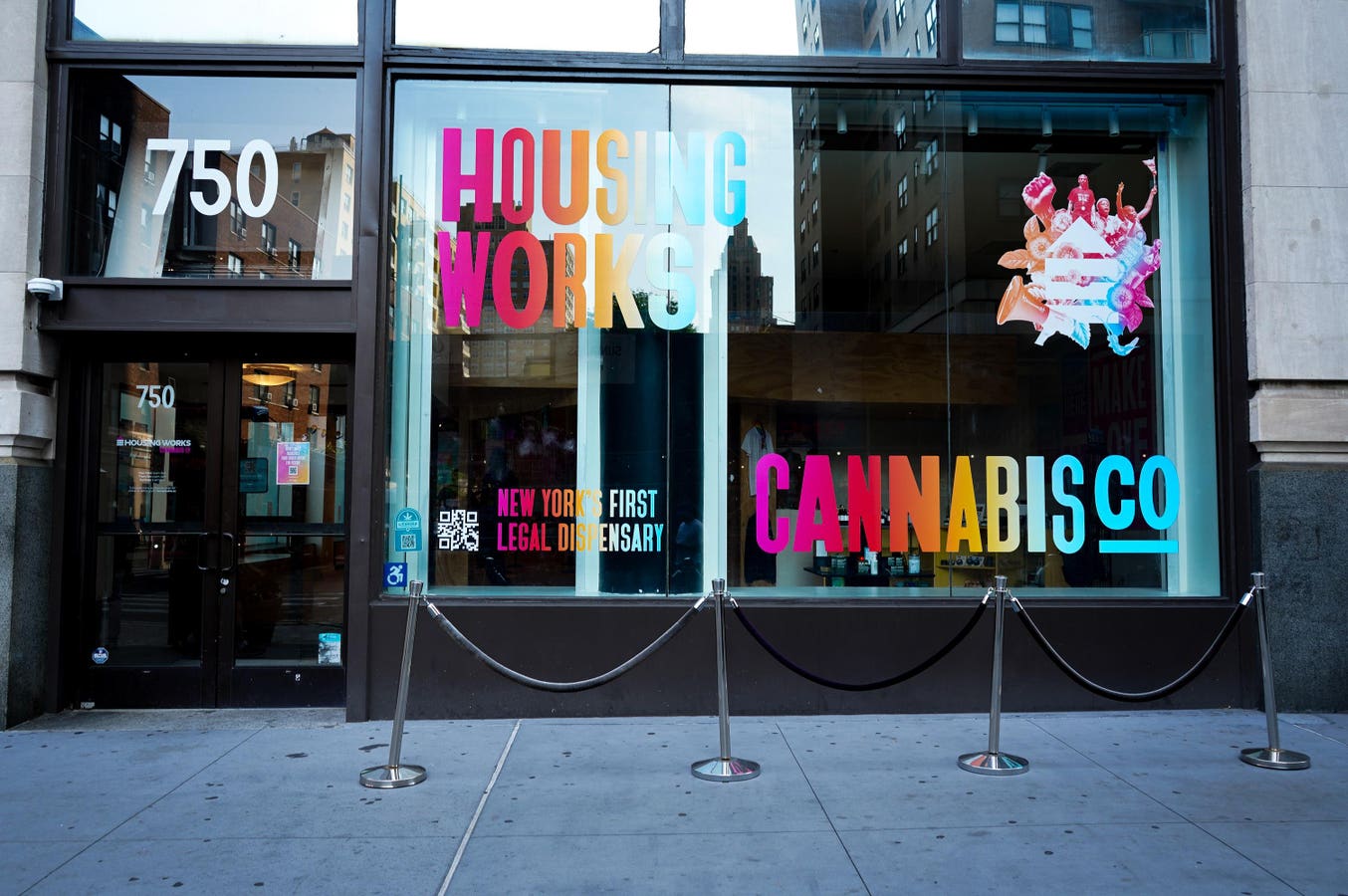
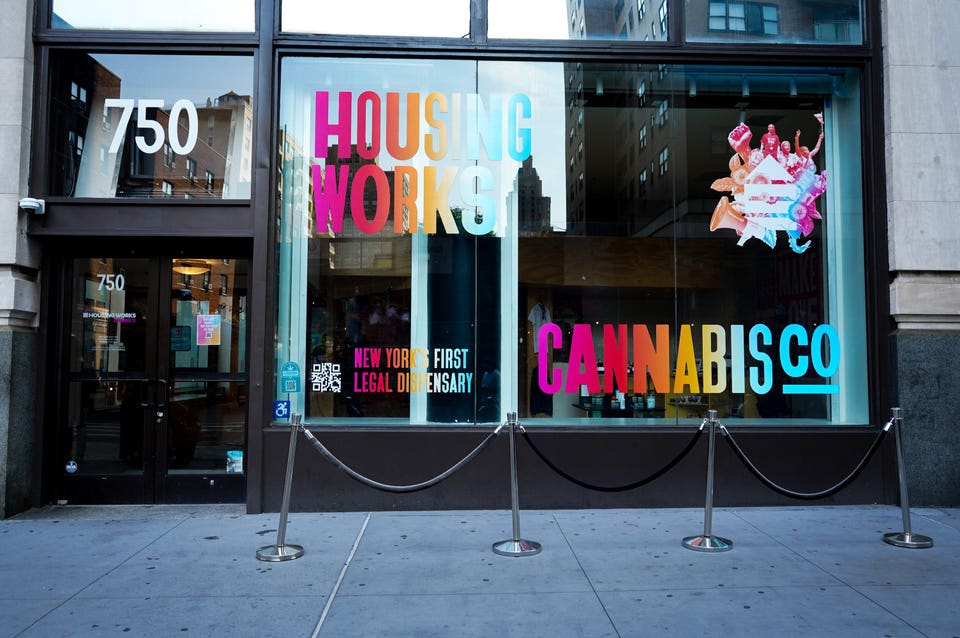
Lower Manhattan-based Housing Works Cannabis Co. is New York’s first licensed adult-use cannabis dispensary, and donates 100% of proceeds to Housing Works.
Photo credit: Prince Franco
The state of New York’s first licensed adult-use cannabis dispensary is honoring World AIDS Day on Dec. 1, and every dollar you spend there—on any day—goes to Housing Works, a nonprofit that’s been fighting for justice for people with HIV and AIDS in New York City since 1990.
Lower Manhattan-based Housing Works Cannabis Co. is the only dispensary in New York City to donate all of its proceeds to people living with HIV, AIDS, and other chronic illnesses. The organization also promotes equity for communities that have been impacted by the war on drugs.
Housing Works Creative Director Elizabeth Koke and Sasha Nugent, VP of retail operations at Housing Works Cannabis Co., described their mission amid unprecedented federal funding cuts.
“We opened our doors late December 2022, and we were the first adult-use license issued in the state of New York,” Nugent says in a video call. “We are an extension of Housing Works Inc., which is our parent company, and 100% of our proceeds go directly back into our mission of helping people who are living with chronic diseases, HIV, AIDS, and those impacted by those illnesses.”
Housing Works provides services such as job training, healthcare, and housing units. To honor people living with AIDS and their families, Housing Works is organizing the annual “reading of the names” for World AIDS Day. It will unite activists, survivors, and volunteers to read aloud the names of those who lost their lives to AIDS. This tradition is designed to help the community collectively mourn together while renewing their advocacy for those still living with HIV and AIDS.
Housing Works Creative Director Elizabeth Koke.
Photo courtesy of Housing Works.
“We are New York City’s only 100% charity dispensary,” Koke says. “Housing Works, as an organization, has a history of social enterprise retail. We operate 10 thrift shop locations throughout New York City, a bookstore, and online retail. The dispensary is another one of our social enterprise retail businesses.”
Koke is actively involved in numerous community initiatives under her role at Housing Works.
“All the proceeds from the dispensary go back into our mission and our works. We operate five community healthcare centers—over 800 units of supportive housing for people living with HIV and other chronic illnesses,” Koke says. “We conduct political advocacy working on the state, national, and global level to advocate for health equity and social justice, especially right now in light of the AIDS funding cuts case. We also provide management, care, coordination, substance use support, and full wrap-around services for low-income New Yorkers.”
Supporting People With HIV And AIDS
Recent and proposed HIV funding cuts include significant reductions to research, prevention, and international aid, such as the proposed elimination of the CDC’s HIV prevention and surveillance programs. The Trump administration announced it would no longer commemorate World AIDS Day, the New York Times reported Wednesday.
“We have been collecting donations at the cannabis dispensary for World AIDS Day that will trickle back into our overall mission of helping those who are in need,” says Nugent. “And that’s some of the things that we’re doing at the cannabis dispensary.”
People living with HIV frequently deal with concerns such as unstable living situations, broken homes, and medication issues. When they move to a different jurisdiction, they could face losing access to life-saving medication if their financial assistance paperwork is not in order.
“In terms of access to medication, we have clinic staff. We have support staff that help with all of the administrative burdens that people living with HIV face in terms of getting medication,” says Koke. “We have systems in place to help people fill their medications. We have a pharmacy program as well.”
This mission transformed out of early AIDS advocacy groups dating back to 1990, when the original goal was the urgent need to be recognized.
AIDS activists at an ACT UP meeting on May 7, 1990, in New York City, NY. (Photo by Thomas McGovern/Getty Images)
Getty Images
“Housing Work started as a small group of activists in the housing committee of ACT UP New York, looking at the way unhoused people living with HIV aids were being treated and the need for stable housing in order to have positive health outcomes, and has now grown to be a full service organization,” says Koke. “We operate community healthcare centers that are open to everyone—regardless of insurance or ability to pay. They provide the full range of healthcare services.”
Housing Works focuses on not only HIV prevention, but also primary care, behavioral health, psychiatry, pediatrics, and so on. They operate a drug user health program with overdose prevention education, syringe exchange, and street outreach. They also operate a reentry program, justice initiatives, and a program in collaboration with the city called Create which is to help people get jobs in the legal cannabis industry.
Medical Cannabis on World AIDS Day
The connection between cannabis and HIV and AIDS is undeniable: The battle against AIDS, long before effective pills, was a key driving force in the first statewide medical cannabis law—Prop. 215—in California. Prop. 215 co-author Dennis Peron personally used cannabis to ease the symptoms of his lover Jonathan West, who was dying of AIDS.
Mary Jane Rathbun, also known as Brownie Mary, baking a batch of chocolate chip cookies on Aug. 4, 1992. Many of her recipients were people living with AIDS. (Photo by Scott Sommerdorf/San Francisco Chronicle via Getty Images)
Hearst Newspapers via Getty Images
Likewise, “Brownie Mary” Jane Rathbun’s selfless example was demonstrated by cannabis-infused edibles she personally delivered to people with AIDS, at a time when the virus’s mode of transmission wasn’t fully understood. Fear kept many people from interacting with them. Her edibles enabled some people to eat for longer periods, due to its unmistakable effects on appetite. This is why HIV is a primary qualifying condition in most states with medical cannabis.
Her advocacy transformation would prompt her to eventually spend her entire personal social security checks on her edible batches. She was arrested, at age 60, on the same day Prop. 215 passed due to her cannabis projects.
Nowadays, people with HIV rarely encounter the same difficulties as in the past, such as opportunistic infections, Kaposi sarcoma, and gaunt physical conditions, due to advances in medicine. Lifespans have been extended, but they still often face high rates of unstable housing and other issues.
The soft opening of Housing Works Cannabis Co. on December 29, 2022 in New York City. (Photo by Gary Gershoff/Getty Images for Housing Works)
Getty Images for Housing Works
Organizations such as Housing Works, as well as its dispensary arm, are helping to provide people living with HIV and AIDS with housing and other services when they need it most. They stand as a beacon of hope when people living with HIV are underscored by reductions in these types of services in the U.S. and abroad.