
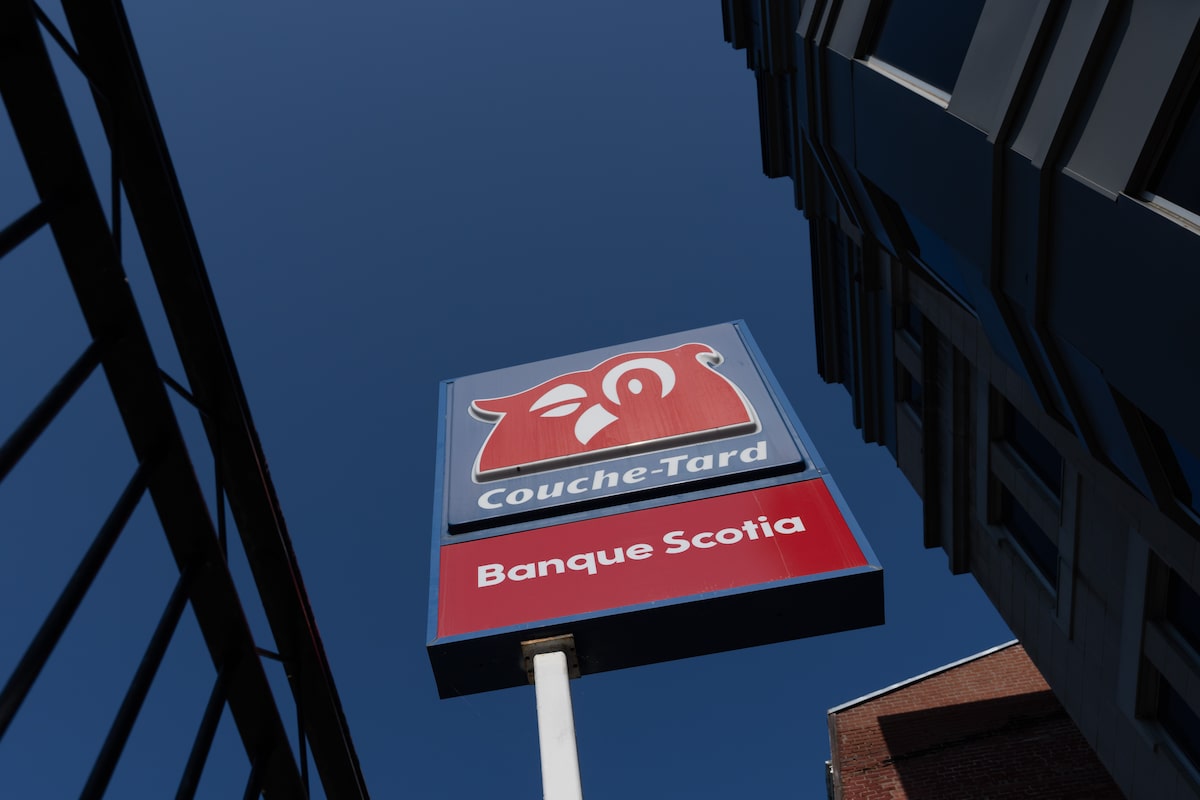
Couche-Tard’s share price has grown more than 140 per cent over the past decade, outperforming the S&P/TSX Composite Index by about 14 percentage points, though the past two years have been disappointing.Christinne Muschi/The Canadian Press
Alimentation Couche-Tard Inc. ATD-T has endured a lull over the past two years as its zigzagging share price underperforms the broader market and its acquisition frenzy sputters.
But perhaps the Canadian-based owner of a global empire of convenience stores can regain some lustre as a sin stock – a diversified one.
Because sin is back, baby: Cigarettes have attained a retro cool vibe as more celebrities light up, and gas-burning cars are revving up as electric-vehicle incentives fade in North America.
Couche-Tard is here to serve us gas and smokes. Beer and wine are on the shelves, too. And let’s not forget about Polar Pops, energy drinks and Skittles, if they fit into your definition of sinful living.
While the product mix is not new, its value to investors may be rising.
The investment case for Couche-Tard – known for its Circle K banners, among other brands – has rested on the company’s record for acquiring existing chains of convenience stores.
It has integrated these acquisitions into an international network that now spans nearly 17,300 locations in 29 countries, generating sales of US$17.9-billion in the most recent quarter.
Couche-Tard eyes U.S. growth with Guy Fieri partnership, bargain meal bundles
Through scale, rebranding and the logistical efficiencies derived from large distribution centres, Couche-Tard has nearly tripled its annual profit over the past decade, to more than US$2.6-billion in its last fiscal year.
This rapid growth has driven the company’s share price up more than 140 per cent over the past 10 years, outperforming the S&P/TSX Composite Index by about 14 percentage points.
But the past two years have been disappointing for investors.
Couche-Tard’s share price has been meandering sideways. Its growth-through-acquisition model suffered a setback in July when the company abandoned efforts to acquire Seven & i Holdings Co. Ltd., the Japanese owner of the 7-Eleven chain of stores.
Couche-Tard pulls bid for Japan’s Seven & i, accusing 7-Eleven owner of failing to engage
During the company’s quarterly earnings conference call with analysts this week, executives said they are still actively pursuing big deals in the fragmented environment of convenience stores.
“We’re engaged, and we continue to see quite a bit of deal flow,” Alex Miller, Couche-Tard’s chief executive officer, told analysts.
There may be more to the company than deal-making, though.
U.S. and European consumers have been buying more nicotine products, particularly cigarette alternatives such as oral nicotine pouches, a.k.a. white nicotine, sold under brand names such as Zyn.
That’s putting greater emphasis on what’s on Couche-Tard’s shelves.
“Not only does this contribute top-line growth from a category forever in secular decline, it brings margin expansion,” said John Zamparo, an analyst at Bank of Nova Scotia, in a note this week.
Oral nicotine pouches command margins about 2½-times fatter than the margins on cigarettes, he added.
At U.S. stores, Couche-Tard’s merchandise margins in the most recent quarter expanded to 34.7 per cent, up from 33.8 per cent a year earlier. During the conference call this week, Zyn sales were singled out as a big reason for the increase.
Sin is back: U.S. and European consumers have been buying more nicotine products, while Couche-Tard also reports increased sales of alcoholic beverages at its Canadian locations.CHRIS HELGREN/Reuters
Is that a reason to buy the stock?
Sin stocks are often reviled by investors who believe that buying shares in tobacco companies, alcohol makers, arms manufacturers, nuclear energy developers or fossil fuel producers is a tacit endorsement.
But the lines that used to separate good and evil in capital markets are becoming blurry – and sin is doing okay.
Defence companies are saving democracies. Fossil fuels are ensuring steady energy supplies. Nuclear power is a clean, reliable energy source. White nicotine is an alternative to smoking.
And cigarettes are … well, they’re still bad.
But you wouldn’t know that from the performance of Altria Group Inc., long seen as a major sinner: The tobacco giant’s share price hit a six-year high this past summer. Though the rally has since sputtered, the stock is up more than 12 per cent this year.
Apart from rising nicotine sales in the United States and Europe, Couche-Tard is reporting that sales of alcoholic beverages at Canadian locations are increasing.
As well, fuel sales are steady, offering a salve to anyone worried that EVs were going to destroy the gas-station business.
And Mr. Miller expects that the company’s expansion into inexpensive meal deals − caloric combos of, say, a hot dog, potato chips and a Polar Pop for five bucks – is a sure way to fuel growth, if not a healthy profile.
Couche-Tard may not be the world’s No. 1 sin stock just yet. But investors can dream.