
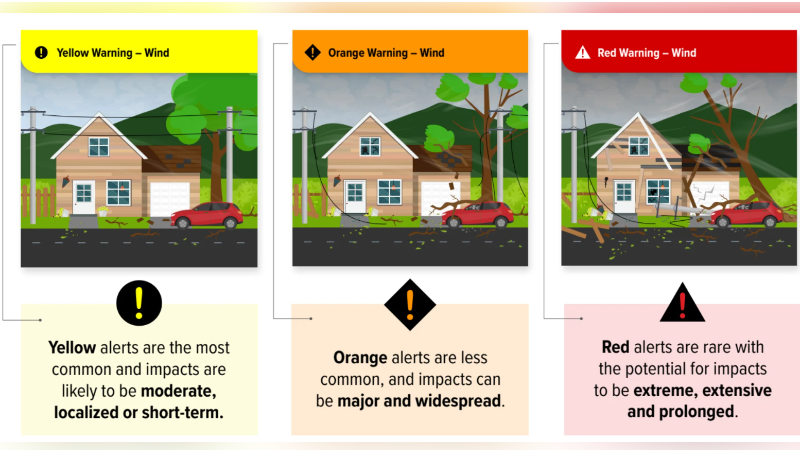
Yellow alerts are the most common. They are issued when hazardous weather may cause damage, disruption, or health impacts. Impacts are likely moderate, localized, and/or short-term.

Orange alerts are issued when severe weather is likely to cause significant damage, disruption, or health impacts. Impacts can be major, widespread, and/or may last a few days.
Red alerts are rare. They are issued when very dangerous and possibly life-threatening weather will cause extreme damage and disruption. Impacts have the potential to be extensive, widespread, and prolonged.
For context, historical red weather events would include the 1998 ice storm in Ontario and Quebec, “snowmageddon” in St. John’s, Newfoundland, in 2020, and the 2021 atmospheric river in B.C. that damaged highways.
Global BC meteorologist Kristi Gordon provided some examples specific to B.C.:
A snowfall warning could be a “yellow warning – snowfall” indicating hazardous weather may cause damage or disruptions and have a moderate, localized or short-term impact. This could be travel disruption or power outages.
A snowfall warning could also be an “orange warning – snowfall” indicating severe weather is likely to cause significant disruptions and have a major, widespread impact that may last a few days. This could be significant snowfall over a wide region that shuts down travel for a day or two or causes widespread power outages.
Likewise, a rainfall warning could be a “yellow warning – rainfall” indicating hazardous weather may cause damage or disruptions and have a moderate, localized or short-term impact. This could be minor flooding over low-lying areas, pooling water on the roads, slower traffic.
A rainfall warning could also be an “orange warning – rainfall” indicating severe weather is likely to cause significant disruptions and have a major, widespread impact that may last a few days. This could be some flooding and significant travel delays and the possibility of washouts, landslides.
A “red warning – rainfall” means very dangerous weather will occur, like the 2021 atmospheric rivers.
A “yellow warning – wind” warning means that there could be broken tree branches and short-term outages are possible.
An “orange warning – wind” means tree trunks could break, roofs could be damaged and widespread power outages are likely.
A “red warning – wind” means structural damage to trees and homes and long-duration widespread outages will occur.
“We continue to experience more frequent and extreme weather in Canada, which makes it more important than ever for Canadians to have access to clear, accurate, and easy-to-understand weather alerts,” Julie Dabrusin, Minister of Environment and Climate Change, said in a statement.
“By improving how severe weather is reported, we are helping Canadians better understand and prepare for potential impacts, so they can make informed decisions about how and when to protect themselves, their loved ones, and their property.”
by Amy Judd / Global News