
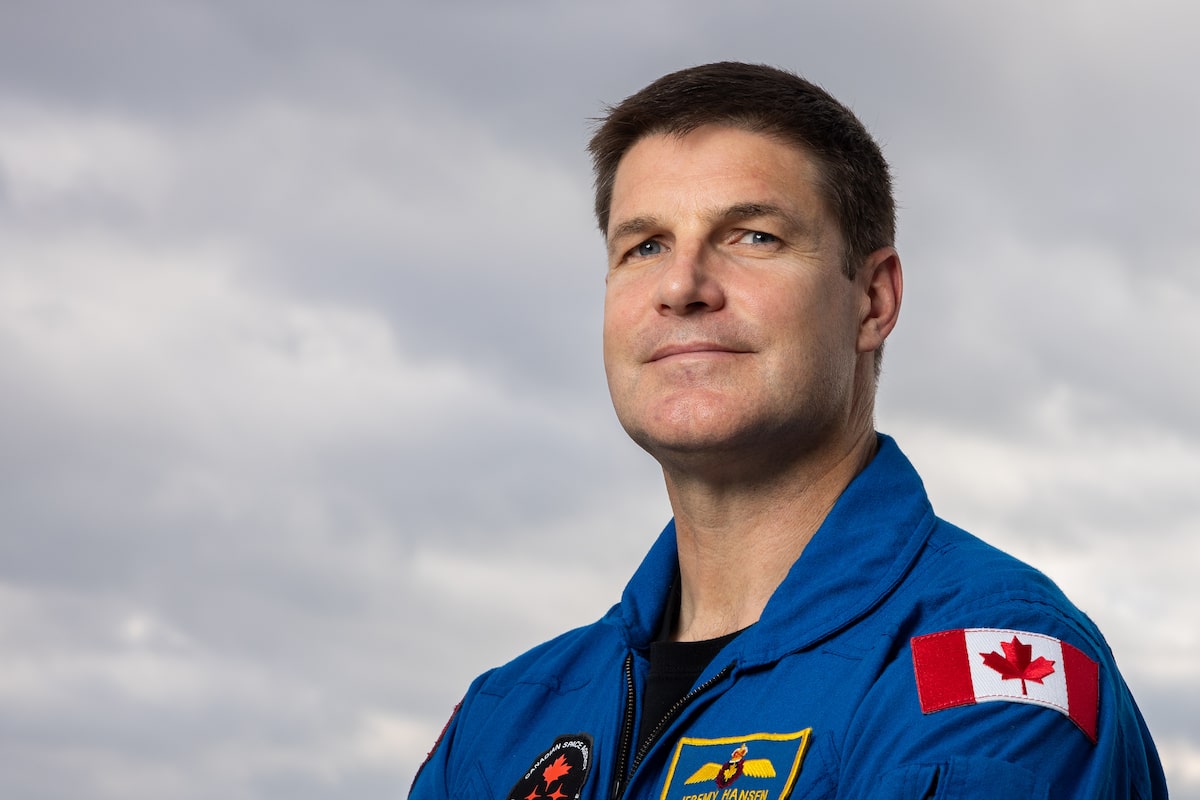
Canadian astronaut Jeremy Hansen is preparing for the coming Artemis II mission.Melissa Tait/The Globe and Mail
Astronaut Jeremy Hansen is about to become the first Canadian to venture into deep space as he and his U.S. crewmates prepare for the launch of Artemis II.
The test flight, which could launch as early as Feb. 6, 2026, will mark the first time a crew has flown in NASA’s Orion capsule, designed to ferry astronauts to the moon and back. During their 10-day mission, Col. Hansen and his three U.S. crewmates are expected to circle around the moon’s far side and potentially see regions of the lunar surface that have not yet been glimpsed by human eyes. The mission’s broader goal is to pave the way for astronauts to return to the lunar surface and, ultimately, set the stage for future expeditions to Mars.
Moon revisited: NASA scientists prepare to unleash the human element
Currently based in Houston for his training, Col. Hansen was in Canada this week for a visit that included being recognized in the House of Commons. He also stopped in at The Globe and Mail to speak about final preparations for the upcoming journey.
NASA astronauts and ground staff are running simulations of the Artemis II mission expected to launch in February, 2026.
How are you feeling now that the launch is potentially just two months away?
Some mixed emotions. On one side, I have this sense that we’re really getting there. We were reviewing some of the fire scenarios recently and the loss-of-pressure scenarios. That’s the last time we’re going to address this. So it starts to have that sense of finality to it. And then there’s the other side. There are things we want to be better at. We still want to get back in the simulator a lot more before we go. I find myself in the evenings and weekends spending more time in the sim just on my own and just drilling things. It doesn’t feel scary or panicked. The sense is I will use every moment I have between now and launch to make sure we’re really ready.
How would you describe the team dynamic among you and your crewmates?
The crew really feels like it’s come together and is firing on all cylinders. Every team has to figure out how to work well together and I really feel like we’ve done that. We see it in the sims where we’re able to bring the best of the four minds at the right time in the right moments. We know when to speak up and when to just be quiet. And that feels like we’ve got the right rhythm there. So that gives me a lot of confidence.
The crew of Artemis II at Johnson Space Center in Houston on Sept. 24, 2025.Annie Mulligan/The Globe and Mail
Are you getting any advice from veteran astronauts and if so, what’s been useful for you?
My three crewmates are experienced astronauts, so I listen really intently to everything – every time they bring up what they did on the SpaceX capsule or the Soyuz or on the space station. Astronauts share a lot about how they felt when they first got to space, how they managed space adaptation. Some people are quite ill, others not as much. The best thing I could do is just stay in my seat for a while until I see how my body adapts. But that’s not an option. I’ve got to get out of my seat right away, start floating around and getting out equipment. So just talking to people about managing that and the fatigue.
How do you prepare yourself mentally to undertake the risk that’s inherent in a mission like this?
You kind of take it bit by bit. It’s easier for me, I think, because I work so closely with the team. I truly really trust them. I know the approach that we’re taking is conservative. We’re not being reckless. And the risks that we’re taking, we think are worthwhile. But then on the other hand, I have seen all the risks that have been accepted and they’re real. Some of them are not super likely, but they’re also catastrophic and they are just there and that means they can happen. You have to understand going into it that there are no guarantees. We have good plans, but we can’t make it perfectly safe. And that’s okay. The most likely outcome is it’ll work out. We’ll be breathing when we hit the Pacific and we’ll set everything up for Artemis III. But if not I know there will be another four astronauts who will say let’s stack the rocket and let’s take the lesson learned and let’s get going.
Artemis I, which launched in November, 2022, was the first step toward an ongoing human presence on the moon. Here’s a look at the preparations for that mission.
The Globe and Mail
If you are able to launch in the first half of February – the current target – what might you see when you pass behind the moon?
There will be good lighting on the far side of the moon at that time. The geologists are excited about what we might see on the far side. So they’ve identified different areas of the moon, large crater areas, some areas with these neat swirls they want us to observe from different angles as we go around the moon, taking photos but also commenting on what our eyes are picking up compared to what we’ve seen in the images.
Why is Artemis II important for Canada?
Well, Canada would become the second country in the world to send a human into deep space. That in itself is not important. What is important is recognizing why we’re there. Since I took this job, I’ve had a front-row seat to what is happening in Canada, what our industry and our people are capable of. And I think people are starting to come around to this. If you have a regional problem and you can find a space solution, you’ve now created a global solution. So it’s an opportunity for us to lean into and take advantage of. There will be more space in everybody’s future. And if we can send a human around the moon in 2026, imagine what Canada can do next.
This interview has been edited and condensed.