
The erosion of the relationship between science communication and the general public became increasingly evident during the COVID-19 pandemic. Part of this is no doubt due to a numbness caused by the popular media barrage of new cancer and disease cures, if not the end of aging itself.
Caroline Williams is a seasoned translator of neuroscience into accessible language. In Inner Sense, her study of interoception traces the history of a niche scientific field as well as potential future vistas.
Interoception refers to signals arising from the body and communicated to the brain — perceptions of fullness, feelings of worry and respiration rates are familiar examples. When heeded and correctly interpreted, interoception keys us to shifts away from homeostasis towards incipient illness and dangers. Williams heralds research into interoception as one of the most significant areas of study to emerge in science and medicine in many years.
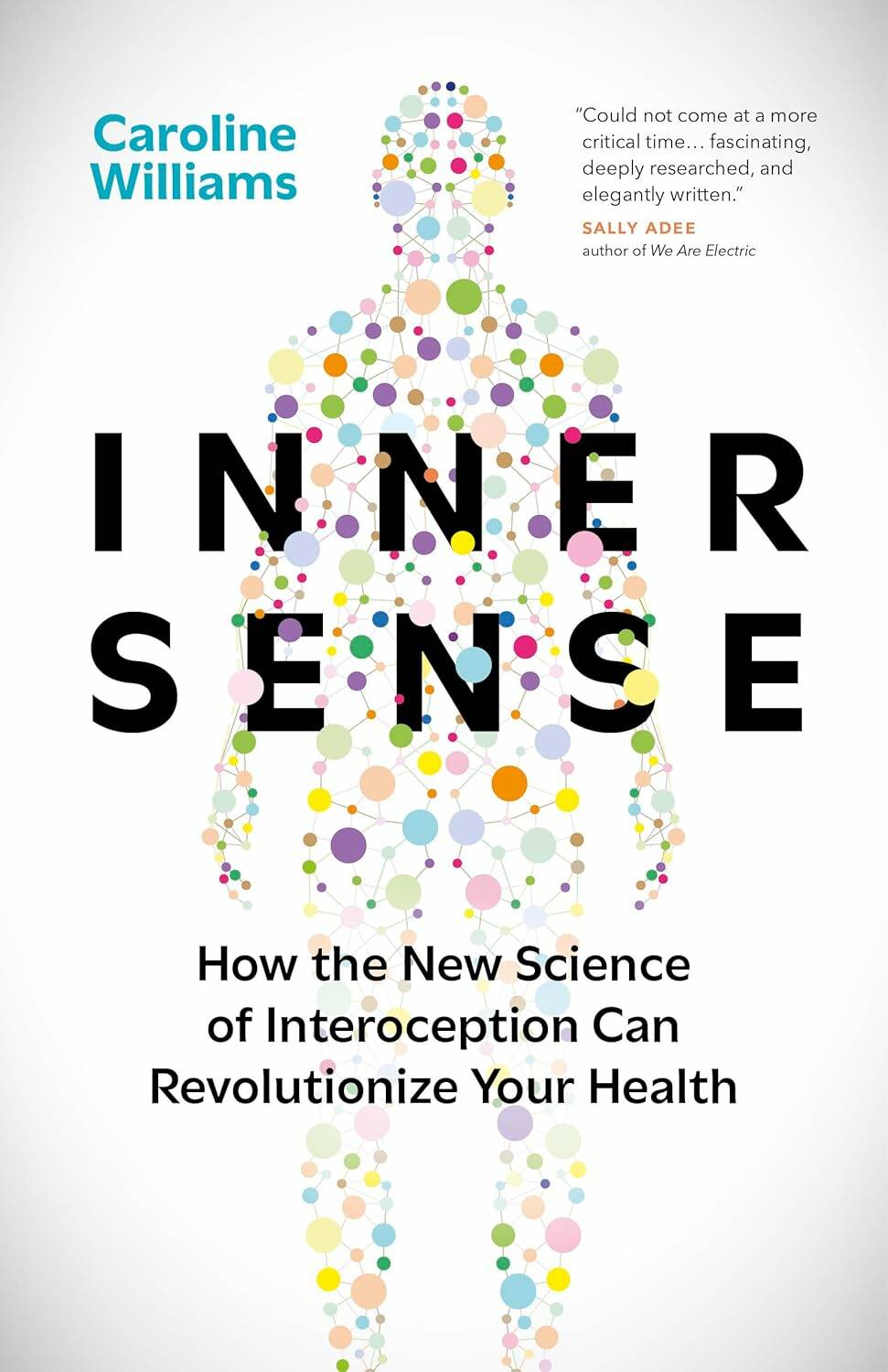
Inner Sense
Interoceptive ability varies by individuals, but is trainable. Improvements can influence our behaviour to foster greater health resiliency and energy and to reduce stress. Research may offer insights into treatments for arthritis, fatigue, depression and many other maladies; these interventions range from developing heart-rate awareness to more invasive surgical procedures.
An accessible writer, Williams articulates the complicated nuance of signaling pathways and digestive physiology into compelling narrative. AI (artificial intelligence) research, she notes, begins with the brain and often ends absent any sense of body, demonstrating an ongoing obliviousness to the body’s interdependent nature.
Whatever its strengths, Inner Sense feels like it was written too early and too narrowly. Despite promises of an accessible health revolution, concrete advice oscillates between easy fixes and a strange, privileged valorization of technology. We’re encouraged to take a bath, laugh, eat whole foods, try yoga, to spend more (or less) time with others.
Further afoot from banally familiar health advice, Williams suggests we consider wearable technology to track biometrics. She seems largely unaware of both the cost and imprecision of smart devices when tracking data as basic as heart-rate variability, a marker of stress. Anything truly new is left to an uncertain scientific future.
That the brain and body are interconnected is a keystone of Williams’ pitch. For all the energy expended supporting this thesis, it’s novel in neither the world of science or philosophy. Her lack of awareness of context and even culture bleeds into other areas. Many meditative practices are intimately linked to interoceptive awareness, but they get shorter shrift than, say, costly sensory deprivation tanks.
Buddhism, which has rich cultural histories exploring many of the same key concepts, is never mentioned.
Inner Sense frequently reads like a breathless announcement to a Canadian that recreation may be possible on ice surfaces.
Winnipeg Free Press | Newsletter

Williams is confident that the nature of the self has been resolved through neuroscience — certainly not a unanimous opinion. Addiction is treated with some delicacy, but the focus on the role of interoception is so strong that history, cultural or personal, is largely effaced.
Inner Sense becomes increasingly scattershot in its final section, identifying the possibility of interoception as critical to avoiding online scammers and navigating conflict. At best Williams is being darkly humorous when she notes its role in surviving climate change so that we’re aware of the need for shade and water in a rapidly warming world.
While interoception is an important area of research, so is understanding complex phenomena within cultural and historical contexts. Science is crucial to meeting present-day challenges, but public communication of its findings, tentative as they be, is imperative.
The near-frantic sales pitch of Inner Sense promises too much and delivers too little. It’s almost enough to quicken the pulse.
Jarett Myskiw is a teacher.