
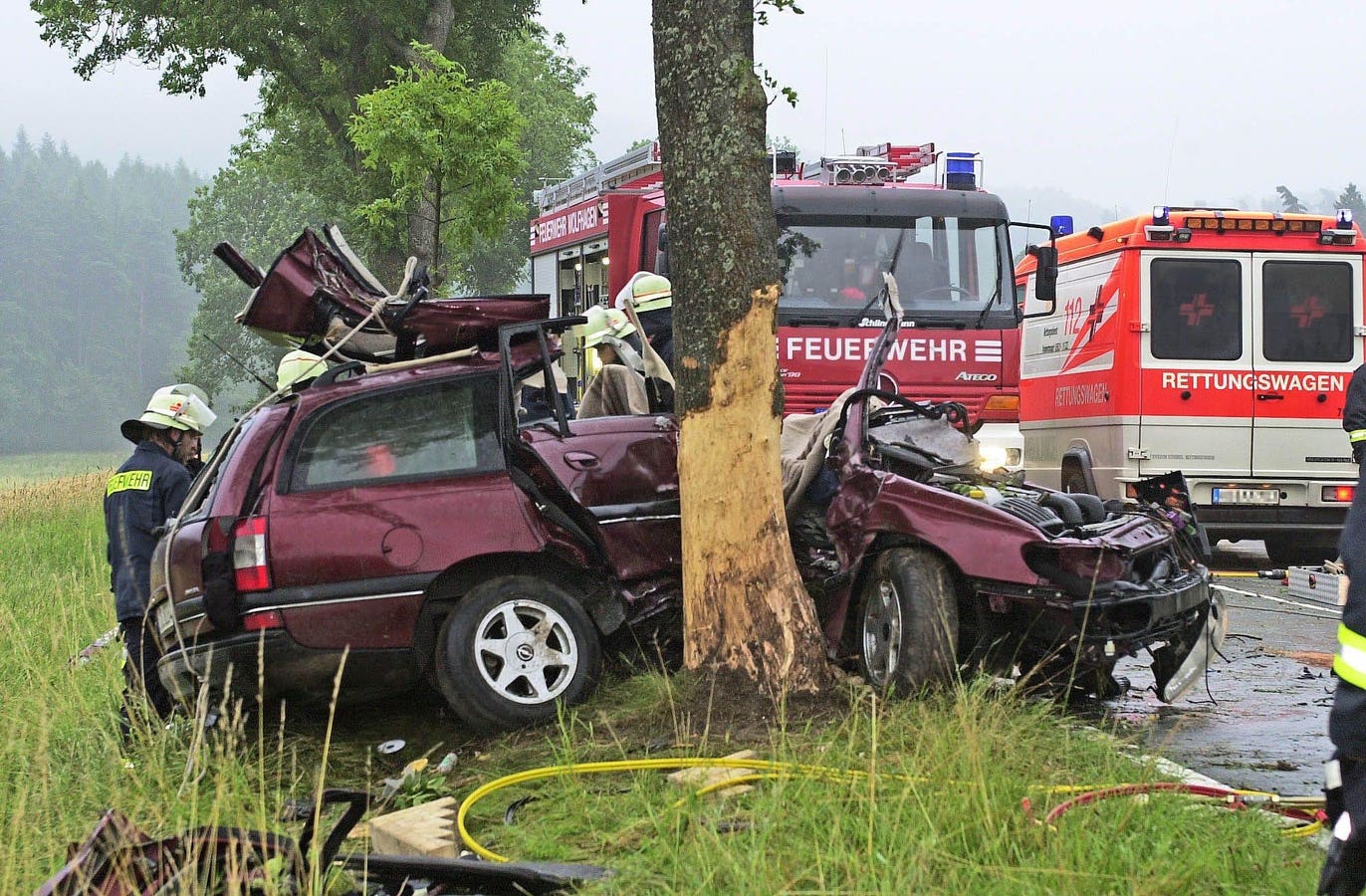
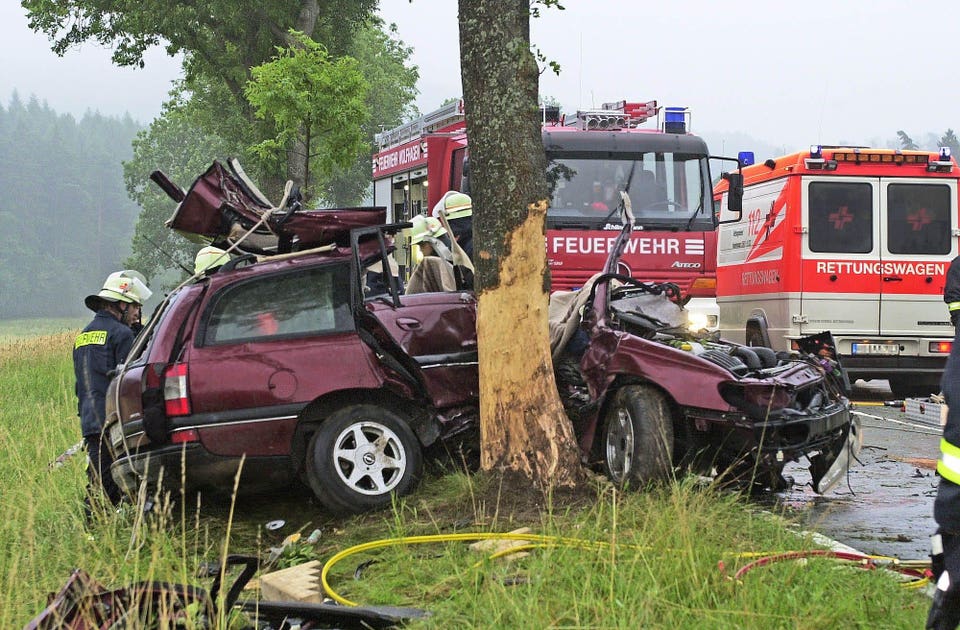
Despite many technological advances, some crash scenarios remain a problem, like collisions with trees, according to new research.
DEKRA
Modern vehicle technology, sophisticated driver assistance systems, and improved infrastructure have all contributed to road safety progress in recent years, yet certain types of crashes continue to persist. Collisions with: trees; people on foot, cyclists and others on two-wheels; and rear-enders involving trucks continue to pose significant hazards. Speed, distraction, and blind spots are some of the reasons why.
Those are the main findings of research announced on Friday by DEKRA, a company based in Germany that conducts automotive testing, inspection and crash research. The assessment is part of its Road Safety Report 2025, “Mobility in a Changing World.”
“While modern cars are equipped with stability control systems, lane departure warning systems, and sophisticated restraint systems, this technology cannot defy the laws of physics,” Stefanie Ritter, a DEKRA crash researcher, said in a statement.
The report found that while vehicles are more intelligent, roads are becoming safer, robust infrastructure more widespread, and the number of fatal crashes is declining in the long term, certain types of collisions remain a serious risk, due to issues like technology reaching its limits or inadequate infrastructure.
Collisions with trees, for instance, are still among the most serious traffic crashes on rural roads, researchers said, noting that often, a moment of distraction or inappropriate speed is enough to cause a vehicle to skid, particularly on wet or dirty roads.
In the future, preventative systems like lane departure warning systems, camera-based assistance systems, and networked vehicle sensors could intervene early, before the vehicle begins to skid, and could play a crucial role, according to the research.
The report advises that protecting existing trees with safety devices, planting new trees a sufficient distance from the road and ensuring appropriate speeds, are measures that could be taken to mitigate risks.
Walkers and road users on two wheels are especially at risk in collisions, the report noted. Many strategies, like pedestrian-friendly vehicle designs, emergency braking systems with pedestrian detection, reduced speeds in urban areas, better headlights, and public awareness campaigns, have led to a decrease in the number of pedestrian fatalities, but “these figures have stagnated for several years or are even rising again in some countries.” If implemented more widely, infrastructure improvements, barrier-free crossings, and visually clear traffic guidance, as well as changes in behavior,are among the advances the report said could help prevent or reduce the severity of crashes to these groups.
Collisions between a turning truck and a cyclist or pedestrian due to blind spots remain serious dangers. Driver assistance systems, which can provide audible and visual warnings, or initiate automatic braking, can mitigate this risk, but many older trucks do not have them, so “even the best sensors cannot detect every hazard – for example, when cyclists are obscured by parked vehicles,” according to the report.
A single second of inattention can be fatal
Automatic emergency braking, adaptive cruise control, and lane departure warning and prevention systems have helped reduce rear-end-collisions with trucks, the report noted, but despite these technological advances, insufficient knowledge of how those systems work, as well as distractions from smartphones and fatigue remain among the major causes of serious crashes.
In the future, communication between vehicles and with the infrastructure could play a crucial role, “providing early warnings of potential hazards and thus further increasing road safety,” according to the report. Awareness campaigns, too, can raise awareness to specific dangers and help prevent tragedies.
For more information about the research and other traffic safety information, click here and here.